
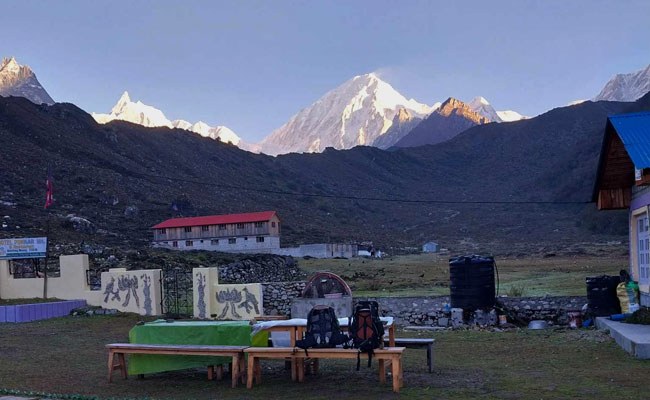
The Manaslu Circuit is one of the few major treks in Nepal where permits aren't just a formality — they're the entire reason you need a licensed guide and registered agency in the first place. Unlike Everest Base Camp or Annapurna Base Camp, where independent trekking is possible and permits can largely be self-arranged, Manaslu sits inside a government-designated restricted area near the Tibet border. That changes the entire permit process, and it's worth understanding exactly what's required before you start planning dates or budgets.
Hand-picked itineraries
Recommended Trips
Related journeys you may want to explore after reading this article.
Why Manaslu's Permit System Is Different
Because the region is classified as restricted, the Nepal Department of Immigration mandates that every foreign trekker be accompanied by a government-licensed guide from a registered trekking agency, and that permits be processed through that agency rather than purchased independently at a checkpoint or tourism office. This single rule shapes almost every other planning decision on this trek, from your choice of agency to your itinerary length, since permit costs scale with the number of days you spend inside the restricted zone.
There are three permits every foreign trekker on the standard route needs, plus one optional add-on if you're extending into Tsum Valley.
1. Manaslu Restricted Area Permit (RAP)
This is the core permit, and the most expensive and complex of the three. It covers the restricted section of the trek, generally starting around the village of Jagat and continuing through to Dharapani near the end of the circuit.
Cost structure: The RAP is priced by season and by the number of days you spend in the restricted zone.
- Winter, spring, and summer (the quieter months): Roughly USD 75 for the first seven days, with a smaller daily fee — typically around USD 10 — for each additional day beyond that.
- Autumn (the busiest trekking season, September through November): Roughly USD 100 for the first seven days, with a higher daily fee — typically around USD 15 — for each additional day.
For a standard 12–14 day itinerary through the restricted section, this generally works out to somewhere in the USD 150–250 range depending on your exact season and trip length. A longer itinerary or a trek that adds extra acclimatization days inside the restricted zone will push this figure higher, since every day counts toward the fee.
How it's issued: The RAP can only be obtained through a government-registered trekking agency based in Kathmandu. It is not available to independent trekkers, cannot be purchased at the trailhead, and is non-transferable and non-refundable once issued — which is why your passport details and photos need to be finalized with your agency well before your departure date.
Group requirements: Restricted-area permit rules have historically required a minimum of two trekkers per application, a rule designed around group safety in a remote border zone. These requirements have shifted in recent seasons, including changes affecting solo travelers, so it's worth confirming the exact current rule directly with your agency rather than relying on older sources, since regulations here are updated periodically by the Department of Immigration.
2. Manaslu Conservation Area Permit (MCAP)
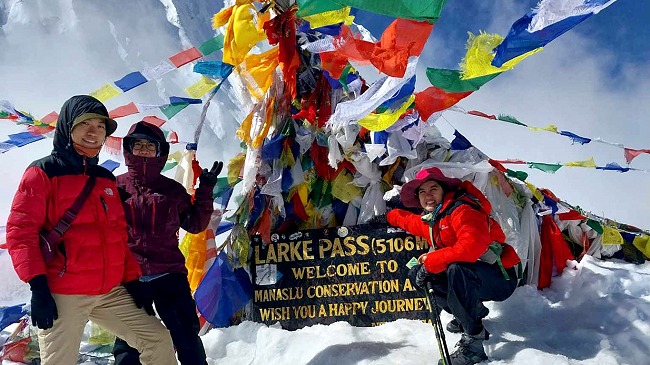
The MCAP is a flat-fee permit, generally around USD 30 for foreign trekkers regardless of season, covering the Manaslu Conservation Area that the route passes through. Unlike the RAP, this permit is issued by the Nepal Tourism Board office in Kathmandu or Pokhara, and technically doesn't require agency involvement to obtain — though in practice, almost every trekker has their agency handle this alongside the RAP as part of a single, streamlined package.
The fees collected through the MCAP go toward conservation efforts and community development projects within the region, supporting the same trails, forests, and villages you'll be walking through.
3. Annapurna Conservation Area Permit (ACAP)
This one surprises some trekkers, since Manaslu and Annapurna are often thought of as separate regions. But the standard Manaslu Circuit route exits through villages near Dharapani that technically fall within the Annapurna Conservation Area, which means an ACAP is required for that final stretch of the trek. Like the MCAP, this is a modest flat fee, generally in a similar range, and is typically bundled into your overall permit package by your trekking agency.
Optional: Tsum Valley Permit
If your itinerary includes the Tsum Valley extension — a worthwhile detour into a more remote, culturally distinct side valley — you'll need an additional permit on top of the standard three. This typically costs around USD 30–40 for the first week, again varying by season, with its own daily add-on structure similar to the RAP. Since Tsum Valley adds several extra trekking days on top of the standard circuit, budgeting for both the extra permit and the extra time is worth doing early if you're considering this option.
Practical Points Every Trekker Should Know
- None of these permits are refundable or transferable. Once issued, they're tied to your passport and can't be reassigned or reused, so trip changes after permits are processed can be costly.
- A licensed guide is mandatory throughout the restricted section, a rule the Nepal Tourism Board has reinforced nationwide in recent years — this isn't something any agency, however flexible, can waive.
- Permit rules do change between seasons. Solo-trekker requirements in particular have been updated more than once in recent years, so always confirm the current rule with your agency rather than assuming last year's information still applies.
- Booking early helps pricing accuracy. Because RAP costs scale with season and trip length, confirming your dates and itinerary early lets your agency give you a precise, final permit cost rather than a rough estimate.
- Passport details need to be finalized in advance. Since permits are issued to named individuals and can't be transferred, your agency will need clear passport copies and passport-style photos well before your departure to process everything on time.
How Peace Nepal Treks Handles This
Peace Nepal Treks arranges all required permits — RAP, MCAP, and ACAP — as a standard part of its Manaslu Circuit Trek packages, so trekkers only need to send passport copies and photos in advance rather than navigating Kathmandu government offices or piecing together separate applications themselves. For trekkers adding the Tsum Valley extension, the additional permit is handled the same way, folded into a single, clearly itemized quote rather than left as a surprise add-on.
Given how central permits are to this particular trek — legally, logistically, and financially — it's worth treating the permit conversation as one of the first questions you ask any agency, not an afterthought once you've already committed to a booking.