Upper Dolpo Trekking is a challenging but rewarding experience, one that takes trekkers through some of the most pristine and awe-inspiring landscapes in the world.
Upper Dolpo is a hidden valley located in the Himalayas of Nepal and is said to be one of the most beautiful and unspoiled regions on earth. Trekking through Upper Dolpo provides visitors with stunning views of the Himalayas, as well as an opportunity to experience the local culture and traditional way of life.
The trek is located in the remote region of Far West of Nepal with one of the recent popular trekking destinations of Nepal, Shey Phoksundo National Park. Likewise, it lies at the north of the Dhaulagiri Range along the Tibetan borders.
Similarly, the Upper Dolpo Trekking can take you at a maximum elevation of 4,530 meters to 5,115 meters. As the trek lies in one of the remote areas of Nepal, this trek is considered one of the longer treks in Nepal requiring 20 days to complete the complete trek.
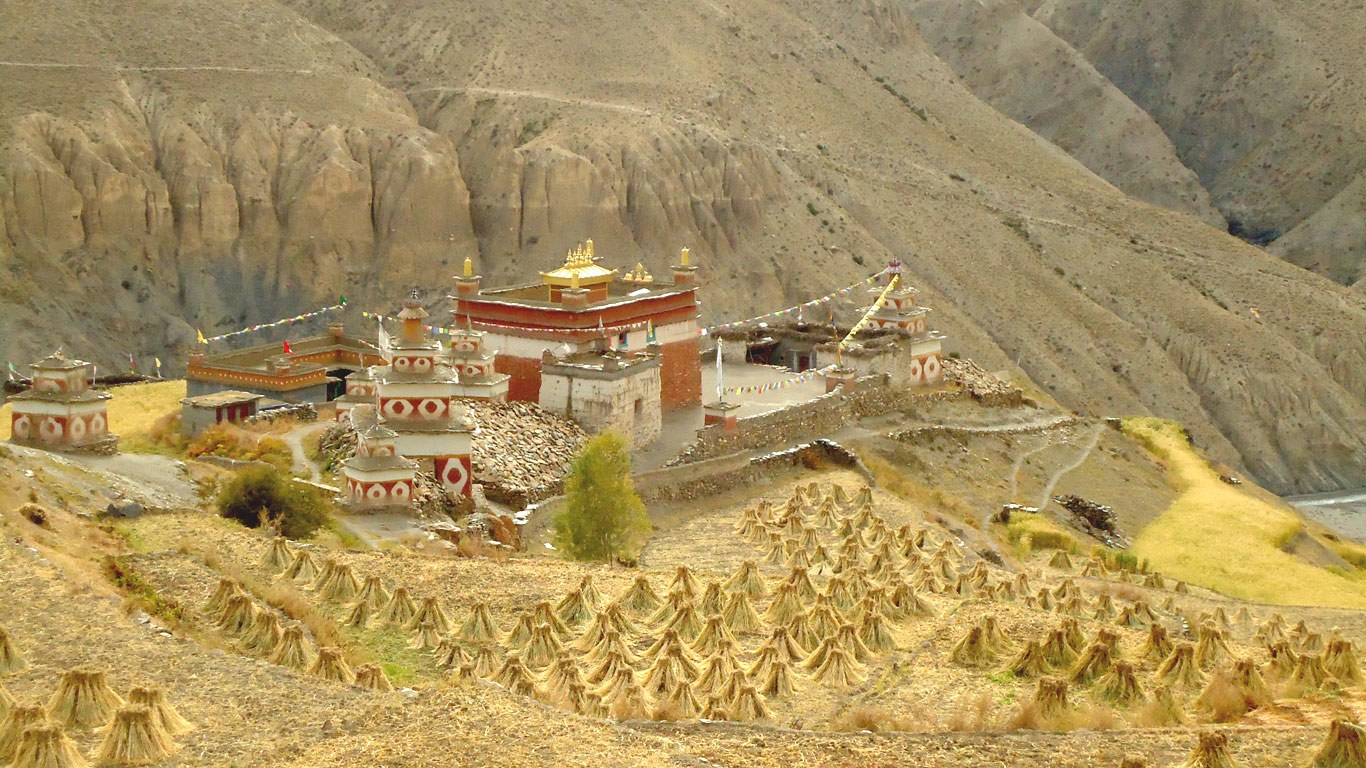
However, the major rewards you will receive with the trek are to experience the ancient Tibetan Buddhist culture, old monasteries, Lake Phoksundo, wildlife, and nature.
This trek is one of the five passes adventure treks in Nepal, Nangdalo La Pass (5,350 m), Sela (Gelu) La (5,094m), Mo La Pass ( 5,027m), Jungben La (5,550m), during the 23 days Dolpo circuit.
Throughout the journey, you will have to cross Five different challenging high passes over 5,000m and three moderate-high passes, Nangdalo Pass (5,350m), Sela (Gela) La Pass (5,094m), Mo La Pass (5,027m), Niwar Pass (5,110m), Jungen La Pass (5,550m) and three lower passes are Khoma Pass ( 4,660m), Shimen Pass (4,260m), Bhima Lojun La Pass (4,460m). Similarly, multiple nights would be inside the camp above 3,500 meters.
One of the famous rising treks of Nepal, the Upper Dolpo Trekking Route starts from Juphal in the Dolpo district and the first step begins by traveling to Nepalgunj which can be reached by flight or road.
If you choose to fly towards Nepalgunj, you can again have a flight towards Juphal and begin your trek from Day 1. This trekking route is unlike any other trekking route in Nepal as usually other routes include dense forest while Dolpo provides a different landscape with the remote region, untouched cultures, and vegetation.
Upper Dolpo Trek is a strictly protected area that requires an expensive permit to enter. Likewise, you will also require a permit for lower Dolpo.
This trek was opened for tourists only in 1989 as the region was a restricted area and belonged to the Shey Phoksundo National Park.
Similarly, there are several types of permits to trek in Upper Dolpo such as Lower Dolpo
Restricted Area Entry Permit, Shey Phoksundo National Park Entry Permit, and Upper Dolpo Restricted Area Entry Permit.
Lower Dolpo Restricted Area Entry Permit: USD 20 Per Person Per Week
Shey Phoksundo National Park Permit: USD 30 Per Person
Upper Dolpo Restricted Area Entry Permit: USD 500 Per Person for 10 days
As the trek lies in a rural area with very limited facilities and hotels, the best time for trekking is during Spring (April to May) and Autumn fall (October to November).
There is very little chance that you can plan and execute your Upper Dolpo trek during winter as the trekking routes will be completely covered by snow.
Also, due to fewer facilities for that reason, trekking in winter will be close to impossible.
Hoping to get deluxe accommodation and good meals during this trek will be a big mistake as due to the harsh landscape and tough trail, transportation of food and other supplies is not often.
However, you will find some basic lodges and teahouses along the trek where you will be provided with their local foods and sleep in their traditional house.
Therefore, it is advised to carry food and other essential supplies during the trek and adapt yourself to rest on their local accommodation until the trek continues.
After your arrival in Kathmandu, our representatives at the airport will help you transfer to your hotel check-in.
Official work issuing the special permit and preparation for the trek, overnight stay in Kathmandu hotel.
Overnight stay in Nepalgunj Hotel accommodation.
walk to Dunai (2,140m) for 2-3 hours, Overnight stay in CAMPING SERVICES ACCOMMODATION.
Overnight stay in CAMPING SERVICES ACCOMMODATION
Overnight stay in CAMPING SERVICES ACCOMMODATION.
Overnight stay in CAMPING SERVICES ACCOMMODATION.
Overnight stay in CAMPING SERVICES ACCOMMODATION.
Overnight stay in CAMPING SERVICES ACCOMMODATION.
Overnight stay in CAMPING SERVICES ACCOMMODATION.
Overnight stay in CAMPING SERVICES ACCOMMODATION.
Overnight stay in CAMPING SERVICES ACCOMMODATION.
Overnight stay in CAMPING SERVICES ACCOMMODATION.
Overnight stay in CAMPING SERVICES ACCOMMODATION.
Overnight stay in CAMPING SERVICES ACCOMMODATION.
Overnight stay in CAMPING SERVICES ACCOMMODATION.
Overnight stay in CAMPING SERVICES ACCOMMODATION.
Overnight stay in CAMPING SERVICES ACCOMMODATION.
Overnight stay in CAMPING SERVICES ACCOMMODATION.
Overnight stay in CAMPING SERVICES ACCOMMODATION.
Overnight stay in CAMPING SERVICES ACCOMMODATION.
Overnight stay in CAMPING SERVICES ACCOMMODATION.
Overnight stay in CAMPING SERVICES ACCOMMODATION.
Overnight stay in CAMPING SERVICES ACCOMMODATION.
Today, you have a full day’s rest in Pokhara and visit around the city. If you have limited time, you may fly Pokhara to Kathmandu or drive Pokhara to Kathmandu at the same time. This is also possible in the itinerary.
If you have a few days to spare, you can choose to spend them either in Pokhara or Kathmandu. We offer international airport transportation along with a warm Namaste greeting after you've successfully completed your Upper Dolpo Trek.
The trek usually takes 24–27 days, including acclimatization and travel days.
The trek reaches its highest point at Jungben La Pass (5,500m / 18,044 ft).
The ideal trekking seasons are spring (April–May) and autumn (September–November) for favorable weather and clear mountain views.
You will need the following permits
This trek is classified as strenuous, requiring a high level of physical fitness and prior trekking experience due to challenging trails and high-altitude conditions.
Key highlights include:
Accommodations are basic, including teahouses, lodges, and camping, as the region is remote and less developed.
The trek starts with a flight to Nepalgunj and onward to Juphal in Dolpo. It ends at Jomsom, followed by a flight to Pokhara.
Yes, travel insurance is mandatory and should cover high-altitude trekking, emergency evacuations, and medical expenses.
This trek is a unique journey through remote Himalayan landscapes, offering cultural immersion, breathtaking scenery, and a chance to explore Nepal’s less-traveled paths.
Spring (April to May)
Autumn (September to November)
Why These Seasons Are Ideal?
Spring (April to May):
Mild Weather: Comfortable daytime temperatures and clear skies make trekking easier.
Blooming Rhododendrons: The trail is adorned with vibrant rhododendron blooms, adding a splash of color to the rugged landscape.
Stable Conditions: Minimal chances of rainfall or snowstorms, ensuring a smoother journey.
Autumn (September to November):
Crystal-Clear Views: The post-monsoon skies offer stunning views of the snow-capped peaks and vast Himalayan landscapes.
Pleasant Temperatures: Ideal trekking weather with neither extreme cold nor excessive heat.
Festive Vibes: Experience Nepal's vibrant festivals like Dashain and Tihar if your trek aligns with these dates.
Shey Phoksundo Lake
The turquoise waters are most vivid under clear skies, making it a prime photography spot.
Crossing Jungben La (5,500m) and other passes is safer due to stable weather conditions.
Interact with locals and explore ancient monasteries like Shey Gompa, which are more accessible during these times.
Spring offers a chance to see blooming flowers and rare wildlife like snow leopards, while autumn provides pristine views of the rugged terrain.
Monsoon (June to August)
Trails become slippery and leech-infested, with limited visibility due to heavy rainfall.
Winter (December to February)
Extreme cold and heavy snow make high passes inaccessible, adding significant challenges to the trek.
Plan your Upper Dolpo to Jomsom Trek during spring or autumn to experience the best of Nepal's remote landscapes, cultural richness, and natural beauty.
Given the remote and challenging nature of the Upper Dolpo to Jomsom Trek, having the right equipment is crucial for safety, comfort, and an enjoyable experience.
The Upper Dolpo to Jomsom Trek takes you through high-altitude passes, remote villages, and harsh terrains. This equipment ensures safety, protection from unpredictable weather, and a comfortable trekking experience.
If you'd like to enjoy this Peace Nepal holiday trip exclusively with your own group of friends, we have great news! This trip is available as a Private Adventure.
Our dedicated Private Adventure specialists are ready to provide a customized quote or discuss tailored options to suit your preferences.
Make your adventure truly personal with Peace Nepal Treks!
No reviews yet. Traveled with us on this trip? Be the first to share your experience.
Adrian Mula
Robert and Arnica Reurekas
Patrick Keulens Helmond
Richard Kirtley
Chang Jong Kwon
Lim Tianshun
Mark Eversham