
Ask around in trekking circles and you'll hear the Manaslu Circuit described as "Everest Base Camp's quieter, harder cousin." That's a fair summary, but it doesn't tell you much about what actually makes the trek demanding, or whether you personally are ready for it. If you're trying to honestly assess your own fitness against this route before booking, here's a detailed breakdown of where the difficulty really comes from — and what meaningfully reduces it.
Hand-picked itineraries
Recommended Trips
Related journeys you may want to explore after reading this article.
The Core Numbers
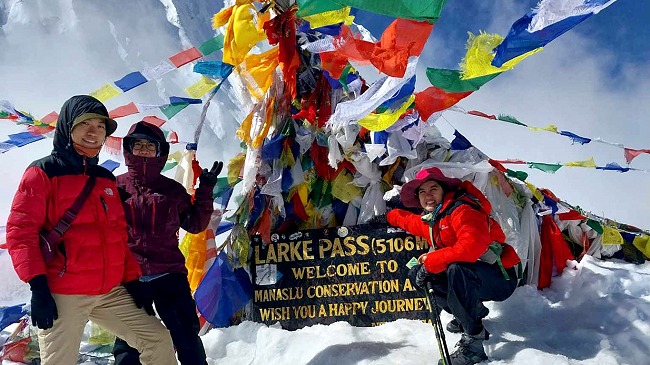
Most Manaslu Circuit itineraries run 13 to 18 days, depending on whether you include acclimatization days, a Tsum Valley extension, or extra buffer time. The trek climbs from around 700 meters near the trailhead at Soti Khola or Machha Khola all the way up to 5,160 meters at Larkya La Pass — a vertical gain of well over 4,000 meters over the course of the trek. That's a significant altitude swing packed into a relatively short trek by Himalayan standards, and it's the single biggest factor behind Manaslu's reputation.
For comparison, the Everest Base Camp trek tops out around 5,364 meters at Kala Patthar but does so over a longer, more gradual, and far more developed trail. Manaslu covers similar or greater elevation gain over a route that's steeper in places and considerably less built up in terms of infrastructure.
Why Larkya La Pass Is the Real Crux
If there's one day that defines the difficulty of this trek, it's the Larkya La crossing. It's typically a long summit day, often starting well before dawn in sub-zero temperatures, crossing snow and ice sections that can be genuinely slippery underfoot. The descent on the far side is steep and can be mentally as demanding as it is physically, particularly if visibility is poor or weather has moved in.
This single day asks more of trekkers than almost anything on the Everest or Annapurna circuits, which is a major reason Manaslu is generally rated a notch above EBC in overall physical difficulty, even though the peak altitude is comparable.
Trail and Terrain Conditions
Away from the pass itself, the trail has its own challenges that add up over the length of the trek:
- Narrower, less developed paths. Particularly in the lower Budhi Gandaki gorge section, trails can be exposed alongside steep drop-offs, and are occasionally affected by landslides or trail damage after heavy monsoon rain, requiring rerouting or extra caution.
- More basic teahouse infrastructure. Compared with Everest or Annapurna, lodges along the Manaslu route are simpler and more irregularly spaced, meaning your daily distances are sometimes dictated by where accommodation exists rather than by an ideal pacing plan.
- Fewer trekkers on the trail. This is part of Manaslu's appeal — quieter trails and a stronger sense of remoteness — but it also means less "trail traffic" support, fewer alternative accommodation options if a teahouse is full, and a genuine sense of being in a less-traveled part of the Himalaya.
Daily Physical Demands
Expect five to seven hours of walking on most days, with some days running longer, particularly around the pass crossing itself. Several sections involve genuinely steep, sustained climbing rather than gentle graded trail, and the cumulative fatigue of consecutive trekking days at altitude is a real factor by the second week.
None of this requires technical mountaineering skills — no ropes, no climbing gear, no specialized alpine training. But it does require solid cardiovascular fitness, comfort with multi-day physical exertion, and an understanding that altitude affects everyone differently regardless of gym fitness back home.
Who This Trek Actually Suits
You don't need prior Himalayan experience to attempt Manaslu, but you should go in as a reasonably fit, regular hiker — someone who is comfortable with sustained multi-day physical activity and ideally has at least some experience with a previous high-altitude trek, whether that's Everest Base Camp, Annapurna Base Camp, or a comparable route elsewhere.
First-time trekkers absolutely can complete Manaslu successfully, but they should treat preparation more seriously than they might for an easier route:
- Months of dedicated cardio and leg-strength training beforehand — stairs, hill walking, and long hikes with a loaded daypack are all useful
- An itinerary built around proper acclimatization days rather than a compressed, rushed schedule
- Realistic expectations about how altitude, not just distance, affects daily energy levels
What Actually Makes the Trek Feel Easier
The difficulty of Manaslu isn't fixed — a well-planned trip meaningfully changes how hard it feels on the ground:
- Built-in acclimatization days, particularly around Samagaon or Samdo before the Larkya La push, give your body time to adjust rather than forcing a rushed ascent
- An experienced guide who actively watches for altitude symptoms and isn't reluctant to slow the group's pace or add a rest day if needed
- Proper cold-weather gear, especially for the pass crossing itself, where a pre-dawn start in freezing temperatures is standard
- Honest pre-trip training, rather than assuming general fitness will translate automatically to altitude performance
How Peace Nepal Treks Approaches This
Rated honestly, the Manaslu Circuit sits above Everest Base Camp in physical difficulty and well above the more developed Annapurna routes — but it remains genuinely achievable for a prepared, moderately fit trekker with the right support around them. Peace Nepal Treks builds acclimatization days directly into its Manaslu Circuit Trek itinerary rather than treating the Larkya La crossing as just another walking day, which in practice is the single biggest factor in how manageable the trek feels once you're actually on the trail.
If you're unsure whether you're ready, the honest answer is usually this: if you can comfortably hike five to seven hours a day for multiple consecutive days at lower elevation, and you're willing to put in a few months of focused training beforehand, Manaslu is within reach — as long as your itinerary gives your body the time it needs to adjust to the altitude along the way.