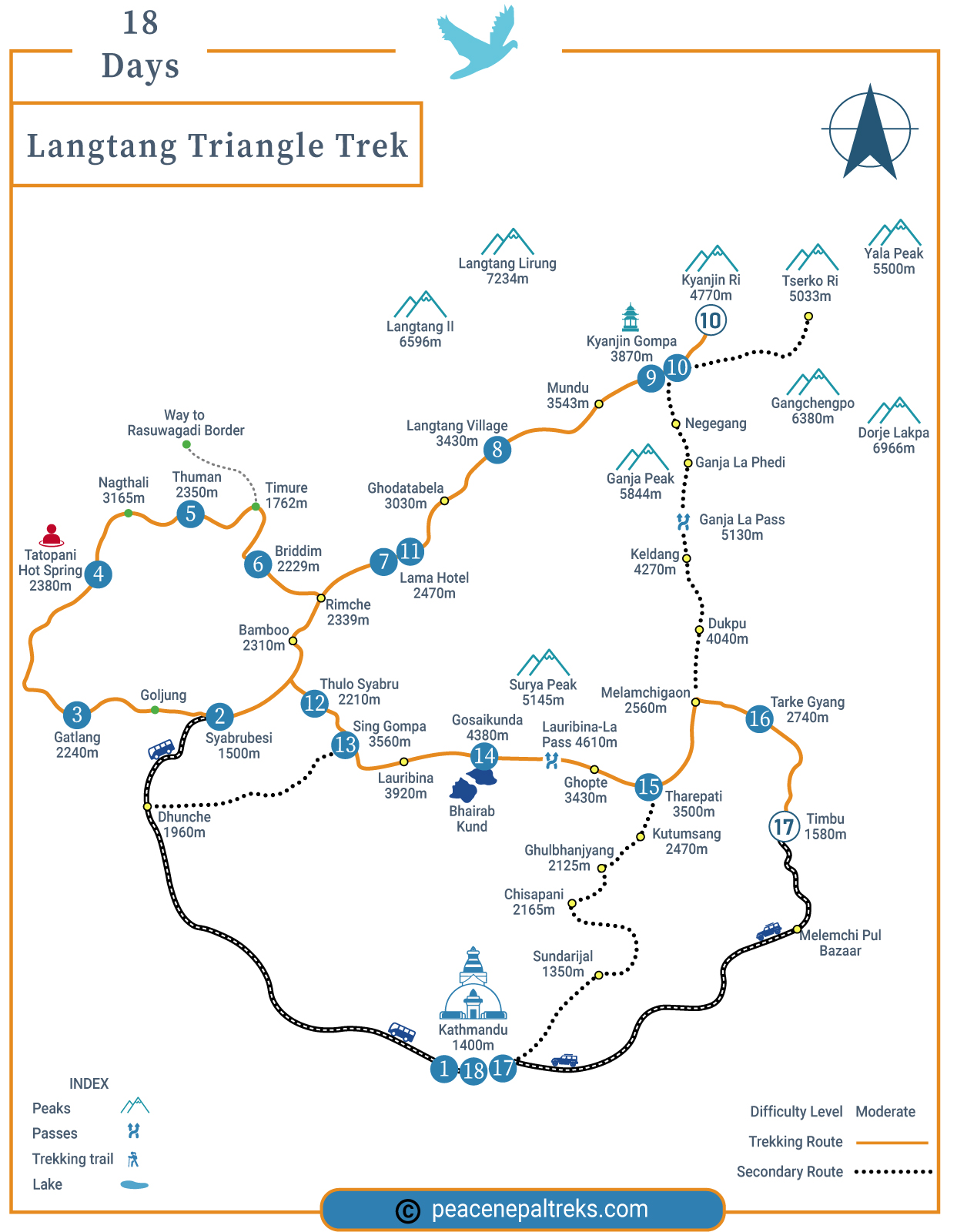
The Ganja La Pass Trek offers an exhilarating journey through Nepal's Langtang region, blending challenging high-altitude trekking with rich cultural immersion. Ideal for seasoned adventurers, this trek traverses diverse landscapes, from lush forests to snow-covered passes, culminating in the formidable Ganja La Pass at 5,130 meters.
Embarking from Syabrubesi, the trail meanders through the verdant Langtang Valley, home to the Tamang community, whose Tibetan-influenced culture adds depth to the journey. As trekkers ascend, they encounter Kyanjin Gompa, a sacred monastery nestled amidst towering peaks like Langtang Lirung and Dorje Lakpa. This segment offers opportunities to acclimate and explore local cheese factories and panoramic viewpoints such as Tserko Ri (4,984m).
The trek's pinnacle is the Ganja La Pass, a challenging ascent requiring technical skills and proper equipment. Crossing this pass rewards trekkers with sweeping views of the Himalayas, including glimpses of Shishapangma in Tibet. Descending into the Helambu region, the trail winds through Sherpa villages like Tarke Gyang and Sermathang, offering insights into Buddhist traditions and lifestyles.
nepalindependentguide.com
The Ganja La Pass Trek is rated as one of the more challenging high-altitude treks in Nepal, demanding strong cardiovascular endurance, leg strength, and mental resilience. Begin training at least 8–12 weeks prior to departure. Focus on:
Cardiovascular workouts: running, brisk walking, cycling, swimming, and stair climbing to improve lung capacity and stamina.
Strength training: emphasize core and lower body workouts such as squats, lunges, step-ups, planks, and deadlifts to build muscle support for long hikes.
Endurance exercises: incorporate long hikes with a weighted backpack to simulate trekking conditions.
Packing the right gear ensures both safety and comfort during the trek. Key items include:
Hiring an experienced local guide and porter not only enhances safety but also enriches the cultural experience. A professional guide:
Arrive at Tribhuvan International Airport in Kathmandu. You’ll be greeted by Peace Nepal Treks representatives and transferred to your hotel. Use the day to rest, explore the city, or attend a pre-trek briefing.
Enjoy a scenic drive through hills, terraced fields, and rivers to Syabrubesi, the starting point of the trek. The route follows the Trishuli River with views of Ganesh Himal and local villages.
Begin trekking along the Langtang Khola, crossing suspension bridges and ascending through dense oak and rhododendron forests. Reach Lama Hotel nestled in the forested hills.
The trail ascends gradually through forests to Ghoda Tabela, then opens up with mountain views. Continue to Langtang Village, a traditional Tamang settlement rebuilt after the 2015 earthquake.
A short and pleasant walk to Kyanjin Gompa, surrounded by snowy peaks. Visit the monastery and local cheese factory. The trail offers views of Langtang Lirung and glacial moraines.
Spend the day exploring nearby viewpoints like Kyanjin Ri or Tserko Ri (4984m) for panoramic views. A crucial day to acclimatize before crossing high-altitude Ganja La Pass.
Leave the main trail and ascend to a secluded alpine camp at Nyengang Kharka. The terrain becomes more rugged with fewer settlements, marking the beginning of the remote section.
The most challenging and rewarding day. Begin early to cross Ganja La Pass (5130m), using ropes or crampons if snow-covered. Enjoy sweeping views before a steep descent to Keldang.
Trek down through isolated alpine terrain with changing landscapes. This section offers solitude and views of distant mountain ranges, passing through quiet meadows and ridges.
Descend sharply through pine and rhododendron forests to reach the culturally rich Sherpa village of Tarkeghyang. Visit monasteries and interact with locals.
After breakfast in Tarkeghyang, embark on a scenic drive back to Kathmandu. The route winds through the Helambu region, offering views of the hills, rivers, and terraced fields. Upon arrival, relax at the hotel or explore the city.
Transfer to the airport for your onward journey. Peace Nepal Treks representatives will assist with your departure arrangements.
All essential camping and cooking equipment are included for the Ganja La Pass Trek during the 3 nights / 4 days alpine-style camping section. This covers sleeping tents, kitchen tents, cooking utensils, basic camping furniture, and simple but nutritious meals (breakfast, packed lunch, and dinner), prepared by our support team to ensure safety, comfort, and proper acclimatization in high-altitude conditions.
To make your trek easier and reduce extra costs, we provide essential equipment free of charge.
(All items must be returned after the trek)
Small comforts that make a big difference on the trail.
Your health and safety are always our priority.
Extra services that add value and care for the environment.
Meals in Kathmandu and during the Langtang Triangle Trek are not included in the package cost.
Personal snacks and drinks are not included in the package.
This includes
These items are available to buy along the trekking route. Guests may also bring their favorite snacks from Kathmandu if they wish.
The package includes only the hotel nights mentioned in the itinerary.
We are happy to help arrange extra hotel nights if needed.
Tips for the trekking staff are not included in the trip cost.
Recommended guideline
Any costs related to emergencies are not included.
Travel and medical insurance are mandatory for all guests and must cover:
Any personal expenses during the trek are not included, such as:
Kathmandu sightseeing tours are not included unless clearly mentioned.
Visa fees payable at Kathmandu Airport:
Online Visa Application (Recommended to save time)
Please bring a passport valid for at least 6 months and a passport-size photo.
Personal trekking equipment not listed in the “Cost Includes” section is not included.
Guests are responsible for personal items such as
Any services not clearly stated in the “Cost Includes” section are not included.
The Langtang & Ganja La Pass Trek is considered a challenging and adventurous trek. The main difficulty comes from high altitude, remote terrain, limited facilities, and the technical crossing of Ganja La Pass (5,130m). Trekkers must walk long days, sometimes on snow, ice, or rocky trails. Prior trekking experience, good physical fitness, and mental preparation are essential for this trek.
The standard itinerary takes around 14 days, including arrival, acclimatization days, trekking days, and departure. However, Peace Nepal Treks can extend or shorten the itinerary depending on your fitness level, weather conditions, and personal preferences.
The best seasons are spring (March–May) and autumn (September–November). During these months, the weather is more stable, skies are clear, and mountain views are excellent. Winter is very cold with heavy snow on the pass, while the monsoon season brings rain and poor visibility.
Yes, this trek is not recommended for beginners. It is ideal for trekkers who have already completed other high-altitude treks such as Annapurna Circuit, Everest Base Camp, or Manaslu. Previous experience helps you understand altitude, pacing, and body response.
Special gear is required due to snow and icy conditions at the pass. Recommended equipment includes crampons, trekking poles, warm layered clothing, waterproof boots, gloves, and sometimes rope support. Peace Nepal Treks provides technical equipment if needed.
Yes. The trek goes above 5,000 meters, which increases the risk of Acute Mountain Sickness (AMS). Proper acclimatization, slow ascent, hydration, and awareness of symptoms are very important. Guides from Peace Nepal Treks monitor your condition daily.
Accommodation is a mix of tea-house lodges in villages and tent camping in remote sections, especially near and after Ganja La Pass. Camping includes sleeping tents, dining tents, and cooked meals by a trained trekking cook.
Yes. You need:
Langtang National Park Entry Permit
TIMS Card (Trekking Information Management System)
Peace Nepal Treks arranges all permits before the trek begins.
Absolutely. Peace Nepal Treks can customize the trek based on your available time, fitness level, group size, and acclimatization needs. Extra rest days or alternative routes can be added if required.
In tea-house areas, meals include dal bhat, noodles, rice, soups, momos, eggs, and limited Western dishes. During camping sections, a professional cook prepares fresh, hygienic meals, including breakfast, lunch, dinner, and hot drinks.
The highest point is Ganja La Pass at 5,130 meters (16,830 feet). Crossing the pass is the most challenging and rewarding part of the trek, offering incredible Himalayan views.
You should start preparing 2–3 months in advance. Recommended training includes cardio (hiking, cycling, running), strength training (legs and core), and long hikes with a backpack. Good fitness greatly improves your experience.
A guide is highly recommended and often essential due to the remote route, navigation challenges, and technical pass crossing. Peace Nepal Treks provides experienced, licensed guides familiar with the Ganja La region.
Langtang National Park is rich in wildlife. You may see red pandas, Himalayan black bears, langurs, musk deer, Himalayan thar, and many bird species, especially in lower forest areas.
Peace Nepal Treks carries first-aid kits, a digital pulse oximeter, emergency medicines, and satellite communication support when needed. Safety briefings are provided before crossing the pass.
In emergencies, Peace Nepal Treks can arrange helicopter evacuation if necessary. This must be covered by your travel insurance, which is mandatory for this trek.
Yes. Travel insurance is mandatory and must cover:
High-altitude trekking (above 5,000m)
Emergency helicopter rescue
Medical treatment and evacuation
Temperatures can drop below -10°C at night, especially near the pass and during spring or autumn. Proper warm clothing and sleeping gear are essential.
On average, you walk 5–7 hours per day. On the Ganja La Pass crossing day, walking time can be 8–9 hours, depending on conditions.
Yes, water is available from streams and lodges. We recommend using water purification tablets or filters instead of buying plastic bottles.
Yes, solo trekkers are welcome. Peace Nepal Treks can arrange private or small-group departures depending on availability.
Winter and monsoon treks are not recommended due to heavy snow on the pass, extreme cold, rain, and landslide risks.
This trek combines classic Langtang Valley beauty with a remote, adventurous high pass, making it ideal for trekkers seeking a less crowded and more technical Himalayan experience.
You should be in good physical and mental condition, able to walk long hours at high altitude. Strong legs, stamina, and positive mindset are key to success.
Peace Nepal Treks offers experienced guides, strong logistics, safety-focused planning, fair pricing, and genuine local hospitality. Their team understands the challenges of Ganja La Pass and ensures a safe, well-supported adventure.
The optimal seasons for the Langtang and Ganja La Pass Trek are:
Note: Avoid the monsoon (June–August) due to landslides, leeches, and cloudy conditions, and winter (December–February) unless you're highly experienced, as Ganja La Pass becomes extremely difficult and often impassable.
Here is a suggested gear checklist categorized for comfort and safety:
Guests should carry a printed copy of their insurance policy and provide details to the trekking agency prior to the trip.
Peace Nepal Treks ensures all Nepali staff are protected with:
Additionally, the agency provides proper clothing, shoes, and safety equipment for high-altitude trekking to all team members.
Enjoy the popular trekking and tour packages in Nepal Himalayas. 2026.
Off the Beaten Trek 12 Days
Langtang Ganja La Pass TrekOff the Beaten Trek 10 Days
Ganesh Himal TrekOff the Beaten Trek 12 Days
Timal Sailung Trek© 2011 - 2026 All rights reserved. Peace Nepal Treks.