Nepal is a land full of contrasts—majestic mountains, peaceful lakes, green jungles, and rich history. If you want to experience the true spirit of Nepal, the best way is to combine four amazing destinations in one journey: Kathmandu, Annapurna Circuit, Pokhara, and Chitwan National Park.
Your adventure begins in Kathmandu, the capital city filled with ancient temples, palaces, and lively streets. It’s a place where history and culture come alive, from the sacred stupas of Boudhanath and Swayambhunath to the royal squares of Patan and Bhaktapur.
Next, you head to the Annapurna Circuit Trek, one of Nepal’s most famous trekking routes. This trail takes you through high mountain passes, traditional villages, and stunning Himalayan views. It’s a true adventure for nature lovers and hikers.
After the trek, you relax in Pokhara, a beautiful lakeside city. Here, you can enjoy boating on Phewa Lake, watch the sunrise over the mountains, and explore local markets and cafés. It’s the perfect place to rest and recharge.
Finally, your journey takes you to Chitwan National Park, a lush jungle in southern Nepal. Go on wildlife safaris to see rhinos, elephants, crocodiles, and maybe even a tiger. Experience the unique culture of the Tharu people and enjoy the peaceful nature of the Terai plains.
This trip gives you a complete taste of Nepal—its mountains, cities, culture, and wildlife—all in one unforgettable adventure.
Mountains, Lakes & Jungle – All in One Epic Adventure
- Why It’s Special: This journey blends high-altitude trekking, peaceful lakeside relaxation, and thrilling jungle exploration, giving you the best of Nepal in one unforgettable trip.
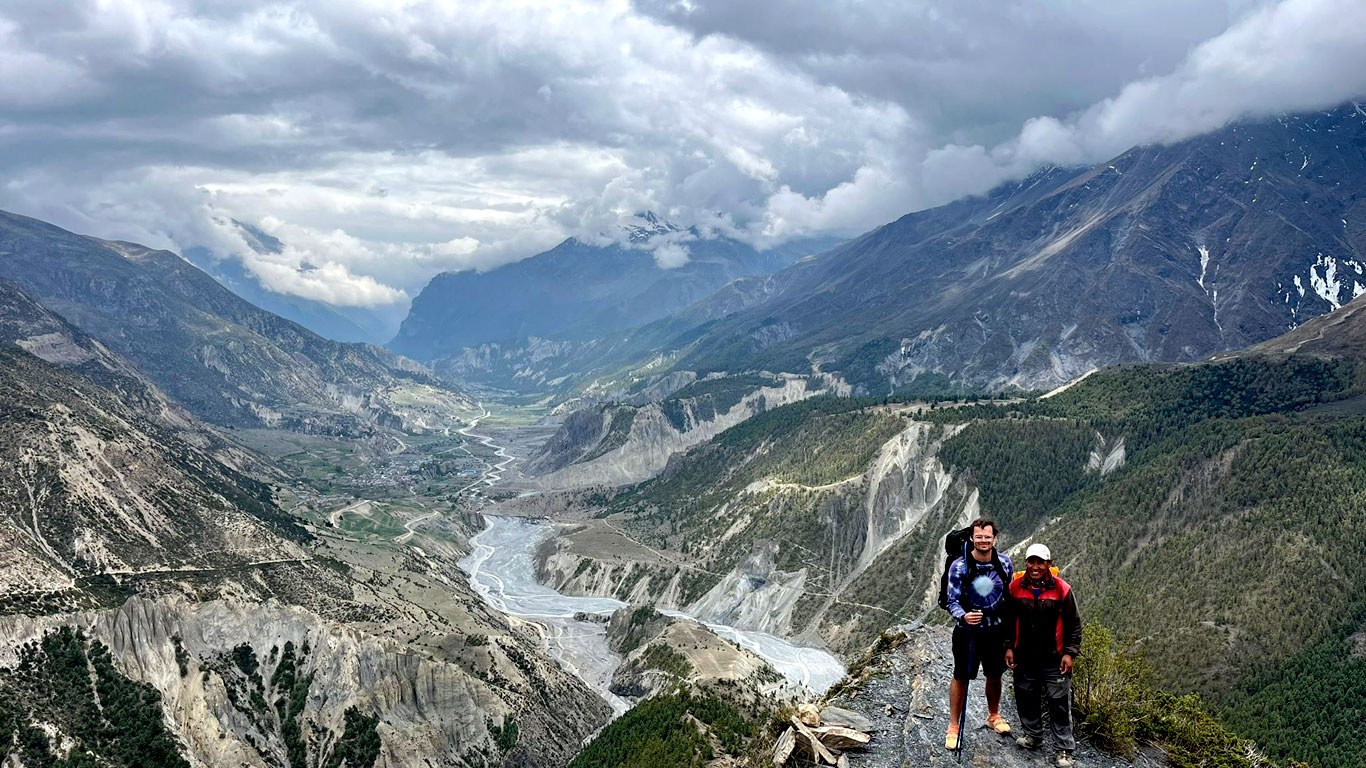
The Annapurna Circuit is one of the most famous treks in the world. It loops around the Annapurna Massif, passing through deep river valleys, traditional villages, Buddhist monasteries, and dramatic landscapes that shift from jungle to alpine and desert-like terrain.
Trekkers walk from the lowlands (around 800 meters) up to the famous Thorong La Pass at 5,416 meters, making it one of the most diverse altitude journeys in Nepal.
The Annapurna Circuit is not just about mountains—it's also a cultural experience. Along the way, you’ll meet Gurung, Thakali, and Tibetan-influenced communities, each with unique traditions, foods, and warm hospitality. You’ll pass ancient monasteries, prayer flags, and chortens that reflect the deep spiritual connection between people and the mountains.
One of the most beautiful aspects of the Annapurna Circuit is how quickly the environment changes. You’ll start in lush green valleys, climb through pine and rhododendron forests, cross rocky high-altitude deserts, and then descend into fertile fields and subtropical forests.
You’ll walk beside rivers like the Marsyangdi and Kali Gandaki, marvel at waterfalls, glaciers, and of course, see epic views of Annapurna, Dhaulagiri, Machhapuchhre (Fishtail), and Tilicho Peak.
The highest point of the trek, Thorong La Pass, is a major highlight and a true adventure. At 5,416 meters, it's a tough but incredibly rewarding day. The sense of achievement and the panoramic view from the top is unforgettable.
The route is well-supported with teahouses, meaning you don’t need to camp—just carry your essentials and enjoy the warm meals and cozy beds each night.
After finishing the trek, the lakeside city of Pokhara is the perfect place to relax and unwind. Surrounded by green hills and snow-capped mountains, with Phewa Lake at the center, Pokhara is peaceful, scenic, and full of charm.
Pokhara offers a soft, gentle contrast to the high-altitude intensity of the Annapurna Circuit. It gives your body time to rest while still offering beautiful scenery and cultural experiences.
After the mountains and lakes, head to the southern plains of Nepal for a completely different adventure—Chitwan National Park, Nepal’s most famous wildlife sanctuary.
Chitwan is home to bengal tigers, one-horned rhinos, elephants, crocodiles, deer, monkeys, and hundreds of bird species. The park is one of the best places in Asia for wildlife viewing.
Chitwan is also the home of the Tharu people, an indigenous group with a rich culture. Visiting their villages and experiencing their traditions adds depth to your journey and highlights Nepal’s cultural diversity.
This combined journey gives you the full spectrum of Nepal:
Destination What You Experience
Annapurna Circuit High-altitude trekking, mountains, culture, challenge
Pokhara Relaxation, lakes, soft adventure, local charm
Chitwan Jungle safari, wildlife, nature, Tharu culture
It’s like doing three mini-trips in one—each different in setting and style but perfectly connected in one unforgettable itinerary.
You don’t need to be a pro athlete to do the Annapurna Circuit, but you should have good fitness and the ability to walk several hours a day.
The best seasons for this trip are:
Autumn (September to November) – Clear skies, great mountain views, perfect for trekking.
Spring (March to May) – Warm weather, rhododendron forests in bloom, good visibility.
Chitwan and Pokhara can be visited year-round, but combining them with the Circuit works best in these trekking seasons.
You’ll need to pack for different climates:
Don’t forget sunblock, good trekking boots, insect repellent (for Chitwan), and a mix of warm and light layers.
Responsible Travel Tips
Trekking the Annapurna Circuit is an adventure of a lifetime. But adding Pokhara and Chitwan turns your trek into a complete journey through Nepal’s soul. You get the adventure of the Himalayas, the peace of lakeside beauty, and the thrill of jungle wildlife—all in one go.
Whether you’re here for nature, culture, or adventure, this trip offers the perfect balance of everything Nepal has to offer. You’ll return home with memories of prayer flags on snowy passes, peaceful lakeside sunsets, and the sound of rhinos moving through the tall jungle grass.
Land in Kathmandu, be greeted by your guide, and transfer to your comfortable hotel. Rest after your flight and enjoy a short briefing about your exciting journey.
Highlights:
Distance/Duration: ~210-km by jeep and vehicle, with 5–6 hours on Dharapani and 4 hours on off-road trails.
Depart early for the scenic drive through rolling hills and lush valleys to Besisahar. Switch to a sturdy jeep to tackle Himalayan foothills and winding mountain roads. Arrive in Dharapani nestled beside the Marsyangdi River.
Highlights:
Begin your trek along pine-covered trails, crossing swinging bridges and small settlements. Chame, the headquarters of Manang District, welcomes you with stunning views of Annapurna II.
Distance/Duration: 15.5-km / 5–6 hours trek
Highlights:
Trek through narrow paths between cliffs and across villages until you reach Upper Pisang. The elevation rises noticeably, and the views grow grander.
Distance/Duration: 15-km / 5–6 hours trek
Highlights:
A challenging yet rewarding trek through Marsyangdi Valley. Today’s route offers dramatic views, ancient chortens, and small forests.
Distance/Duration: 15-km / 5–6 hours trek
Highlights:
Spend a day in Manang to adjust to the increasing altitude. Take a short hike to Gangapurna Lake or visit nearby viewpoints and cultural sites.
Highlights:
Ascend into a more barren, alpine environment. Tilicho Base Camp is a remote outpost with stunning views of Annapurna and rocky terrain.
Distance/Duration: 12-km / 6–7 hours trek
Highlights:
High-altitude landscapes and glacial rivers
Stars and silence under the Himalayan sky
See Tilicho Peak looming above
Rise early for the breathtaking trek to Tilicho Lake, one of the highest lakes in the world. After visiting the lake, descend to Siri Kharka.
Distance/Duration: 17-km / ~7 hours trek
Highlights:
A relaxed day of trekking to help your body adjust before crossing the pass. The trail offers wide landscapes and plenty of space for yaks to graze.
Distance/Duration: 10-km / ~4 hours trek
Highlights:
Climb steadily to Thorong High Camp, the last stop before the pass. Altitude awareness is important here—stay hydrated and rest well.
Distance/Duration: 7-km / ~4 hours trek
Highlights:
A tough early morning start for the steep ascent to Thorong La—the highest point of the trek. Celebrate at the pass, then descend to the sacred town of Muktinath.
Distance/Duration: 15-km / 7–8 hours trek
Highlights:
Descend from the mountains and enjoy a scenic ride to Pokhara. You'll pass through Mustang's dry valleys before reaching the lush Pokhara valley.
Highlights:
Enjoy a well-deserved rest in Pokhara. Stroll along the lakeside, take a boat ride, or join optional adventure activities.
Highlights:
Drive from the hills into Nepal’s lowland jungle region. Arrive at your jungle lodge near Chitwan National Park.
Distance/Duration: ~150-km / ~5 hours drive
Highlights:
Experience the wild side of Nepal with a full day of jungle adventures. A guide will accompany you on safaris and local explorations.
Highlights:
Drive back to Kathmandu. Enjoy the final views of the countryside and hills before reaching the busy capital.
Distance/Duration: ~175-km / ~6–7 hours drive
Highlights:
Spend your last full day discovering the rich heritage of Kathmandu. Choose from cultural sightseeing or enjoy leisure time in the city.
Highlights:
After breakfast, we’ll transfer you to the airport for your flight home. Carry back unforgettable memories of mountains, lakes, jungles, and heritage.
Highlights:
The Annapurna Circuit Trek with Kathmandu, Pokhara & Chitwan is a complete Nepal travel experience that combines high-altitude Himalayan trekking with cultural sightseeing and wildlife exploration. You trek around the Annapurna massif, cross the famous Thorong La Pass (5,416m), explore UNESCO heritage sites in Kathmandu, relax by Phewa Lake in Pokhara, and enjoy jungle safaris in Chitwan National Park. This package is thoughtfully organized by Peace Nepal Treks for travelers who want both adventure and comfort in one trip.
The full program usually takes 18–22 days, depending on acclimatization days, side trips, and the number of nights in Kathmandu, Pokhara, and Chitwan. The trekking part alone normally takes 12–14 days, while the remaining days are for cultural tours, rest, and wildlife activities. Peace Nepal Treks can customize the duration based on your holiday time.
Yes, the Annapurna Circuit Trek is suitable for fit beginners with good preparation. Although it is a long trek, it is not technical. The main challenge is altitude, especially when crossing Thorong La Pass. With proper acclimatization, a slow pace, and an experienced guide from Peace Nepal Treks, beginners can complete this trek successfully.
The highest point of the trek is Thorong La Pass at 5,416 meters (17,769 ft). This is why acclimatization days are extremely important. Peace Nepal Treks designs the itinerary carefully to reduce the risk of altitude sickness and ensure a safe crossing.
You need two main permits:
ACAP (Annapurna Conservation Area Permit)
TIMS Card (Trekkers’ Information Management System)
Peace Nepal Treks arranges all trekking permits for you before the trek begins.
Yes. According to Nepal trekking regulations, a licensed guide is compulsory for the Annapurna Circuit Trek. Having a guide also improves safety, navigation, cultural understanding, and overall enjoyment. Peace Nepal Treks provides experienced, English-speaking local guides.
The package usually includes airport transfers, hotels in Kathmandu and Pokhara, teahouse accommodation during the trek, meals on the trek, guide and porter services, permits, ground transportation, and Chitwan jungle activities. Peace Nepal Treks clearly separates services included and excluded, so there are no hidden costs.
During the Annapurna Circuit Trek, accommodation is in local teahouses (lodges). These are simple but comfortable, offering twin beds, blankets, and shared bathrooms. In Kathmandu and Pokhara, you stay in comfortable tourist-standard hotels, while in Chitwan you stay in a jungle resort or lodge.
Teahouses offer a wide menu including Dal Bhat (rice, lentils, vegetables), noodles, pasta, soup, potatoes, eggs, pancakes, and tea or coffee. Dal Bhat is highly recommended because it is fresh, nutritious, and provides unlimited refills. Peace Nepal Treks advises safe and healthy meal choices during high altitude days.
The Annapurna Circuit Trek is considered moderate to challenging. Daily walking ranges from 5 to 8 hours. The main difficulty is altitude rather than trail condition. With good fitness, slow pacing, and guidance from Peace Nepal Treks, the trek is very achievable.
The best seasons are:
Spring (March–May) – clear views, rhododendron forests, stable weather
Autumn (September–November) – best visibility, dry trails, comfortable temperatures
Winter is possible but colder, and monsoon season has rain in lower regions.
Essential items include good trekking boots, warm layers, down jacket, rain jacket, trekking poles, sleeping bag, headlamp, sunscreen, water bottle, and personal medications. Peace Nepal Treks provides a detailed packing list before departure.
Altitude sickness can affect anyone above 3,000m. Peace Nepal Treks minimizes risk by designing proper acclimatization days, maintaining a slow pace, and closely monitoring guests. Guides are trained to recognize symptoms and take immediate action if needed.
Kathmandu sightseeing includes UNESCO World Heritage Sites such as Pashupatinath Temple, Boudhanath Stupa, Swayambhunath (Monkey Temple), and Durbar Square. This cultural introduction helps travelers understand Nepal’s history and traditions before heading into the mountains.
Pokhara is the gateway to the Annapurna region and a perfect place to relax after trekking. You can enjoy Phewa Lake, mountain views, cafés, massage, and sightseeing. It offers a peaceful contrast to trekking life.
In Chitwan, activities usually include jungle safari, canoeing, jungle walk, bird watching, and Tharu cultural dance. You may see rhinos, deer, crocodiles, monkeys, and various bird species. It adds a wildlife experience to your Himalayan adventure.
You should be able to walk 5–7 hours per day with a light backpack. Regular walking, hiking, cycling, or stair climbing before the trip helps a lot. You do not need technical climbing skills.
Yes. Peace Nepal Treks specializes in tailor-made itineraries. You can add rest days, side trips like Tilicho Lake, upgrade hotels, or shorten the trek using jeep or flight options.
Porters carry your main luggage (usually up to 15 kg), allowing you to enjoy the trek with a light daypack. Peace Nepal Treks ensures fair wages, proper equipment, and insurance for all porters.
Yes, travel insurance is mandatory. It should cover high-altitude trekking up to 5,500m and emergency helicopter evacuation. Peace Nepal Treks checks insurance details before departure for safety reasons.
At higher altitudes, especially near Thorong La Pass, temperatures can drop below –10°C at night. Proper clothing and layering are essential. Peace Nepal Treks advises guests carefully based on season.
Most teahouses offer solar charging and limited Wi-Fi for an extra cost. Connectivity becomes weaker at higher elevations. It’s best to enjoy the mountains and stay flexible.
The trek is considered very safe, especially when done with a registered company like Peace Nepal Treks. The trails are well established, and guides are trained in first aid and altitude awareness.
Peace Nepal Treks offers experienced guides, fair pricing, personalized service, ethical porter treatment, and deep local knowledge. They focus on safety, comfort, and genuine Nepalese hospitality.
Absolutely. This trip offers mountains, culture, city life, and wildlife in one journey. It is one of the most complete and rewarding travel experiences in Nepal, especially when organized by Peace Nepal Treks.
The best time for the Annapurna Trek and visiting Kathmandu, Pokhara & Chitwan is during:
- Autumn (September to November)
- Spring (March to May)
Avoid monsoon (June to August) due to rain and leeches, and winter (December to February) due to snow on higher passes.
Yes, absolutely! All trekkers should have insurance that covers:
Check with your provider and confirm it covers Nepal trekking and mountain rescue.
Yes. A responsible trekking company like Peace Nepal Treks provides insurance for all Nepali staff.
This follows the rules of TAAN (Trekking Agencies’ Association of Nepal) and Nepal Government regulations.
You’ll travel through cold mountains, warm cities, and hot jungles, so you need to pack for all kinds of weather. Here’s an easy guide:
No reviews yet. Traveled with us on this trip? Be the first to share your experience.
Adrian Mula
Robert and Arnica Reurekas
Patrick Keulens Helmond
Richard Kirtley
Chang Jong Kwon
Lim Tianshun
Mark Eversham