Kanchenjunga Base Camp trek also known as Kanchenjunga Circuit trekking is one of the remote, less crowded, and challenging trekking routes in eastern Nepal. It is located in the northeastern part of Nepal along the borders of China and India.
Mt. Kanchenjunga is 8,586m high above sea level standing as the second-highest mountain in Nepal and the third highest mountain in the world.
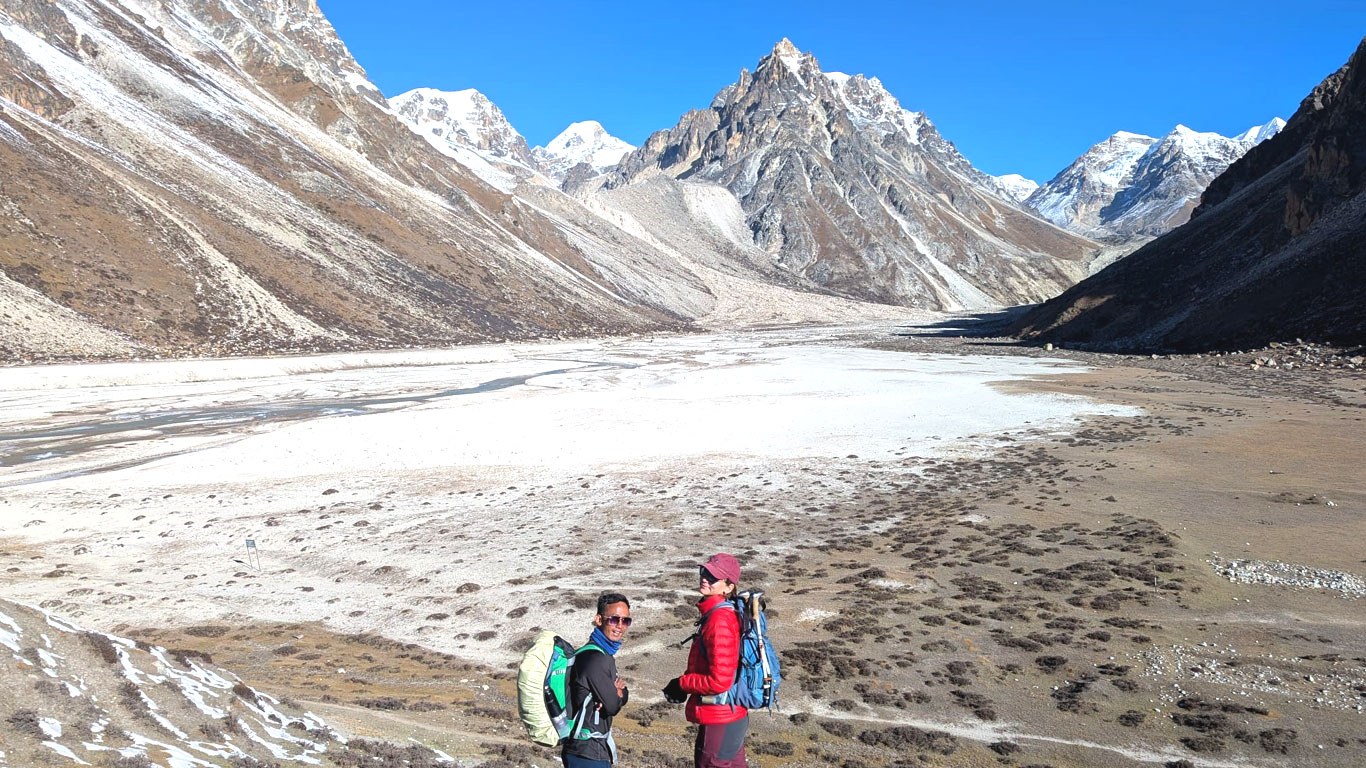
This Kanchenjunga Base Camp trek is one of the special remarkable trekking that takes you to the Kanchenjunga valleys and its beautiful landscape to experience the amazing culture, traditions of the local inhabitants, and magnificent views of the Himalayas.
Kanchenjunga trek is an unforgettable holiday experience of remote and long walking hours 6-8 each day. Very few tourists visit this trekking area. Kanchenjunga is less crowded in comparison to the Everest region and Annapurna region.
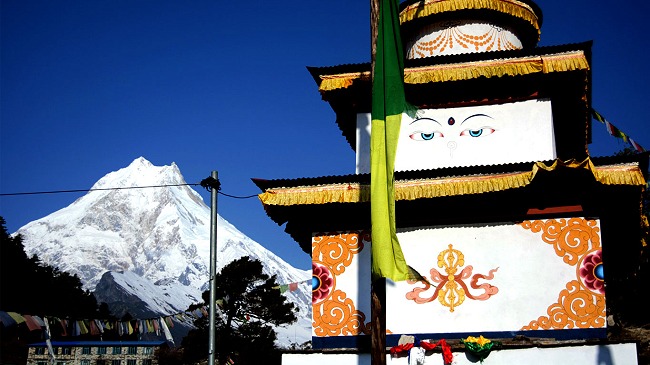
The base camp trek to Kanchenjunga gives an opportunity for a local homestay, and to experience the culture and traditions of the Sherpa, Rai, and Limbus communities in a diverse landscape.
In the Kanchenjunga area, you can observe wildlife such as Himalayan black bear, musk, leopard, and red pandas and many different birds can be found here, shy dragon, Amphibian, Mammals, Re- Billed blue Magpie, and pheasant.
Trekking to the Kanchenjunga base camp takes you to first reach the North Base camp and then visit the south base camp. You will enjoy the beautiful mountain snow-capped and the stunning views of Mount Kanchenjunga 8,586m and observe the many mountains around the Himalayas such as Mount Everest 8,848m, Lhotse 8,816m, Mount Makalu 8,201m, etc.
Kanchenjunga trekking is getting popular day by day. The government of Nepal is promoting Kanchenjunga Base Camp Trek as a lodge trekking route. However, the trekking route is still under development.
The Kanchenjunga Base Camp Circuit Trek is one of Nepal’s most remote and culturally preserved trekking routes. Unlike the busier trails of Everest Base Camp or Annapurna Base Camp, Kanchenjunga offers a deep, wilderness experience with fewer travelers, untouched forests, dramatic landscapes, and authentic Limbu and Rai villages. The trek takes you to both Kanchenjunga North Base Camp (Pangpema – 5,143m) and South Base Camp (Yalung – 4,500m), making it one of the most rewarding circuit treks in Nepal. Because this region is a restricted conservation area, it remains naturally pure, quiet, and culturally rich. For trekkers who want real adventure, breathtaking mountains, and a peaceful environment, the Kanchenjunga Base Camp Trek stands as one of the best Himalayan journeys.
Why it’s unique:
• Far less crowded
• Raw Himalayan beauty
• Dual base camps
• High passes (Mirgin La & Sele La)
• Pure ethnic culture
• Excellent for adventure trekkers
The official Kanchenjunga Circuit Trek Itinerary followed by Peace Nepal Treks begins with a short flight from Kathmandu to Bhadrapur, followed by a scenic drive to Taplejung, the starting point of the trek. From here, the trail heads toward the north side of Kanchenjunga, reaching Pangpema Base Camp. Afterwards, trekkers cross the two high passes—Mirgin La (4,440m) and Sele La (4,290m)—to reach the southern part of the mountain, ending at Yalung Base Camp.
The trek concludes by walking back to Taplejung and returning to Kathmandu via the same Bhadrapur flight route. The full itinerary normally takes 19 days, including acclimatization and travel days. This itinerary is designed for trekkers who have good fitness, past trekking experience, and the ability to trek 6–7 hours daily.
Kanchenjunga is a restricted trekking region because of its sensitive ecology and proximity to the international border. The area is protected under the Kanchenjunga Conservation Area Project (KCAP), covering more than 2,035 sq. km. To preserve the environment and maintain safety, the Nepal government requires trekkers to join a registered trekking company and travel with a licensed guide.
Compulsory permits include:
• Restricted Area Permit (RAP) – minimum 2 people
• Kanchenjunga Conservation Area Entry Permit (KCAP)
Important:
Solo trekking is not allowed.
Peace Nepal Treks handles all permit paperwork and logistics for you.
The best season for Kanchenjunga trekking is:
Spring (April–June)
• Mild temperatures
• Blooming rhododendron forests
• Clear mountain panoramas
Autumn (October–mid-December)
• Stable weather
• Blue skies and long-distance visibility
• Cool and comfortable trekking days
Seasons to Avoid:
• Monsoon (July–mid-September): heavy rain, landslides, leeches
• Winter (mid-December–March): extreme cold, snow-covered passes
Because Kanchenjunga receives fewer trekkers even in peak season, it remains a quiet, peaceful, and off-the-beaten-path adventure.
The Kanchenjunga region has simple, traditional teahouses, not modern lodges. Accommodation generally includes:
• Basic wooden rooms
• Shared toilets outside the room
• Limited electricity (sometimes solar)
• No Wi-Fi in many villages
• Limited charging facilities
• Basic blankets (sleeping bag recommended)
The meal options are simple Nepali-style foods:
• Dal Bhat (lentil soup, rice, vegetables)
• Thukpa
• Fried noodles
• Tibetan bread
• Potatoes
• Soup and tea
Peace Nepal Treks provides accommodation, guide, porter, permits, and transportation, while meals are purchased by trekkers according to preference, making budgeting flexible.
The Kanchenjunga Circuit Trek is considered a challenging and strenuous adventure trek. Its difficulty comes from:
• Long walking hours (6–7 hours per day)
• Altitudes above 5,000 meters
• Remote trails
• Basic accommodation
• High passes exposed to wind and cold
• Unpredictable weather
However, the rewards are exceptional—both base camps, glaciers, deep valleys, high passes, and breathtaking Himalayan scenery.
Recommended for:
• Fit trekkers
• Previous Himalayan trekkers
• Adventurers seeking remote routes
With an experienced team from Peace Nepal Treks, the trek becomes safe, enjoyable, and well-managed.
You can expect:
✔ Real wilderness – untouched forests, waterfalls, and wild terrain
✔ Rich culture – Limbu, Rai, Sherpa, and Tibetan-influenced villages
✔ Two major base camps – both North & South Kanchenjunga
✔ High passes – gorgeous views from Mirgin La & Sele La
✔ Peaceful atmosphere – very few trekkers
✔ Warm hospitality – local families and tea houses
The Kanchenjunga Base Camp Trek offers a rare Himalayan journey that feels authentic, adventurous, and deeply rewarding.
Proper preparation is essential. You should start training at least 4–6 weeks before the trek.
Recommended training:
• Long-distance walking (10–15 km per day)
• Stair climbing
• Light jogging
• Cycling
• Leg strengthening exercises
• Breathing practice
Mental preparation:
• Expect basic lodges
• Be ready for cold weather
• Accept remote conditions
• Enjoy adventure over comfort
Peace Nepal Treks will guide you through equipment selection, training suggestions, and preparation tips before your arrival.
Booking is simple and secure:
1. Contact Peace Nepal Treks with your desired dates
2. Share your passport copy for permit processing
3. Receive a detailed itinerary and cost breakdown
4. Confirm your booking with a small deposit
5. Arrive in Kathmandu, meet the team, and start the journey
Peace Nepal Treks arranges everything:
✔ Permits
✔ Flights
✔ Accommodation
✔ Guide & porter
✔ Route planning
✔ Trek briefing
You simply enjoy the experience.
Unfortunately, solo trekkers cannot get permits for the Kanchenjunga region. The government requires:
• Minimum two trekkers in a group
• A licensed guide
• Registration through a legal trekking company
Peace Nepal Treks can help match solo travelers with another group for permit purposes.
Travel insurance is mandatory for this trek.
Must include:
• High-altitude trekking (up to 6,000m)
• Helicopter evacuation
• Medical treatment
• Accidents or injuries
• Trip cancellation or delay
Peace Nepal Treks also provides local insurance for guides and porters as required by Nepal’s trekking regulations.
Altitude sickness is a common risk above 3,000m. Prevention is more important than treatment.
Prevention Tips:
• Walk slowly, don’t rush
• Drink 3–4 liters of water daily
• Avoid alcohol, especially at altitude
• Take acclimatization days seriously
• Eat warm, nutritious meals
• Inform your guide about any symptoms
Medication:
• Diamox helps prevent AMS
• Guides carry a first aid kit
• Emergency evacuation arranged if required
Peace Nepal Treks designs the itinerary to ensure proper acclimatization.
A proper gear list is essential due to cold temperatures and long days of walking.
Clothing
• Down jacket
• Fleece layers
• Thermal wear
• Waterproof jacket and pants
Accessories
• Warm hat and gloves
• Sunglasses
• Buff or scarf
Footwear
• Quality trekking boots
• Comfortable trekking socks
Other essentials
• Sleeping bag (-15°C to -20°C)
• Trekking poles
• Headlamp
• Water purification tablets
• First aid kit
• Power bank
• Personal medicines
Peace Nepal Treks will provide a full equipment checklist before your trek.
The trek is safe when managed by a professional company like Peace Nepal Treks.
Safety Measures:
✔ Experienced guide
✔ Proper acclimatization
✔ Insured porter and guide
✔ Reliable weather updates
✔ Emergency evacuation support
✔ Updated trail information
✔ Government-registered operation
Your safety is always the top priority.
Peace Nepal Treks is a trusted Nepali trekking company with years of experience in the Kanchenjunga region. The company has highly experienced guides, excellent logistics planning, and strong attention to safety and client care.
Why Peace Nepal Treks?
• Personalized itineraries
• Safe & responsible trekking
• Friendly guides & porters
• Transparent pricing (no hidden fees)
• Full permit assistance
• Local knowledge & cultural insight
• Strong client reviews
With Peace Nepal Treks, you enjoy a well-organized, stress-free, and memorable Kanchenjunga adventure.
Arrive at Tribhuvan International Airport, where our representative will greet you and transfer you to your hotel. Take time to rest or explore Thamel, Kathmandu’s bustling tourist district. Evening briefing about the trek.
Enjoy a scenic morning flight to Bhadrapur in eastern Nepal with spectacular views of the Himalayan range. From Bhadrapur, drive 5–6 hours to Ilam, a serene hill town known for its tea gardens and lush landscapes.
Continue with a long yet beautiful drive through terraced fields, hills, and winding roads. Pass Taplejung (1,820 m), the district headquarters, before reaching Chiruwa, the trek’s starting point. Overnight in a tea house.
Walk along the Tamor River, cross suspension bridges, and pass through cardamom plantations and local villages. Reach Sekathum, located at the confluence of the Ghunsa and Simbuwa rivers.
Distance: 12 km / Time: ~6 hrs
Follow steep trails through dense bamboo and rhododendron forests, with occasional glimpses of distant peaks. Amjilosa, a Tibetan-influenced village, offers a peaceful stay.
Distance: 14 km / Time: ~7 hrs
Trek through oak, pine, and rhododendron forests with small clearings and mountain streams. Arrive at Gyabla, a small Sherpa settlement surrounded by forested hills.
Distance: 10 km / Time: ~6–7 hrs
The trail gradually ascends through alpine meadows and forests before entering Ghunsa, a charming Sherpa village with prayer flags, mani walls, and monasteries.
Distance: 15 km / Time: ~6 hrs
Spend the day resting and exploring Ghunsa. Short hikes to nearby ridges help with acclimatization, and you can visit the local monastery to learn about Sherpa culture and traditions.
The trail climbs gently along river valleys with spectacular views of Mount Jannu (7,710 m). Kambachen is a small settlement in a dramatic alpine setting.
Distance: 8 km / Time: ~4 hrs
Walk through rocky terrain and sparse vegetation, entering a high-altitude landscape with striking glacier views. Overnight at Lhonak.
Distance: 10 km / Time: ~4 hrs
A tough yet rewarding hike to Pangpema, the Kanchenjunga North Base Camp. Witness breathtaking views of Kanchenjunga, surrounding peaks, and glaciers. Return to Lhonak for overnight stay.
Distance: 18 km / Time: ~8 hrs
Retrace the trail back to Ghunsa. The return offers a different perspective of the mountains and valleys.
Distance: 18 km / Time: ~8 hrs
Take a well-deserved rest day after the high-altitude climb to the North Base Camp. Enjoy short walks around the village, visit the local Ghunsa Monastery, or hike up a nearby ridge for panoramic views. This day also helps with recovery and preparing for the next stage of the trek toward Sele Le.
Climb through forests of rhododendron and juniper to reach Sele Le, a ridge offering panoramic views of surrounding peaks.
Distance: 16 km / Time: ~5 hrs
Cross the high Sinion La (4,440 m) and descend to Cheram. Enjoy dramatic views of Makalu, Baruntse, and Kanchenjunga during the trek.
Distance: 14 km / Time: ~7 hrs
Hike to Yalung Glacier and South Base Camp for another breathtaking view of Kanchenjunga from a different side. Return to Ramche for overnight stay.
Distance: 14 km / Time: ~7 hrs
Descend through forests, alpine meadows, and yak herder settlements. The trail is scenic and quiet.
Today marks the final trekking day. Descend from Torongding through forests and small villages, following the trail down to Ranipul. Here, your trek officially ends. From Ranipul, take a scenic drive through the tea-covered hills of eastern Nepal to reach Ilam, where you can enjoy a peaceful evening in a tea house.
Distance: ~12 km / 4 hrs trek + ~150 km / 5–6 hrs drive
In the morning, drive from Ilam to Bhadrapur, passing through rolling hills and vibrant local markets. From Bhadrapur, take a flight back to Kathmandu. Upon arrival, transfer to your hotel in Thamel and enjoy a relaxing evening.
Distance: ~60 km / 2 hrs drive + 45-min flight
Medical support: emergency first aid kit carried by the support staff
Water: we serve with boil water drink along the trek either you can make tea or coffee for a day trip. It should be better to bring a good quality water bottle for the trek.
Food on tea house trek: During tea house treks our guests pay for their own food (breakfast/lunch/dinner) at the lodge. It can be about USD $30-40 each day per person. You can choose your own meal as a menu for every tea house.
The Kanchenjunga Base Camp Trek is a remote and spectacular journey to the foot of Mt. Kanchenjunga (8,586m), the world’s third-highest mountain. The region is famous for its untouched wilderness, rich Limbu–Rai culture, deep valleys, high alpine passes, and dramatic glaciers. Unlike Everest or Annapurna, Kanchenjunga Trek Nepal remains peaceful with fewer trekkers, making it a perfect destination for travelers seeking true Himalayan solitude.
With Peace Nepal Treks, trekkers enjoy professional guidance, safe logistics, detailed Kanchenjunga trek itinerary, and a genuine off-the-beaten-path Himalayan experience.
The Kanchenjunga Base Camp Trek difficulty level is rated challenging because of long walking days, high altitudes, cold temperature, and remote terrain. While no technical climbing is required, trekkers should have good physical fitness, some previous trekking experience, and the ability to walk 6–8 hours per day.
Beginners can complete it if they prepare well and follow a well-designed Kanchenjunga base camp trek itinerary provided by Peace Nepal Treks.
Yes — in many ways, Kanchenjunga is harder than Everest Base Camp. This is because Kanchenjunga is far more remote, has fewer teahouses, longer distances between settlements, and requires more endurance. Everest has more infrastructure, but Kanchenjunga retains its pure wilderness environment.
Trekkers seeking adventure, solitude, and raw Himalayan landscapes often choose Kanchenjunga over Everest.
The standard Kanchenjunga Base Camp Trek takes 20–26 days, depending on acclimatization and whether trekkers visit both North Base Camp (Pangpema) and South Base Camp (Oktang).
Peace Nepal Treks commonly offers:
Kanchenjunga Circuit Trek – 24 to 26 days
Kanchenjunga North Base Camp Trek – 18 to 20 days
Kanchenjunga South Base Camp Trek – 16 to 19 days
The complete Kanchenjunga Circuit Trek distance is approximately:
✅ 200–220 km (round trip)
Visiting only one base camp reduces the distance, but most trekkers prefer the full circuit for a complete wilderness experience.
The Kanchenjunga Base Camp Trek cost generally ranges from USD 1,900 to USD 2,900 per person, depending on group size, duration, and custom services.
Cost includes:
Kanchenjunga trek map, logistics, and full support
Because Kanchenjunga is remote, it requires more staff, special permits, and longer itineraries compared to other treks.
Trekkers need:
Restricted Area Permit (RAP)
Kanchenjunga Conservation Area Permit (KCAP)
A registered guide is mandatory
Peace Nepal Treks arranges all documentation, including passport registration at entry checkpoints.
No, trekking solo is not allowed. The Kanchenjunga region is a restricted area, and all trekkers must hire a licensed Kanchenjunga trek guide from an authorized company like Peace Nepal Treks.
A guide ensures:
Navigation through remote trails
Safety on landslide areas
Communication with local communities
Assistance in emergencies
The Kanchenjunga Base Camp Trek best time is:
Spring (March–May)
Clear skies
Flowering rhododendrons
Warm trekking temperatures
Autumn (September–November)
Stable weather
Best mountain visibility
Ideal for photography
Winter is extremely cold; monsoon brings landslides, so trekking during these months is not recommended.
A typical Kanchenjunga trek itinerary includes:
Flight/drive to Taplejung
Trek through villages like Chiruwa, Sekathum, Ghunsa, and Lhonak
Hike to Pangpema (North Base Camp)
Cross high passes toward South Base Camp
Return to Taplejung
Peace Nepal Treks can customize the itinerary based on fitness, time, and interest.
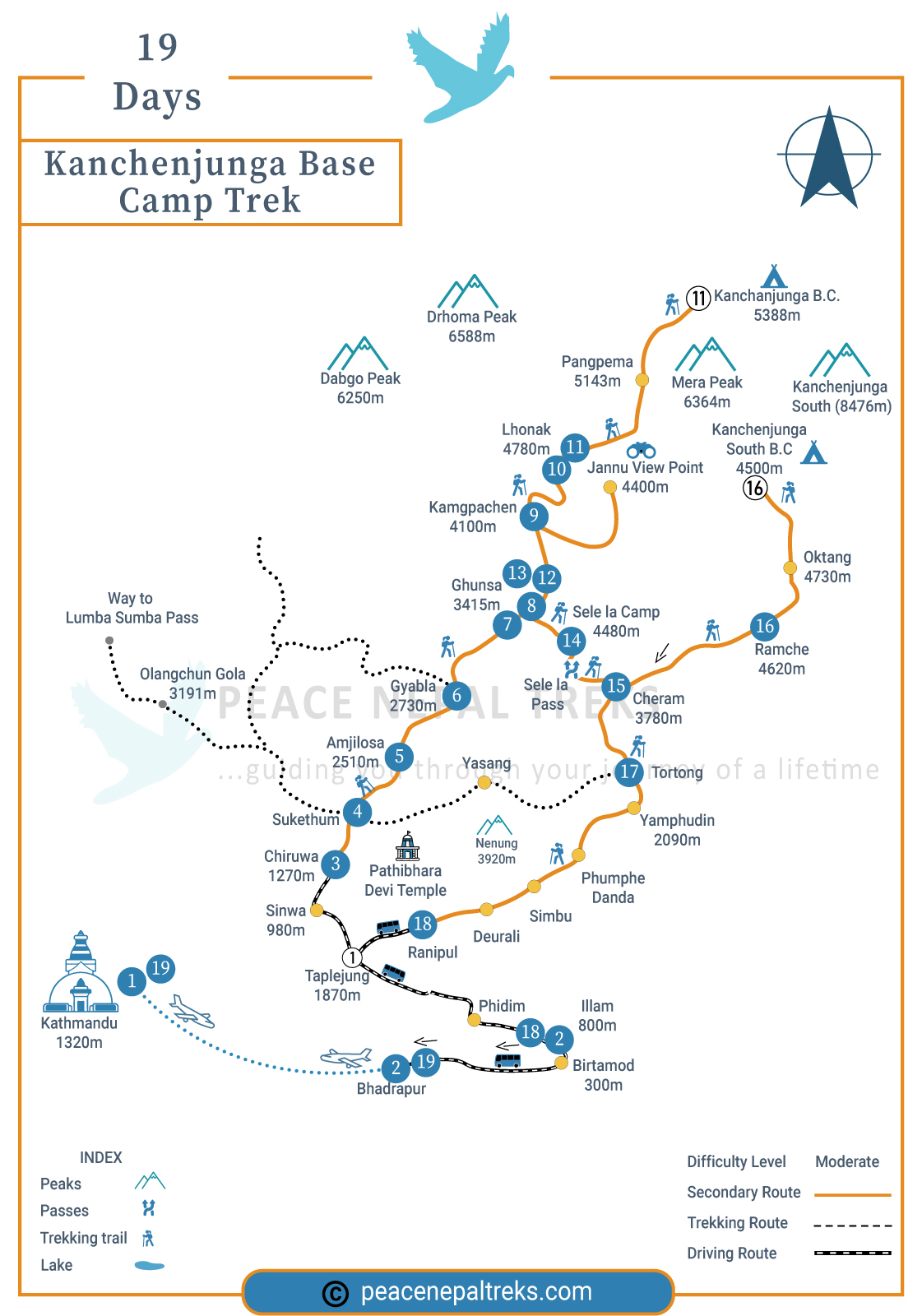
Yes, Peace Nepal Treks provides a detailed, updated Kanchenjunga base camp trek map showing:
North & South Base Camp routes
Camping and tea-house locations
Passes, rivers, and conservation areas
The map is included in your trip briefing and booking package.
Booking is simple:
Choose your itinerary (North, South, or full circuit).
Share your passport copies for permits.
Pay a small advance deposit.
Receive confirmation, trek map, and preparation guide.
Peace Nepal Treks also helps with gear rental, hotel bookings, airport transfers, and domestic flights.
Accommodation is basic but comfortable tea houses. Rooms usually include:
Wooden beds and mattresses
Shared dining areas
Limited electricity
Traditional Nepali meals
Because Kanchenjunga is remote, luxury facilities like Everest are not available.
Yes. Kanchenjunga is peaceful, safe, and operated by experienced guides.
Peace Nepal Treks ensures:
Daily health checks
Safe acclimatization
Emergency communication
Evacuation arrangements if needed
The region is remote, but extremely safe with proper preparation.
Yes, experienced trekkers often combine:
Kanchenjunga + Makalu Base Camp
Kanchenjunga + Lumba Sumba Pass
These are long wilderness routes and require special camping logistics organized by Peace Nepal Treks.
Yes! The region is part of a conservation area home to:
Red Pandas
Himalayan Black Bears
Blue Sheep
Snow Leopards (rare sightings)
Many bird species
Kanchenjunga is one of Nepal’s wildest protected zones.
Meals include:
Dal Bhat
Fried rice, noodles, pasta
Potatoes, vegetables, eggs
Tea and limited bakery items
Because of remoteness, menu choices are simpler than Everest or Annapurna.
Essential gear includes:
Down jacket & sleeping bag
Thermal layers
Trekking boots
Crampons (if early spring)
Gloves, hats, sunglasses
Power banks & headlamps
Peace Nepal Treks provides an equipment checklist and assists with rentals.
North Base Camp (Pangpema): 5,143m
South Base Camp (Oktang): 4,620m
Acclimatization is essential to avoid AMS.
Reviews range from excellent to outstanding, often describing the trek as:
“The best wilderness trek in Nepal”
“A pure Himalayan experience far from crowds”
“A life-changing adventure”
Peace Nepal Treks receives consistent praise for expert guides, well-planned itineraries, and community connections.
Yes. Peace Nepal Treks shares:
Trek photos
Base camp images
Kanchenjunga glaciers views
Local village photos
These help trekkers visualize the journey before booking.
The Kanchenjunga Circuit Trek is unique because:
You visit both base camps
Trails are remote with minimal commercialization
The landscape shifts from tropical valleys to high glaciers
Rich Limbu culture and cardamom farmlands
It offers a mix of wilderness and cultural immersion unmatched in Nepal.
Trekkers should be able to walk:
6–8 hours per day
Carry light daypacks
Handle high altitude
Training 6–8 weeks before trekking is recommended.
Transportation includes:
Flight or drive from Kathmandu to Bhadrapur
Jeep to Taplejung
Trekking on foot
Peace Nepal Treks arranges all travel logistics.
Yes, trekkers must have insurance covering:
High-altitude rescue
Medical emergencies
Helicopter evacuation
Peace Nepal Treks helps trekkers choose correct insurance policies.
Kanchenjunga is one of Nepal’s least developed trekking regions.
No big towns, very few lodges, and long distances between stops make it a pure expedition-style trek.
Key map highlights include:
Taplejung
Ghunsa
Lhonak
Pangpema (North BC)
Oktang (South BC)
Sele La & Sinion La passes
The Kanchenjunga trek map is detailed and included in all Peace Nepal Treks packages.
Private trek: Higher cost but fully customizable
Group trek: More economical
Peace Nepal Treks offers competitive Kanchenjunga trek price options for both styles.
Weather depends on the season:
Spring: Mild, colorful forests
Autumn: Clear skies, best visibility
Winter: Very cold, heavy snow
Monsoon: Wet, slippery, and risky
Autumn offers the best views of Kanchenjunga’s giant glaciers.
Peace Nepal Treks offers:
Experienced Kanchenjunga trek guides
Deep knowledge of local culture & trails
Professionally customized itineraries
Safety-first operations
Responsible tourism & porter welfare
Their long-standing reputation and personalized care make the journey safe, enjoyable, and unforgettable.
The best time to trek the Kanchenjunga Base Camp is during Spring (March–May) and Autumn (September–November). These two seasons provide the most stable weather, safest trekking conditions, and clearest views of the world’s third-highest peak, Mount Kanchenjunga (8,586m).
During Spring, trekkers enjoy warm daytime temperatures, blooming rhododendron forests, long daylight hours, and excellent visibility for both the Kanchenjunga North Base Camp and South Base Camp trails. This is also the preferred season for photographers and nature lovers, as the entire Kanchenjunga Conservation Area becomes alive with colorful flora and wildlife.
Autumn is equally ideal. The monsoon rains wash away dust and haze, resulting in crystal-clear skies and exceptional Himalayan panoramas. Temperatures are cool, dry, and stable, making it the peak season for the Kanchenjunga Circuit Trek.
Winter (December–February) brings heavy snowfall, freezing temperatures, and closed high passes. Monsoon (June–August) creates slippery trails, landslide risk, and poor visibility — making them unsuitable for this remote wilderness trek.
Weather in the Kanchenjunga Base Camp Trek region varies significantly with altitude and season because the trail covers dense forests, high alpine zones, and glacial valleys.
Spring Weather (March–May)
Mild mornings and evenings (5°C to 10°C)
Warm days at lower altitudes (15°C to 20°C)
Clear skies with stable conditions
Occasional afternoon clouds or light rain
Autumn Weather (September–November)
Crisp, dry air and cool temperatures
Clear mountain views with minimal precipitation
Daytime: 10°C–18°C
Nighttime at base camp: –5°C to –10°C
Winter Weather (Dec–Feb)
Very cold, often –15°C or below at high altitudes
Heavy snowfall
High passes often blocked
Not recommended except for highly experienced expedition trekkers.
Monsoon Weather (Jun–Aug)
Frequent rain
Slippery terrain & leeches in lower forest areas
Cloudy skies and poor visibility
Because the Kanchenjunga region is one of Nepal’s most remote Himalayan zones, it is essential to prepare for rapidly changing weather by carrying proper gear, warm clothing, and rain protection. Peace Nepal Treks provides a detailed weather guideline before the trek to help trekkers pack correctly.
Yes. Altitude sickness (Acute Mountain Sickness – AMS) is an important concern because the trek reaches elevations above 5,100 meters at North Base Camp (Pangpema) and above 4,600 meters at South Base Camp (Oktang). The long trekking days and steep elevation gains increase the risk of AMS if acclimatization is not managed properly.
Peace Nepal Treks builds a slow, safe Kanchenjunga base camp trek itinerary with gradual ascent, rest days in villages like Ghunsa and Lhonak, and careful monitoring of trekkers’ health.
Common altitude symptoms include:
Headache
Nausea
Dizziness or fatigue
Loss of appetite
Sleep disturbances
To prevent altitude sickness, trekkers must:
Walk slowly (“low and slow” principle)
Drink 3–4 liters of water daily
Follow acclimatization days strictly
Sleep at lower elevation after high day-hikes
Avoid alcohol
Guides from Peace Nepal Treks are trained in recognizing early AMS symptoms and making safe decisions to ensure trekkers’ health and safety. If symptoms worsen, trekkers are escorted to lower altitudes immediately.
Because the Kanchenjunga Base Camp Trek is one of Nepal’s most remote Himalayan journeys, Peace Nepal Treks follows strict emergency and safety protocols. All guides are certified in:
First Aid
High Altitude Safety
Wilderness Rescue Procedures
Communication and evacuation coordination
Emergency Handling System Includes:
✔ Daily health monitoring – oxygen level checks, symptom tracking, and condition assessments
✔ Immediate descent if AMS symptoms appear
✔ Continuous communication – guides carry satellite phones or mobile devices depending on region coverage
✔ Helicopter evacuation – Peace Nepal Treks coordinates rescue operations for insured trekkers
✔ Local networking – guides maintain contact with village authorities, lodges, and checkpoints
✔ Full support team – porters and staff assist in emergency evacuation or rapid descent
Because Kanchenjunga is a restricted and wilderness region, emergency planning is a top priority. Peace Nepal Treks ensures that every trekker is registered, tracked, and supported at all times with a well-prepared contingency plan.
The Kanchenjunga Trek is very safe when trekked with an experienced and licensed company like Peace Nepal Treks. Although remote, the region is peaceful, culturally rich, and free from major risks when proper precautions are taken. The main safety considerations include altitude, weather conditions, and trail remoteness — all of which are monitored closely by professional guides.
Acclimatization-focused itinerary
Daily weather updates
Kanchenjunga is considered Nepal’s ultimate wilderness trekking experience, but with the right team, it is completely safe and incredibly rewarding.
Yes, but very limited compared to Everest or Annapurna. The Kanchenjunga region is remote, and connectivity varies depending on location and weather conditions.
Mobile Network Availability:
Higher areas such as Ghunsa, Lhonak, and Pangpema often have weak or no network
Wi-Fi Availability:
What Peace Nepal Treks Provides:
Trekkers should prepare for a digital detox during the trek and enjoy the peaceful surroundings of the Kanchenjunga wilderness.
Yes. Insurance must cover high-altitude trekking and helicopter rescue.
Kanchenjunga Base Camp Trek is one of Nepal’s most remote and spectacular Himalayan journeys, and choosing the right season makes the experience even more rewarding. Each season offers something different—crystal-clear mountains, wildflowers, peaceful trails, or deep cultural experiences. Below is a detailed guide to help trekkers understand why and when to visit the Kanchenjunga region.
Autumn is widely considered the most perfect time to trek in Kanchenjunga. After the monsoon rains, the air becomes crisp, visibility is excellent, and the weather is stable.
Clear skies and excellent mountain visibility of Kanchenjunga, Jannu, Kabru, and surrounding ranges.
Comfortable walking temperatures—warm days and cool nights.
Stable weather with very low chances of snowstorms.
Great for photography—golden landscapes and sharp mountain views.
Cultural experiences, as many Nepali festivals (Dashain, Tihar, Chhat) fall during autumn.
➡️ Most recommended season for first-time visitors and photographers.
Spring brings warmer temperatures and colorful landscapes. The trails come alive with blooming rhododendron forests, making the Kanchenjunga region exceptionally beautiful.
Rhododendron and wildflower blooms turn the forest into a natural garden.
Warmer temperatures compared to autumn.
Clear mornings and mild afternoons—comfortable trekking conditions.
Great bird-watching and wildlife scenery in the lower valleys.
Longer daylight hours for trekking.
➡️ Perfect for nature lovers, botanists, and trekkers who prefer warmer weather.
Winter offers peace, solitude, and crystal-clear skies, but the high passes and base camp areas can be extremely cold and sometimes blocked by snow.
No crowds—almost private trekking experience.
Stunningly clear views with sharp blue winter skies.
Lower lodge occupancy, peaceful trails, and quiet villages.
Very cold temperatures, especially above 4,000 meters.
Some high sections like Pangpema (North BC) may get heavy snow.
➡️ Suitable for experienced trekkers who love solitude and can handle cold conditions.
Monsoon season brings rain, clouds, leeches in lower regions, and slippery trails, but some trekkers still choose this time for a unique experience.
Lush green valleys, waterfalls, and dramatic landscapes.
Very quiet trails, almost no other trekkers.
Beautiful cloud formations and dramatic skies.
Good for those who enjoy raw, remote, off-season adventures.
Heavy rain, slippery trails, landslides, and poor visibility.
Lower lodges may have limited services.
➡️ Recommended only for highly experienced trekkers or researchers.
Autumn (Sep–Nov) – Best weather, best visibility, best trail conditions.
Spring (Mar–May) – Beautiful flowers, warmer temperatures, clear skies.
Good for solitude but very cold; suitable for experienced trekkers only.
Off-season; only for adventurous or research-focused trekkers.
Choosing the right personal gear is one of the most important steps for a safe and enjoyable trekking experience in Nepal. Below is a category-wise equipment list, written in a clear and easy style so every guest can understand what they really need.
These items help you stay warm, dry, and comfortable in the mountains.
Base Layers (thermal tops & bottoms)
Light trekking shirts (quick-dry)
Fleece jacket or mid-layer
Down jacket (warm, lightweight)
Waterproof/windproof jacket (Gore-Tex or similar)
Trekking trousers (lightweight & quick-dry)
Warm trekking pants for higher altitudes
Hat/woolen cap
Sun hat/cap
Buff or neck gaiter
Strong footwear protects your feet on long and uneven trails.
Sturdy trekking boots (ankle-support, waterproof)
Comfortable sneakers/sandals (for lodge evenings)
Multiple pairs of trekking socks (warm & breathable)
Gaiters (for snow or muddy trails)
Micro-spikes (high passes in winter/spring)
Pack smart and keep your gear safe.
30–40L daypack (easy access for daily essentials)
Rain cover for daypack
Duffel bag (provided by Peace Nepal Treks if required)
Packing cubes or dry bags
Important for warmth and hygiene.
Sleeping bag (–10°C to –20°C depending on trek)
Sleeping bag liner (cotton or silk)
Travel pillow (optional but comfortable)
These items make your trekking smoother and more efficient.
Trekking poles (highly recommended)
Sunglasses (UV protection)
Headlamp with extra batteries
Water bottles (1L) or hydration bladder
Water purification tablets/drops
Lightweight towel
Keep yourself fresh and comfortable.
Toothbrush & toothpaste
Wet wipes
Hand sanitizer
Lip balm (with SPF)
Sunscreen (SPF 40+)
Body lotion/face cream
Soap or biodegradable travel wash
Small comb
Basic items for safety and health.
Personal medications (as prescribed)
Pain relievers (Paracetamol, Ibuprofen)
Diamox (for high altitude – optional)
Band-aids & blister care
Antiseptic cream
Rehydration salts
Motion sickness tablets
For power and communication during the trek.
Mobile phone & charger
Power bank (10,000–20,000 mAh)
Camera & batteries
Travel adapter (multi-plug)
Keep these safe and easily accessible.
Passport (valid 6+ months)
Passport photos (for permits)
Travel insurance documents
Cash (Nepali Rupees for meals & hot showers)
Copies of important documents
Not necessary, but very helpful for many trekkers.
Energy bars / snacks
Hot pack/hand warmers
Journal & pen
Playing cards
Lightweight book/Kindle
Pack light but smart.
Avoid cotton for trekking days (slow to dry).
Waterproof bags and jackets are essential in all seasons.
Peace Nepal Treks can help arrange down jackets, sleeping bags, duffel bags, and poles upon request.

Would you like to experience the Kanchenjunga Base Camp Trek with your own group of friends or family? Great news! This amazing adventure is also available as a Private Adventure, tailored just for you.
Our Private Adventure specialists are ready to provide you with a personalized quote or discuss different options to suit your preferences.
Let us help you create a private and unforgettable trekking experience!
Enjoy the popular trekking and tour packages in Nepal Himalayas. 2025.
© 2011 - 2025 All rights reserved. Peace Nepal Treks.