The Langtang Triangle Trek is one of the most rewarding trekking adventures in Nepal, offering a perfect balance of mountain scenery, cultural immersion, and spiritual experiences. This trek combines three beautiful regions—Langtang Valley, Gosainkunda Lakes, and Helambu—creating a full circuit, often called the Langtang Trek Circuit or Langtang Triangle Trek.
Unlike crowded trekking routes such as Everest or Annapurna, the Langtang Trek remains peaceful and authentic. It is located close to Kathmandu, making it one of the most accessible Himalayan treks while still delivering dramatic landscapes, snow-covered peaks, ancient monasteries, and traditional Tamang villages.
This trek is ideal for trekkers who want more than just a short walk but do not want extreme technical climbing. It suits both first-time trekkers and experienced hikers looking for a culturally rich and scenic trekking experience.
One of the biggest advantages of the Langtang Trek is its proximity to Kathmandu. The trek starts with a scenic drive to Syabrubesi, avoiding expensive domestic flights. This makes the Langtang trek cost more affordable and travel planning easier.
Key Benefits
The Langtang region is home to the Tamang community, whose culture, language, and traditions are deeply influenced by Tibetan Buddhism. Along the trail, trekkers pass prayer wheels, mani walls, monasteries, and traditional stone houses.
Cultural Highlights
The Langtang Trek offers stunning views of Himalayan peaks throughout the journey. Trekkers enjoy close-up scenery without climbing extremely high altitudes.
Major Peaks Seen
The Langtang region offers multiple trekking options, allowing trekkers to choose according to their time and fitness.
Popular Options
Langtang Trek Itinerary 5 Days (Short Version)
This option is ideal for trekkers with limited time.
Overview
This is the most balanced version of the Langtang Valley Trek, including acclimatization and side hikes.
Highlights
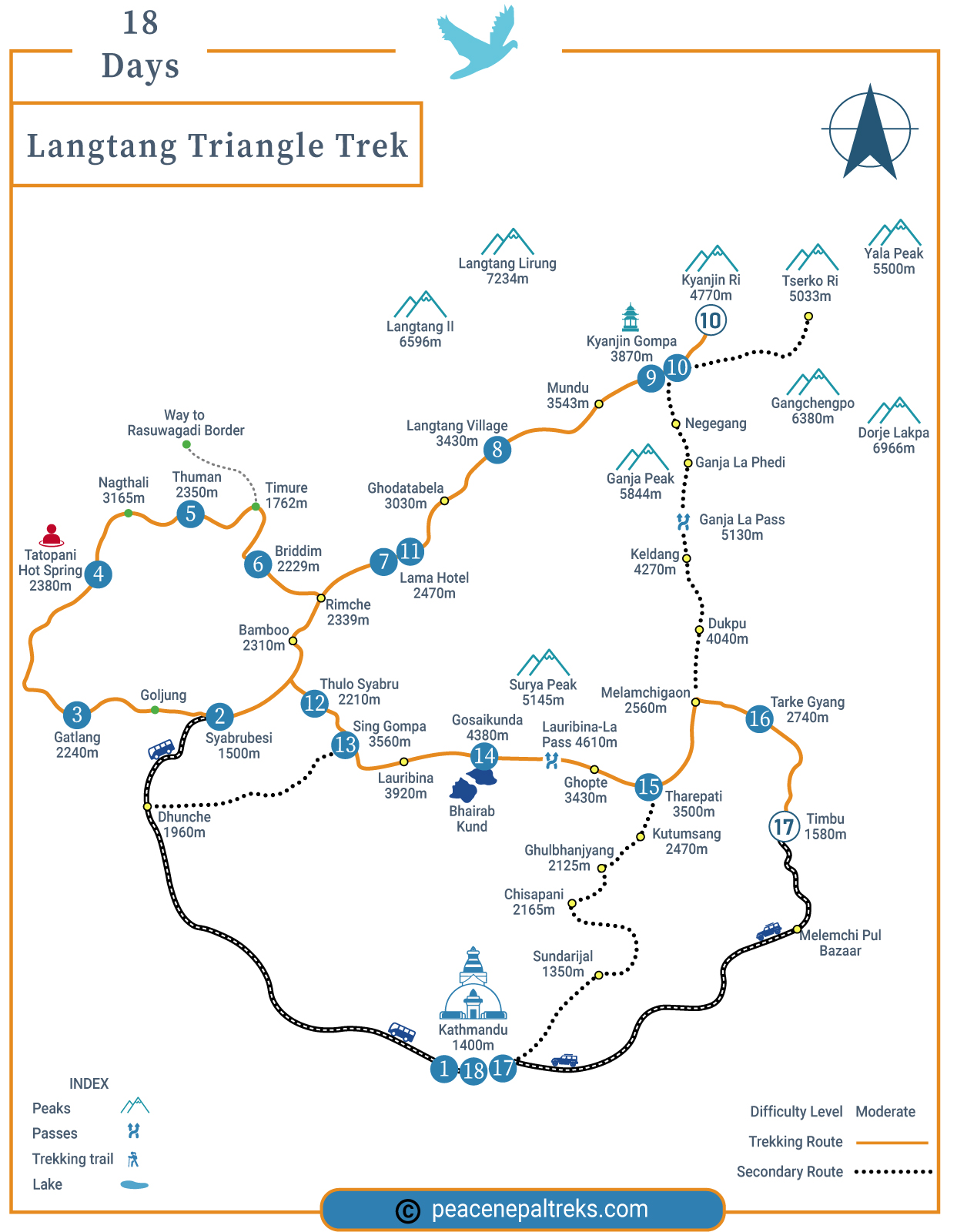
The Langtang Triangle Trek is a complete circuit that combines Langtang Valley + Gosainkunda Lakes + Helambu Region.
Route Sections
Key Experiences
Maximum Altitude
The trek gains altitude gradually, making it safer and more comfortable than many other Himalayan treks.
Accommodation during the Langtang Trek is mainly tea-house lodges, which are simple, warm, and welcoming.
What to Expect
In remote areas like Gosainkunda, accommodation is basic but clean.
Tea houses offer a wide menu, and trekkers can choose meals daily.
Common Meals
Approx. USD 30–40 per person per day
The Langtang trek cost depends on itinerary length, services, and group size.
Average Cost Range
Cost usually includes guide, porter, permits, accommodation, and transport.
These permits help support conservation and ensure trekker safety.
Spring (March–May)
Autumn (September–November)
Avoid
The Langtang Trek altitude is manageable, but proper acclimatization is essential.
Safety Tips
Optional hikes like Kyanjin Ri help with acclimatization.
Langtang National Park is rich in biodiversity.
Peace Nepal Treks ensures a safe, comfortable, and meaningful trekking experience with strong local knowledge.
Our Strengths
The Langtang Triangle Trek is a perfect Himalayan journey that combines natural beauty, culture, spirituality, and adventure. Whether you choose a short Langtang trek itinerary 5 days, a 7-day classic route, or the full Langtang Triangle Trek, this region promises an unforgettable trekking experience.
With fewer crowds, close proximity to Kathmandu, and breathtaking scenery, the Langtang Trek is truly one of Nepal’s best trekking destinations.
After your arrival in Kathmandu, our representatives at the airport will transfer you to your hotel and help you with checking in.
We catch the local bus from Kathmandu to Syabrubesi which is the trek starting place along the Tamang heritage trek and ends the trek same place in Syabrubesi (about 9 hours driving). We can arrange the private Jeep as well upon your services requested paying extra and will be much easier and more comfortable where ever you want to stop. Along with the driving, we can enjoy the views of the Himalayas, Overnight stay in Syabrubesi village.
From Syabrubesi village, our Tamang heritage trekking & walking destination towards the Himalayas starts with the spectacular mountain views of Langtang Lirung/Ganesh Himal and Shisapangma and reached Gatlang village which is one of the villages of Tamang people and stays a night in Gatlang village.
Staying a night in Gatlang village, our next destination is Tatopani which means Nepal HOT WATER. We walk through the Chilime Hydropower dam with the views of Langtang Himalaya ranges, We stay a night in the tea house at Tatopani village.
Today, we can see the magnificent views of Langtang from Nagthali hill and after this continue walking towards the village of Bridang and Thuman, overnight stay in Thuman village.
Our trek continues walking towards Briddim from Thuman which is a Tibetan village also can visit the monastery in this village and stay a night in Briddim.
Today we walk along the Langtang river, continue hiking across waterfalls and finally stop in Rimche before the trail descends to a settlement known as the Lama Hotel.
A three hours hike from Lama Hotel takes us to Ghortabela and another 30 minutes of climbing brings us to a point where the Langtang Valley begins.
From Langtang, it takes us about four hours of gentle ascension to reach Kyangin Gompa passing through the largest mani wall in Nepal which is written on it and made from stone. We walk around the Kanjin Gompa seeing beautiful mountain views and overnight stay in TEA HOUSE.
A day in Kyangin Gompa gives us the opportunity to visit Cherko Ri (4,984m) for about 5 hours walking up and down and can be seen the majestic views of Langtang ranges. Overnight stay in same place Kyangin Gompa TEA HOUSE.
After breakfast in Kyangin Gompa retrace our steps to Lama Hotel downhill walking through the forest and river along the side.
From Lama Hotel, we head towards Syabrugaun and stop in between at Bamboo for lunch.
From Syabrugaun, after crossing rivers and passing through forests where the path is mostly uphill, you will stop for an overnight stay in Sing Gompa.
The trail leading to Gosainkunda is mostly steep and rugged. According to Hindu mythology, the holy lakes of Gosainkunda were created by Lord Shiva’s Trishul (three-pointed weapons) so that he could drink its cold water and quench his thirst.
Today, you will head towards Laurebina pass (4,610m), where the trail passes through a rugged country across three small lakes before finally arriving in Tharepati.
The trek to Targe Gyang from Thare Pati is a gentle climb across a school and a meadow.
The trail today passes through dense forests and crosses a number of streams before a gentle climb to the village of Timbu followed by a drive back to Kathmandu about 4 hours.
Today, you have time till your departure from Kathmandu and can visit the historical city of Kathmandu and tourist places in Thamel.
From your arrival in Nepal until your departure, all transportation is arranged smoothly and reliably.
Overland Transportation During the Trek
Extra Optional Private Transfers (More Comfort & Flexibility):
Private jeeps are ideal for guests who prefer comfort, faster travel, and flexible stops.
We select accommodation carefully to ensure good rest and comfort throughout the journey.
1 night hotel stay in Kathmandu at Hotel Jampa or International Guest House. (Central Thamel location, Clean, comfortable rooms with hot shower and Wi-Fi, Ideal for relaxing before and after the trek)
All trekking paperwork is fully handled by Peace Nepal Treks.
A strong and professional team makes your trek safer and more enjoyable.
Experienced, government-licensed, English-speaking trekking guide (Daily route briefing and altitude awareness, Cultural, natural, and mountain information, Continuous support for safety and comfort)
Porter for every 2 guests (maximum 20 kg shared load) Helps keep your walking light and comfortable
Guide and porter daily wages, meals, accommodation, insurance, and trekking equipment are fully included
This ensures fair treatment of staff and high-quality service for guests.
To make your trek easier and reduce extra costs, we provide essential equipment free of charge.
(All items must be returned after the trek)
Small comforts that make a big difference on the trail.
Your health and safety are always our priority.
Extra services that add value and care for the environment.
Meals in Kathmandu and during the Langtang Triangle Trek are not included in the package cost.
Personal snacks and drinks are not included in the package.
This includes
These items are available to buy along the trekking route. Guests may also bring their favorite snacks from Kathmandu if they wish.
The package includes only the hotel nights mentioned in the itinerary.
We are happy to help arrange extra hotel nights if needed.
Tips for the trekking staff are not included in the trip cost.
Recommended guideline
Any costs related to emergencies are not included.
Travel and medical insurance are mandatory for all guests and must cover:
Any personal expenses during the trek are not included, such as:
Kathmandu sightseeing tours are not included unless clearly mentioned.
Visa fees payable at Kathmandu Airport:
Online Visa Application (Recommended to save time)
Please bring a passport valid for at least 6 months and a passport-size photo.
Personal trekking equipment not listed in the “Cost Includes” section is not included.
Guests are responsible for personal items such as
Any services not clearly stated in the “Cost Includes” section are not included.
The Langtang Triangle Trek is one of the most rewarding trekking routes in Nepal because it combines three major trekking areas into one complete circuit: Langtang Valley, the sacred Gosaikunda Lake, and the Helambu region. Unlike the standard Langtang Valley Trek, this trek forms a triangle shape, meaning trekkers do not repeat the same trail. It offers a perfect mix of mountain scenery, alpine lakes, forests, glaciers, and rich Tamang and Sherpa culture, making it a complete Himalayan experience.
The Langtang Triangle Trek is located north of Kathmandu, very close to the Tibet (China) border, inside Langtang National Park. This region is one of the closest trekking destinations to Kathmandu, which makes it highly attractive for trekkers who want a genuine Himalayan adventure without long flights. Despite its proximity to the capital, the Langtang region feels remote, peaceful, and culturally rich.
The standard Langtang Triangle Trek itinerary takes 14 to 18 days, depending on your walking pace, acclimatization needs, side hikes, and weather conditions. Some trekkers prefer extra days in places like Kyanjin Gompa or Gosaikunda for exploration and rest. Peace Nepal Treks can shorten or extend the itinerary based on your available time, fitness level, and travel goals.
The highest point of the Langtang Triangle Trek is Laurebina Pass (4,610 meters), which is crossed while traveling between Gosaikunda and the Helambu region. Reaching this altitude requires proper acclimatization and a gradual ascent. Although the altitude is challenging, it is manageable with a well-planned itinerary and an experienced guide.
The Langtang Triangle Trek is considered moderate to moderately challenging. The difficulty comes mainly from long walking days, gradual altitude gain, and crossing a high pass. The trails are well-defined, and there is no technical climbing involved. Anyone with good physical fitness, determination, and basic preparation can complete this trek comfortably.
Previous trekking experience is not compulsory, but it is definitely helpful. If you can walk 5–7 hours per day and have done basic hiking or physical exercise before the trip, you are suitable for this trek. Peace Nepal Treks designs the itinerary with sufficient acclimatization, making it suitable even for first-time Himalayan trekkers.
To do the Langtang Triangle Trek, trekkers need two permits:
Langtang National Park Entry Permit
TIMS Card (Trekkers’ Information Management System)
These permits are mandatory and help support conservation and trekking safety. Peace Nepal Treks arranges all permits in Kathmandu, so trekkers do not need to worry about paperwork.
The best seasons for the Langtang Triangle Trek are:
Spring (March to May): Pleasant temperatures, blooming rhododendrons, and clear mountain views.
Autumn (September to November): Stable weather, crisp air, and excellent visibility.
These seasons offer the best combination of weather, trail conditions, and mountain views.
Yes, the Langtang Triangle Trek can be done in winter (December to February), but it requires good preparation. Snowfall around Laurebina Pass and Gosaikunda can make the trek more challenging. Winter trekking is ideal for those who enjoy solitude, fewer crowds, and dramatic snowy landscapes, especially with experienced guides from Peace Nepal Treks.
Accommodation on the Langtang Triangle Trek is mainly teahouse lodges. These lodges offer basic but comfortable rooms with twin beds, blankets, and shared bathrooms. In the Helambu region, trekkers may also experience traditional homestays, providing a deeper cultural experience and local hospitality.
The trek offers a wide variety of freshly cooked meals, including:
Dal Bhat (rice, lentils, vegetables)
Noodles, pasta, fried rice
Tibetan bread, pancakes, eggs
Soups, tea, coffee, and hot drinks
Dal Bhat is especially recommended because it is nutritious, filling, and available everywhere on the trail.
Yes, altitude sickness can be a concern because the trek reaches above 4,600 meters. Symptoms can include headache, nausea, dizziness, and fatigue. Peace Nepal Treks minimizes risks by planning gradual ascents, including acclimatization days, and providing experienced guides trained in altitude awareness and first aid.
Yes, hiring a licensed trekking guide is mandatory under Nepal trekking regulations. A guide ensures safety, helps with communication, manages logistics, and provides cultural and environmental knowledge. Trekking with a guide significantly enhances the overall experience.
Hiring a porter is highly recommended, especially for long treks like the Langtang Triangle Trek. A porter carries your main luggage, allowing you to walk comfortably with a daypack. This also supports local employment and reduces physical strain during high-altitude trekking.
The trek offers spectacular views of major Himalayan peaks such as:
Langtang Lirung
Dorje Lakpa
Ganesh Himal
Himal Chuli
Several Tibetan border peaks
The best viewpoints are from Kyanjin Ri and Tserko Ri.
Yes, the trek is suitable for beginners who are physically fit and mentally prepared. With a slow pace, proper acclimatization, and guidance from Peace Nepal Treks, first-time trekkers can successfully complete this trek and enjoy the experience safely.
The trek starts after a 6–8 hour scenic drive from Kathmandu to Syabrubesi. Since no domestic flights are required, this trek is more affordable and reliable compared to flight-dependent treks like Everest Base Camp.
This trek is special because it offers:
A complete circuit without repeating trails
Sacred Gosaikunda Lake
Rich Tamang and Sherpa culture
Less crowded paths compared to Everest and Annapurna
It is ideal for trekkers seeking authenticity and tranquility.
Yes, Gosaikunda Lake is a major highlight of the Langtang Triangle Trek. It is a sacred alpine lake revered by Hindus and Buddhists and is especially significant during the Janai Purnima festival.
The cost generally ranges from USD 1,200 to 1,800 per person, depending on group size, duration, and services included. The package usually includes guide, porter, accommodation, meals during the trek, permits, and transport.
Yes, travel insurance is mandatory. It must cover high-altitude trekking up to at least 5,000 meters and include emergency helicopter evacuation and medical expenses.
Weather varies by altitude and season. Lower regions are warmer, while higher elevations are colder, especially at night. Snow is possible near Gosaikunda and Laurebina Pass. Layered clothing is essential.
Yes, Peace Nepal Treks offers full customization, including itinerary length, side hikes, rest days, and budget options. Customization helps match individual fitness levels and travel schedules.
Yes, the Langtang region has been fully rebuilt and improved since the earthquake. Trails, lodges, and safety standards are better than before, and trekking helps support local communities.
Peace Nepal Treks offers experienced local guides, fair pricing, strong safety standards, flexible itineraries, and personalized service. Trekking with them ensures a meaningful, safe, and unforgettable Himalayan adventure.
Spring is one of the best and most beautiful seasons to do the Langtang Triangle Trek. After winter, the snow slowly melts, the days become warmer, and the entire Langtang region comes alive with colorful rhododendron forests, fresh greenery, and clear mountain views. The trails are in good condition, and the weather is generally stable, making it ideal for both beginners and experienced trekkers.
During spring, daytime temperatures are pleasant, especially in lower and mid-altitude areas such as Syabrubesi, Lama Hotel, Langtang Village, and Kyanjin Gompa. Nights at higher altitudes are cold but manageable with proper clothing. Crossing Gosaikunda Lake and Laurebina Pass (4,610 m) is usually safe in spring, especially from April onwards, when most snow has cleared.
Why spring is a great time:
Things to consider
Autumn is considered the best and most reliable season for the Langtang Triangle Trek. After the monsoon rains end, the skies become clear, the air is fresh, and the mountains appear sharp and dramatic. This season offers the most stable weather conditions, which is especially important for crossing Laurebina Pass and visiting Gosaikunda Lake.
During autumn, daytime temperatures are ideal for trekking, and the nights are cold but comfortable with warm sleeping gear. Trails are dry, visibility is excellent, and the risk of rain or heavy snow is very low. Autumn also coincides with Nepal’s major festivals like Dashain and Tihar, giving trekkers a chance to experience local culture and celebrations in villages along the trail.
Why autumn is the best season
Things to consider
October is peak trekking season, so advance booking is recommended
Popular lodges may fill quickly
Winter trekking in the Langtang Triangle region is possible, but it is more challenging and suitable mainly for experienced trekkers or those traveling with professional guides. The region receives snowfall at higher elevations, especially around Gosaikunda Lake and Laurebina Pass, which can sometimes block the route.
The biggest advantage of winter trekking is the peace and solitude. Trails are quiet, villages are calm, and snow-covered landscapes create a magical atmosphere. However, temperatures drop significantly, especially at night, and extra preparation is required.
Advantages of winter trekking
Challenges in winter
The monsoon season is generally the least recommended time for the Langtang Triangle Trek. Heavy rainfall affects trail conditions, especially in forested areas and lower elevations. The access road to Syabrubesi can also be affected by landslides during this season.
Cloudy skies often block mountain views, and crossing high passes like Laurebina can be risky due to rain and slippery trails. However, the landscape becomes lush and green, and the region feels very peaceful due to fewer trekkers.
Challenges during monsoon
Possible advantages
Green landscapes and fresh scenery
Fewer trekkers and quieter trails
Suitable only for flexible and experienced trekkers
The best time to visit the Langtang Triangle Trek is spring (March to May) and autumn (September to November). These seasons offer the best balance of weather, safety, trail conditions, and mountain views, making the trek enjoyable and safe.
For the safest route planning, seasonal advice, and flexible itineraries, trekking with Peace Nepal Treks ensures a smooth, well-organized, and memorable Langtang Triangle Trek experience.
The Langtang Triangle Trek passes through Langtang Valley, Kyanjin Gompa, Gosainkunda Lakes, Laurebina Pass, and Helambu villages. Weather and temperature change with altitude, so packing the right trekking equipment is very important for comfort, safety, and enjoyment.
Below is a recommended equipment list for the Langtang Triangle Trek in Nepal.
Trekking in the Himalayas — including the Langtang Triangle Trek — takes you into remote, high-altitude terrain where medical facilities are limited. You may experience altitude-related sickness, injuries from slips or falls, severe weather events, or need emergency evacuation. Without insurance, you could face very high costs — especially for helicopter evacuation or emergency medical care.
Helicopter rescue costs in Nepal can range from several thousand to over USD 10,000 or more depending on location and weather. Himalaya Discovery
Many trekking agencies and permit offices now require proof of valid travel insurance before issuing TIMS cards or national park permits — meaning no insurance, no trek. Top of the World Adventure Pvt. Ltd.
Because of this, travel insurance isn’t just recommended — it’s essential for both foreign visitors and Nepali residents trekking in the mountains.
Your policy should include the following core protections, especially for the Langtang Triangle Trek (which reaches around 4,600 m at Laurebina Pass):
Your insurance must explicitly cover trekking at high altitudes, beyond the standard hiking limit of 3,000 m. Many basic policies do not automatically include high-altitude trekking.
For Langtang Triangle Trek (max ~4,610 m), choose insurance that covers at least 5,000 m or higher. Himalayan Hero
In remote regions, even basic medical treatment can be expensive. Your insurance should cover:
Medical coverage limits of USD 50,000+ are recommended for peace of mind. Himalayan Hero
This is one of the most critical aspects of trekking insurance — especially for high-altitude emergencies like altitude sickness, serious injury, or sudden illness.
Helicopter evacuation must be included in your policy.
Often the insurance provider will require you to contact their 24/7 emergency assistance team before evacuation to ensure the rescue is covered. World Nomads
Plans may range in coverage — aim for USD 50,000–100,000+ for reasonable helicopter coverage. Himalayan Hero
Trekking plans can change due to weather, health issues, strikes, or permit delays.
In case your luggage or gear is lost, stolen, or damaged, this coverage helps you replace essential items like trekking equipment, cameras, and electronics.
Insurance with a 24/7 hotline is crucial so you can get help any time — especially in remote mountain regions where communication can be irregular.
While many Nepali trekkers buy travel insurance locally, it’s strongly recommended to purchase international or international-standard plans that specifically include high-altitude trekking coverage and helicopter evacuation. Standard domestic health insurance may not cover:
Make sure your insurance provider clearly confirms these elements before trekking.
Before buying, make sure your travel insurance:
Travel insurance costs vary widely depending on:
As a general idea
Basic travel insurance up to ~3,000 m: approximately USD 30 – 50. Bold Himalaya
Trekking insurance up to ~6,000 m with Helicopter Evacuation: usually USD 95 – 200+. Himalayan Hero
High-end international policies with extensive cover: USD 200 – 400+. Himalayan Hero
(These are estimates — always check current prices with your provider.)
Best practices when buying
Enjoy the popular trekking and tour packages in Nepal Himalayas. 2026.
© 2011 - 2026 All rights reserved. Peace Nepal Treks.