Larkya Peak Climbing in the Manaslu Region
The Larkya Peak Climbing 6,249m adventure is a rewarding Himalayan expedition in the remote Manaslu region of Nepal. It combines the famous Manaslu Circuit Trek with an exciting high-altitude climbing experience, making it an excellent choice for fit trekkers who want to progress from trekking to mountaineering.
Larkya Peak, also written as Larke Peak or Larkey Peak, rises above the beautiful mountain landscape near Larkya La Pass. The journey takes climbers through deep river valleys, subtropical forests, traditional villages, Buddhist monasteries, alpine pastures, glaciers and high mountain camps.
Unlike busier climbing destinations in theEverest Region Trekand Annapurna Region - Most Visited Trekking Destination in Nepal, the Larkya Peak route offers a quieter and more adventurous environment. The remote location, traditional mountain culture and impressive Himalayan scenery make this expedition a special experience for climbers looking for something different in Nepal.
Peace Nepal Treks organizes the complete journey with experienced trekking guides, licensed climbing guides, porters, camping staff, climbing equipment, permits and careful acclimatization planning.
A Perfect Combination of Trekking and Peak Climbing
The Manaslu Circuit Trek with Larkya Peak Climbing offers much more than a summit attempt. It is a complete Himalayan journey through one of Nepal’s most beautiful and culturally rich trekking regions.
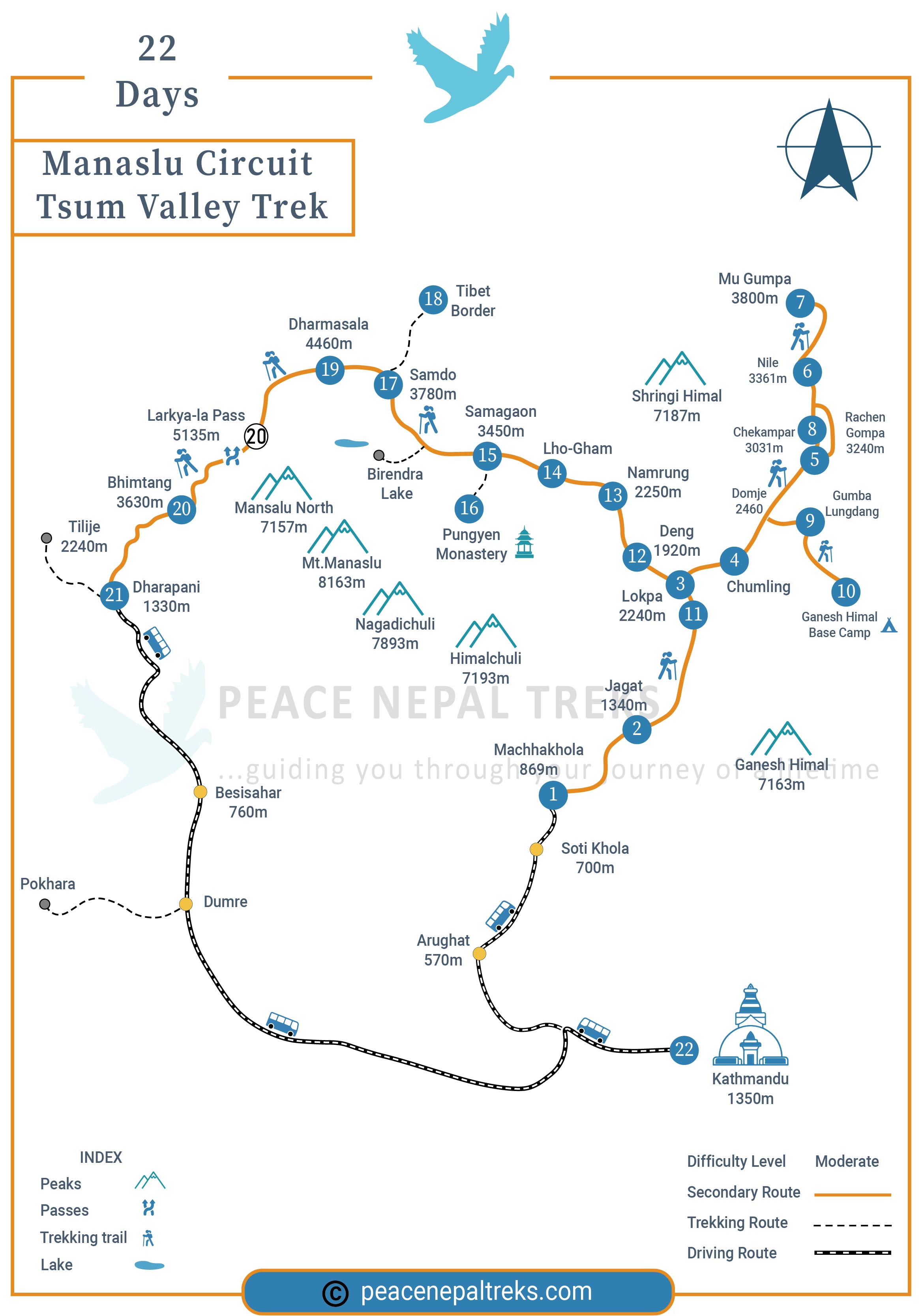
The adventure normally begins with a drive from Kathmandu to the lower Manaslu area. The trekking route then follows the Budhi Gandaki River through Machha Khola, Jagat, Deng, Namrung, Samagaon and Samdo.
During the lower section, the trail passes green forests, waterfalls, farming terraces, suspension bridges and small mountain settlements. As the trek climbs higher, the landscape gradually changes into open alpine valleys, rocky moraine, glaciers and snow-covered peaks.
After proper acclimatization in Samagaon and Samdo, the expedition continues toward Dharamsala, Larkya Peak Base Camp and High Camp. The climbing section begins from the upper camps and requires the use of ropes, crampons, harnesses and ice axes.
After the summit attempt, the journey continues across the beautiful Larkya La Pass before descending to Bimthang and Dharapani.
This combination allows climbers to experience village trekking, high-altitude camping, glacier travel and Himalayan mountaineering in one well-planned expedition.
Highlights of Larkya Peak Climbing
- Summit Larkya Peak at approximately 6,249 metres
- Combine the Manaslu Circuit Trek with a Himalayan climbing expedition
- Cross the spectacular Larkya La Pass
- Trek through the remote Manaslu Conservation Area
- Explore Samagaon, Samdo, Namrung and other traditional villages
- Enjoy close views of Mount Manaslu and surrounding Himalayan peaks
- Visit Buddhist monasteries, mani walls, chortens and prayer wheels
- Hike toward Manaslu Base Camp, Birendra Lake or Pungyen Gompa
- Experience both tea-house trekking and high-altitude camping
- Learn to use ropes, crampons, harnesses, ice axes and jumars
- Climb with an experienced and licensed Nepalese mountain guide
- Enjoy a quieter trail compared with many popular climbing routes
- Walk through subtropical forests, alpine valleys and glacial terrain
- Experience Tibetan-influenced culture in the upper Manaslu region
- Complete a challenging 6,000-metre Himalayan climbing objective
Why Climb Larkya Peak?
A Rewarding First 6,000-Metre Summit
Larkya Peak can be a suitable climbing objective for fit trekkers who already have high-altitude trekking experience and want to attempt their first major Himalayan summit.
The climb introduces participants to important mountaineering skills without requiring the same level of commitment as a major 7,000- or 8,000-metre expedition.
Climbers should still be well prepared, physically fit and comfortable using basic climbing equipment.
A Quieter Himalayan Climbing Experience
Many trekking peaks in the Everest andAnnapurna Region Trekreceive large numbers of visitors during the main seasons. Larkya Peak is located in a more remote area and normally offers a quieter mountain experience.
The peaceful environment allows climbers to enjoy the scenery, local culture and expedition atmosphere without the crowds found on some better-known climbing routes.
Trekking and Climbing in One Journey
One of the greatest benefits of Larkya Peak Climbing is the combination of a world-class trekking route and a genuine mountaineering experience.
Before reaching the climbing camps, participants complete much of the Manaslu Circuit. This provides natural acclimatization and allows climbers to enjoy the region’s forests, rivers, villages, monasteries and mountain landscapes.
Valuable Mountaineering Experience
The climbing section gives participants practical experience in high-altitude movement, rope systems, snow travel and equipment use.
Depending on the condition of the route, climbers may use:
- Mountaineering boots
- Crampons
- Climbing harness
- Helmet
- Ice axe
- Ascender or jumar
- Carabiners
- Fixed ropes and safety lines
This experience can be valuable for climbers planning future ascents of other trekking peaks or larger Himalayan mountains.
Strong Physical and Mental Achievement
Reaching the summit of a 6,000-metre Himalayan peak requires patience, endurance, preparation and mental strength.
The long trekking days, cold conditions, high altitude and early summit start make the climb physically demanding. Successfully completing the journey gives climbers a strong feeling of achievement and confidence.
Outstanding Himalayan Views
The route offers beautiful views throughout the journey. Depending on weather and visibility, climbers can see Mount Manaslu, Himlung Himal, Cheo Himal, Kang Guru, Annapurna II, Ganesh Himal and many other surrounding peaks.
The views become especially dramatic around Larkya Base Camp, High Camp, the summit area and Larkya La Pass.
The Cultural Experience of the Manaslu Region
Larkya Peak Climbing is also a cultural journey through remote Himalayan communities.
The lower trail passes settlements influenced by Gurung and other hill cultures. As the route climbs toward Namrung, Lho, Samagaon and Samdo, Tibetan Buddhist culture becomes more visible.
Stone-built houses, Buddhist monasteries, prayer wheels, mani walls, chortens and colourful prayer flags are common along the route. Local people continue to practise traditional farming, animal herding and Buddhist customs.
Samagaon and Samdo are especially interesting places to observe the culture and lifestyle of the upper Manaslu region. These villages are surrounded by high mountains and have maintained strong cultural links with the Tibetan plateau.
Walking slowly through these communities gives visitors time to appreciate the relationship between the local people, their religion and the mountain environment.
Manaslu Base Camp and Acclimatization
Proper acclimatization is one of the most important parts of the Larkya Peak expedition.
Samagaon is normally used as an important acclimatization stop. Strong and well-acclimatized climbers may hike toward Manaslu Base Camp, situated below Mount Manaslu. A shorter hike to Birendra Lake or Pungyen Gompa may also be selected depending on fitness, weather and trail conditions.
Another acclimatization day may be included at Samdo. From the village, climbers can hike to a higher ridge before returning to sleep at a lower elevation.
These acclimatization walks help the body adjust gradually before moving toward Dharamsala, Base Camp and High Camp.
Peace Nepal Treks plans the climbing schedule carefully and monitors the health, walking pace and oxygen levels of participants during the journey.
Larkya Peak Base Camp and High Camp
After leaving the tea-house trekking route, the expedition enters the camping section.
Larkya Peak Base Camp is established in a suitable location selected according to snow, weather, water availability and route conditions. The climbing team sets up sleeping tents, kitchen facilities and other necessary camp equipment.
At Base Camp, the climbing guide checks personal equipment and provides practical training. Climbers practise using crampons, ropes, harnesses, ascenders and ice axes.
The route from Base Camp to High Camp crosses rocky, snowy and glacial terrain. Climbers move slowly because of the altitude and carry only the equipment needed for the upper mountain.
High Camp provides the starting point for the summit attempt. After reaching camp, climbers rest, eat, drink enough fluids and prepare their clothing and equipment for the early-morning departure.
Larkya Peak Summit Day
Summit day usually begins before midnight or very early in the morning. Starting early provides more time to climb and descend before afternoon winds or changing mountain weather.
The climbing guide leads the team across snow, ice and steep mountain sections. Fixed ropes may be used where required for additional safety.
Climbers must maintain a slow and steady pace while following the instructions of the guide. The thin air, cold temperatures and steep terrain make the summit day physically demanding.
From the summit area, climbers can enjoy a wide Himalayan panorama when the weather is clear. After taking photographs and spending a short time at the top, the team begins a careful descent to High Camp and continues toward Base Camp.
Summit success depends on weather, snow conditions, fitness, health, acclimatization and the guide’s safety decision. Reaching the summit is always the goal, but the safety of every climber remains the highest priority.
Larkya Peak Climbing Difficulty
The Larkya Peak Climbing expedition is considered a challenging high-altitude adventure. It is more demanding than a normal trekking journey and requires good preparation.
The main challenges include:
- Climbing above 6,000 metres
- Long trekking and summit days
- Cold temperatures and strong winds
- Snow, ice, rock and glacier travel
- Remote mountain conditions
- Basic technical climbing sections
- Limited facilities at Base Camp and High Camp
- Risk of altitude sickness
- Rapidly changing Himalayan weather
Previous high-altitude trekking experience is strongly recommended. Basic knowledge of climbing equipment is helpful, although the climbing guide provides additional training at Base Camp.
Participants should be able to walk for six to eight hours on regular trekking days and remain active for ten hours or longer during the summit attempt.
Fitness and Training for Larkya Peak
Good physical preparation greatly improves safety, comfort and the chance of reaching the summit.
Climbers should begin regular training several months before travelling to Nepal. Training should include cardiovascular exercise, leg strength, core strength and long-distance hiking.
Useful activities include:
- Hill walking with a backpack
- Stair climbing
- Running or cycling
- Swimming
- Squats and lunges
- Core-strength exercises
- Long weekend hikes
- Training on uneven ground
Climbers should gradually increase the length and difficulty of their training. Walking with the boots and backpack planned for the expedition can also help prevent discomfort during the trip.
Mental preparation is equally important. Participants should be ready for cold conditions, basic accommodation, long days and changes caused by mountain weather.
Best Time for Larkya Peak Climbing
The best seasons for Larkya Peak Climbing in Nepal are spring and autumn.
Spring: March to May
Spring generally offers suitable climbing temperatures, longer daylight hours and colourful lower trails. Rhododendron forests may be in bloom, while the higher mountain remains covered with snow.
April and May are often popular months for the expedition.
Autumn: September to November
Autumn normally provides clear skies, dry trekking trails and excellent mountain visibility. October and November are popular because of their stable conditions and beautiful Himalayan views.
Winter and Monsoon
Winter brings very cold temperatures, heavy snow and difficult conditions at the upper camps. The summer monsoon can bring rain, cloud, landslides and unstable trails in the lower region.
For these reasons, winter and monsoon expeditions require greater experience, flexibility and preparation.
Mountain conditions can change at any time, even during the main climbing seasons. A flexible itinerary and at least one reserve day are strongly recommended.
Accommodation During the Expedition
Accommodation is provided in hotels, tea houses and tents, depending on the location.
In Kathmandu, guests stay in a comfortable hotel. During the trekking section, accommodation is arranged in local tea houses or mountain lodges.
Tea-house rooms are normally simple and arranged on a twin-sharing basis. Lower villages may have better facilities, while rooms in higher settlements are more basic. Bathrooms are often shared, and hot showers, Wi-Fi and battery charging may cost extra.
At Larkya Base Camp and High Camp, accommodation is provided in expedition tents. The climbing team establishes the camp and manages sleeping arrangements, meals, hot drinks and water.
A warm sleeping bag suitable for very cold Himalayan conditions is essential.
Meals During Larkya Peak Climbing
A selection of freshly prepared meals is available in the tea houses during the trekking section.
Common foods include:
- Nepali dal bhat
- Tibetan bread
- Porridge
- Eggs and pancakes
- Fried rice
- Noodles and soup
- Pasta
- Potatoes
- Momos
- Vegetable curry
- Tea, coffee and hot drinks
At Base Camp and High Camp, the expedition kitchen team prepares simple, warm and energy-giving meals. Food choices become more limited at higher elevations, but the team works to provide suitable nutrition for the climbers.
Vegetarian meals are widely available. Vegan, gluten-free and other dietary requirements should be communicated before the expedition.
Permits Required for Larkya Peak Climbing
Larkya Peak is located within a controlled trekking and climbing region. Several official permits may be required for the complete journey.
These normally include:
- Larkya Peak climbing permit
- Manaslu Restricted Area Permit
- Manaslu Conservation Area Permit
- Annapurna Conservation Area Permit
- Other local or government documents required at the time of travel
Permit rules and fees can change. Peace Nepal Treks checks the latest requirements and arranges the necessary documents before the expedition.
Participants must provide a valid passport copy, passport-sized photographs, travel insurance details and other required information.
Safety and Travel Insurance
High-altitude climbing involves natural risks, including altitude sickness, cold injury, falls, changing weather and difficult terrain.
Peace Nepal Treks uses gradual acclimatization, experienced guides, health monitoring and careful route planning to manage these risks.
Climbers must have comprehensive travel insurance covering:
- High-altitude trekking
- Peak climbing above 6,000 metres
- Emergency helicopter evacuation
- Medical treatment and hospitalization
- Trip cancellation or interruption
- Lost or delayed baggage
Normal travel insurance may not include technical peak climbing. Participants should carefully check the altitude and activity limits of their policy before travelling.
Who Should Join the Larkya Peak Expedition?
The climb is suitable for:
- Experienced high-altitude trekkers
- Fit adventure travellers
- Climbers planning their first 6,000-metre summit
- Mountaineers preparing for higher expeditions
- Travellers interested in remote Himalayan regions
- People with basic climbing knowledge
- Climbers seeking a less-crowded Nepal peak
- Visitors interested in both culture and mountaineering
It is not suitable for people with poor fitness, serious medical conditions or no interest in long and demanding mountain days.
Every participant should speak with a doctor before joining a high-altitude climbing expedition.
Why Book Larkya Peak Climbing with Peace Nepal Treks?
Peace Nepal Treks is a locally based Nepal trekking and climbing company with many years of experience organizing Himalayan adventures.
Our team understands that a successful expedition requires more than simply reaching the mountain. Good communication, acclimatization, experienced guides, reliable porters, proper equipment and flexible planning are all essential.
Our Larkya Peak services can include:
- Airport pick-up and departure transfer
- Kathmandu hotel accommodation
- Private or shared ground transportation
- Restricted-area and conservation permits
- Larkya Peak climbing permit
- Experienced trekking guide
- Licensed climbing guide
- Porter and camping support
- Tea-house accommodation
- Base Camp and High Camp tents
- Expedition meals and hot drinks
- Group climbing equipment
- First-aid support and health monitoring
- Climbing equipment checks and training
- Emergency rescue coordination
- Flexible private-group arrangements
We can customize the program according to your available time, previous experience, fitness, group size and preferred level of service.
Book Your Larkya Peak Climbing Adventure
The Larkya Peak Climbing 6,249m expedition is a complete Himalayan adventure that combines remote trekking, cultural discovery, high-altitude camping and a challenging summit.
Walk through the beautiful Manaslu region, explore traditional villages, cross Larkya La Pass and experience the achievement of climbing above 6,000 metres.
Join Peace Nepal Treks for a professionally organized, carefully planned and memorable Larkya Peak expedition in Nepal.
Peace Nepal Treks – Your Trusted Local Partner for Trekking and Peak Climbing in Nepal