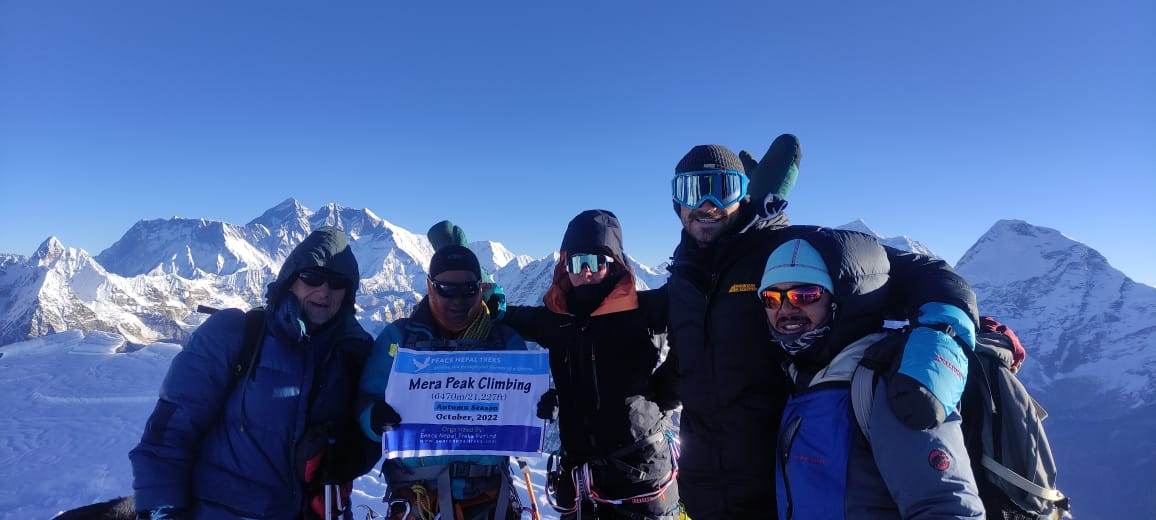
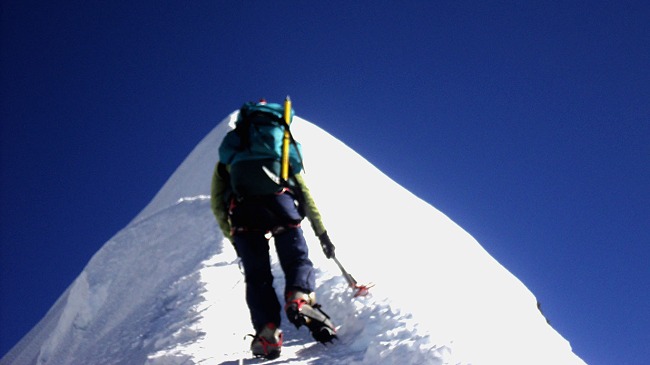
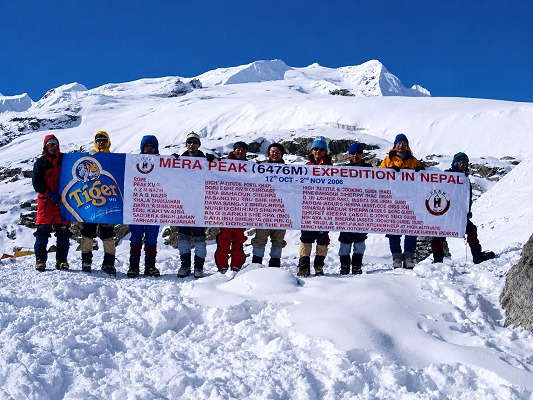
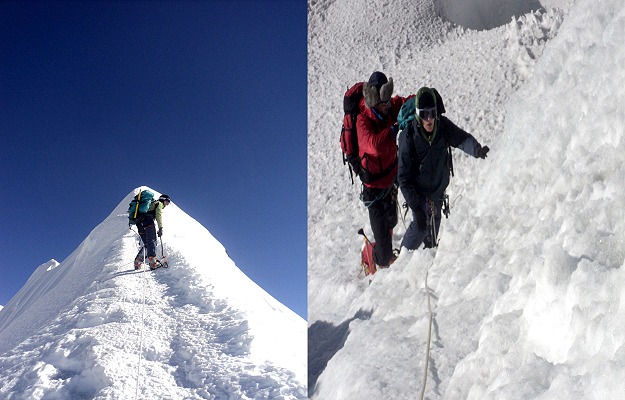
Mera Peak (6,476m) is the highest trekking peak in Nepal, located in the remote and spectacular Hinku Valley of the Everest region. It is one of the most popular climbing peaks permitted by the Nepal government and managed under the Nepal Mountaineering Association (NMA).
Mera Peak offers a non-technical but physically challenging climb, making it perfect for trekkers who want to experience real Himalayan mountaineering without extreme technical difficulty. From the summit, climbers enjoy one of the finest panoramic views in the world — including five of the world’s highest mountains:
- Mount Everest (8,848.86m)
- Lhotse (8,516m)
- Makalu (8,485m)
- Cho Oyu (8,188m)
- Kanchenjunga (8,586m)
Mera Peak Climbing Cost 2026 – Best Price & Group Discount Offer
Climb the highest trekking peak in Nepal with our professionally organized Mera Peak Climbing (6,476m) package. Below is the updated and special group price for 2026 season with experienced climbing guide, permits, meals, and full support from Peace Nepal Treks.
Mera Peak Climbing Cost Table
| Group Size | Cost Per Person (USD) | Description |
|---|
| 1 Person (Solo) | USD 2245 | Private trip with full guide and climbing support |
| 2 People Group | USD 1895 | Small group discounted price |
| 5 People Group | USD 1800 | Best value group offer |
Why Choose Mera Peak Climbing?
Mera Peak is ideal for adventurers seeking to climb a Himalayan peak with minimal technical difficulty. Key reasons to choose Mera Peak include:
- Highest Trekking Peak in Nepal: Mera Peak gives you the opportunity to climb above 6,000 meters without requiring advanced technical mountaineering skills.
Less Crowded & Remote Route: Unlike Everest Base Camp routes, the Hinku Valley is peaceful and less commercialized.
Ideal for First-Time Climbers: If you dream of climbing bigger mountains like Island Peak or even Everest one day, Mera Peak is an excellent starting point.
Spectacular Himalayan Panorama: The summit view is considered one of the best viewpoints in the entire Himalayas.
This climb allows you to explore Nepal's natural and cultural beauty, all while preparing you for more advanced expeditions in the future.
Mera Peak Climbing Gear Checklist: Personal Equipment and Clothing
| No. | Equipment | No. | Equipment |
|---|
| 01 | Insulated double mountaineering boots | 12 | Waterproof jacket and trousers |
| 02 | Crampons with anti-balling plates | 13 | Warm gloves and insulated mittens |
| 03 | Ice axe | 14 | Warm climbing socks |
| 04 | Climbing harness | 15 | Gaiters |
| 05 | Climbing helmet | 16 | Glacier sunglasses |
| 06 | Ascender / Jumar | 17 | Goggles |
| 07 | Descender / belay device | 18 | Headlamp and spare batteries |
| 08 | Locking and non-locking carabiners | 19 | High-altitude sleeping bag |
| 09 | Warm down jacket for the summit | 20 | Summit backpack |
| 10 | Insulated trousers / down pants | 21 | Insulated water bottles |
| 11 | Thermal base layers | 22 | Personal safety rope / lanyard, as specified by your climbing guide |
Why Climb with Peace Nepal Treks?
Peace Nepal Treks offers unmatched safety, expertise, and care throughout your journey. Here’s what makes them exceptional:
- Experienced local guides trained in mountaineering and first aid.
- Personalized support, from your first contact to your summit.
- All logistics handled, including gear, permits, and accommodation.
- Authentic cultural immersion in Sherpa communities.
- Emergency preparedness, including helicopter rescue coordination.
Our team ensures every detail is covered so that you can fully focus on enjoying your adventure.
Mera Peak Climbing Itinerary (6,476m) – 13 Days Detailed Program with Distance & Elevation
Climb Mera Peak (6,470m), Nepal’s highest trekking peak, with this well-planned 13-day itinerary. This route follows the beautiful Hinku Valley, including proper acclimatization for a safe and successful summit.
Below is the complete day-to-day Mera Peak Climbing itinerary with altitude, walking hours, accommodation, and meal plan.
| Day | Itinerary | Altitude | Walking Time | Accommodation | Meals |
|---|
| 1 | Arrive in Kathmandu. Transfer to the hotel and attend the trip briefing. | 1,350 m | — | Hotel | Self-paid |
| 2 | Drive to Ramechhap, fly to Lukla and trek to Chutanga. | 3,430 m | 4–5 hours | Tea house | Self-paid |
| 3 | Cross Zatra La Pass and trek to Thuli Kharka. | 3,900 m | 5–6 hours | Tea house | Self-paid |
| 4 | Trek to Kothey. | 3,580 m | About 6 hours | Tea house | Self-paid |
| 5 | Trek to Thangnak. | 4,350 m | 4–5 hours | Tea house | Self-paid |
| 6 | Trek to Khare. | 5,045 m | About 5 hours | Tea house | Self-paid |
| 7 | Stay in Khare for acclimatization, a short hike and climbing practice. | 5,045 m | 3–4 hours | Tea house | Self-paid |
| 8 | Trek to Mera High Camp. | 5,800 m | 6–7 hours | Tented camp | Self-paid |
| 9 | Climb Mera Peak and return to Khare. | Summit: 6,470 m; stay: 5,045 m | 10–11 hours | Tea house | Self-paid |
| 10 | Trek back to Kothey. | 3,580 m | About 6 hours | Tea house | Self-paid |
| 11 | Trek to Thuli Kharka. | 3,900 m | About 6 hours | Tea house | Self-paid |
| 12 | Cross Zatra La Pass and trek back to Lukla. | 2,840 m | About 6 hours | Tea house | Self-paid |
| 13 | Fly from Lukla and transfer to your Kathmandu hotel. If landing in Ramechhap, continue by road to Kathmandu. | 1,350 m | No planned trek | Hotel | Self-paid |
Best Time to Climb Mera Peak (6,476m)
Climbing Mera Peak is possible in different seasons, but the best time depends on weather, temperature, and visibility.
For a safe and successful summit, choosing the right season is very important. Below is an easy and clear seasonal guide to help you plan your Mera Peak climbing adventure.
Best Seasons to Climb Mera Peak
| Season | Months | Typical Weather | Climbing Conditions |
|---|
| Spring — Recommended | March–May | Generally clearer weather, with warmer days as the season progresses | A popular time for climbing and mountain views. High camp and summit remain very cold. |
| Autumn — Recommended | September–November | Generally dry, with clear mountain views after the monsoon | Good trekking and climbing conditions. Temperatures become colder toward November. |
| Winter | December–February | Very cold, with possible snowfall and strong winds | Fewer climbers, but a more demanding climb due to extreme cold and snow. |
| Summer / Monsoon | June–August | Frequent rain and cloud, with wet trails and snow possible higher up | Less suitable because of poor visibility and weather disruptions. |
Note: Weather can change in any season. Summit success depends on weather, acclimatization, fitness and route conditions.
Mera Peak Climbing Permits & Fees
If you are planning to climb Mera Peak (6,476m), Nepal’s highest trekking peak, you must obtain the required government permits before starting your expedition.
These permits are compulsory for all climbers and help support environmental conservation, local community development, and trail management in the Everest (Khumbu) region.
Below is a simple and clear table explaining all the necessary permits for Mera Peak Climbing.
| Permit Name | Issued By | Cost | Description |
|---|
| Mera Peak Climbing Permit | Nepal Mountaineering Association (NMA) | Spring (Mar–May): USD 350
Autumn (Sep–Nov): USD 175
Winter/Summer (Dec–Feb / Jun–Aug): USD 175 | Main climbing permit required to legally summit Mera Peak. Cost varies by season. |
| Sagarmatha National Park Entry Permit | Nepal Government | NPR 3,000 (Approx. USD 25) | Required to enter Sagarmatha National Park, a UNESCO World Heritage Site in the Everest region. |
| Khumbu Rural Municipality Fee | Khumbu Local Authority | NPR 2,000 (Approx. USD 17) | Local government fee that supports community infrastructure and tourism management in the Khumbu region. |
Documents Required for the Permits
When applying for climbing permits, whether independently or through an agency, you need to submit proper documentation. Trekking companies usually handle these formalities for clients.
Required Documents:
- Valid passport (at least 6 months valid)
- Two passport-sized photos
- Detailed itinerary or trekking plan
- Proof of travel insurance (recommended)
Mera Peak Climbing Equipment
Proper gear is essential for safety, warmth, and comfort during your Mera Peak expedition. Equipment should be suited for high-altitude and glacier conditions.
Essential Equipment List:
- Mountaineering boots (double insulated)
- Ice axe, crampons, climbing harness
- Helmet, ropes, carabiners, ascenders
- Layered clothing: thermal, fleece, down, and waterproof outer
- Four-season sleeping bag (rated –20°C or colder)
- Headlamp, trekking poles, sunglasses, sunscreen
Mera Peak Support Team
A well-trained and experienced support team greatly enhances the success and safety of your climb. These professionals help with logistics, safety, and guidance.
Support Team Includes:
- Licensed mountain guide for navigation and safety
- Climbing Sherpas for rope setup and summit assistance
- Porters for carrying equipment and supplies
- Base camp crew (cook, assistant guides) for food and camp setup
Accommodation on the Mera Peak Climb / Trek
Trekkers can expect a mix of tea house and tented accommodations. Lower elevations provide basic lodge-style stays, while high camps rely on camping.
Accommodation Breakdown:
- Tea houses: Available up to Khare (~5,000m), with basic food and lodging
- High Camp tents: Used for summit push, more basic and cold
- Bring a high-quality sleeping bag and consider thermal liners
Weather and Temperature
Weather and temperature can shift dramatically during the climb, depending on altitude and season. Knowing what to expect helps you prepare better.
Weather Insights:
- Spring/Autumn: Daytime temps range 10–15°C; summit camp drops to –10°C
- Winter: Coldest with temps reaching –20°C or lower at high altitude
- Monsoon: Wet, cloudy, and less reliable for climbing
Altitude Sickness
Altitude sickness or AMS is a common risk in high-altitude trekking. Mera Peak’s height (6,476m) makes acclimatization essential.
AMS Risk Factors & Tips:
- Begins above 2,500m; serious above 5,000m
- Symptoms: Headache, nausea, dizziness, fatigue
- Prevention: Ascend gradually, hydrate well, avoid alcohol
- Include rest/acclimatization days in your itinerary
Physical Fitness
Climbing Mera Peak demands good physical conditioning and endurance. Training should begin several weeks to months in advance.
Training Focus:
- Cardiovascular: Hiking, running, stair climbing
- Strength: Legs, core, and back
- Hiking with packs: Simulate altitude conditions with backpack weight
- Familiarity with gear like crampons or walking on snow improves safety
Mera Peak Climbing Insurance and Helicopter Rescue
Insurance is mandatory for high-altitude trekking in Nepal. Helicopter rescue is the fastest way to evacuate in emergencies, but it is costly without insurance.
Insurance Tips:
- Must cover trekking above 6,000m
- Should include helicopter rescue and emergency treatment
- Reliable providers: World Nomads, Global Rescue, IMG
- Without coverage, helicopter evacuation can cost USD 3,000–5,000
Acute Mountain Sickness (AMS) Risk, Syndrome, and Cure
AMS can escalate to more serious conditions like HAPE (pulmonary edema) or HACE (cerebral edema). Knowing how to recognize and respond is critical.
AMS Overview:
- Mild AMS: Headache, fatigue, sleep disturbance
- Severe AMS (HAPE/HACE): Coughing, confusion, difficulty walking
- Treatment: Immediate descent, oxygen use, Diamox or Dexamethasone
- Guides are trained to spot symptoms and coordinate rescue if needed