
The Tilicho Lake Trek is an 11-day high-altitude journey from Kathmandu to Tilicho Lake at 4,919 metres in Nepal's Annapurna region. Starting from Dharapani, the walking route follows the Marsyangdi Valley through Chame, Upper Pisang and Manang before continuing through Khangsar and Siri Kharka to Tilicho Base Camp.
The main objective is Tilicho Lake, a spectacular alpine lake surrounded by Tilicho Peak, snowy ridges and dramatic mountain terrain. After reaching the lake, trekkers descend to Siri Kharka, return through Manang and travel by road to Besisahar and Kathmandu.
This itinerary does not cross Thorong La Pass and does not continue to Muktinath or Jomsom. It is designed for active travellers who want to visit Tilicho Lake without completing the full Annapurna Circuit Trek.
The 11-day schedule is fast-paced. It includes several long walking and driving days, including a demanding journey from Manang to Tilicho Base Camp. Trekkers should have good fitness, previous hiking experience and adequate preparation for walking at high altitude. A slower 12-day or 13-day private itinerary can be arranged on request.
Peace Nepal Treks provides airport transfers, transportation, the Annapurna Conservation Area Permit, a licensed trekking guide, porter support, Kathmandu hotels, mountain accommodation, loaned trekking equipment and emergency coordination. The package costs USD 695 per person, based on a minimum of two travellers.
| Trip detail | Information |
|---|---|
| Duration | 11 days, Kathmandu to Kathmandu |
| Destination | Tilicho Lake, Manang District |
| Maximum altitude | 4,919 m at Tilicho Lake |
| Trekking region | Annapurna and Manang |
| Difficulty | Moderate to challenging |
| Walking days | Approximately 6 days, including acclimatization hike |
| Longest walking day | Approximately 7–8 hours |
| Starting point | Dharapani, reached by road through Besisahar |
| Walking endpoint | Manang after returning from Tilicho Lake |
| Best seasons | March–May and late September–November |
| Accommodation | Two Kathmandu hotel nights and eight lodge/tea-house nights |
| Meals | Self-paid from the available lodge menu |
| Transportation | Bus and shared local jeep |
| Permit | Annapurna Conservation Area Permit (ACAP) |
| Thorong La Pass | Not included |
| Domestic flight | Not required |
| Group size | Minimum 2 guests; private and small-group departures available |
| Package price | USD 695 per person |
Reach Tilicho Lake at 4,919 metres in the high Himalayas of Nepal
Trek through Dharapani, Chame, Upper Pisang, Manang, Khangsar and Siri Kharka
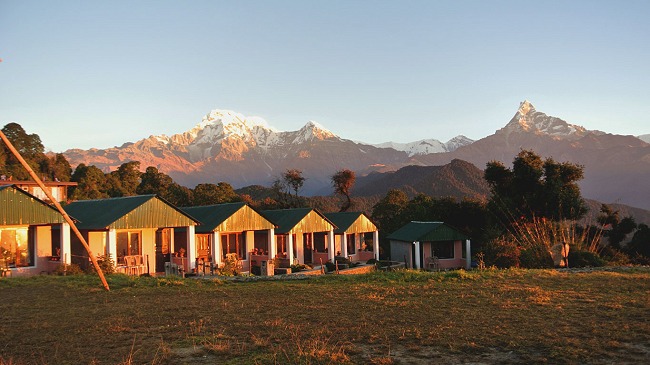
Enjoy views of Annapurna II, Annapurna III, Annapurna IV, Gangapurna and Tilicho Peak
Experience the forests, river valleys and dry alpine landscapes of the Manang region
Discover Tibetan Buddhist culture, monasteries, mani walls and traditional mountain settlements
Spend an acclimatization day in Manang before entering the higher Tilicho Valley
Stay in locally managed lodges and tea houses
Complete the trek without crossing Thorong La Pass
Travel entirely by road without requiring a domestic flight
Trek with an experienced licensed guide and porter support from Peace Nepal Treks
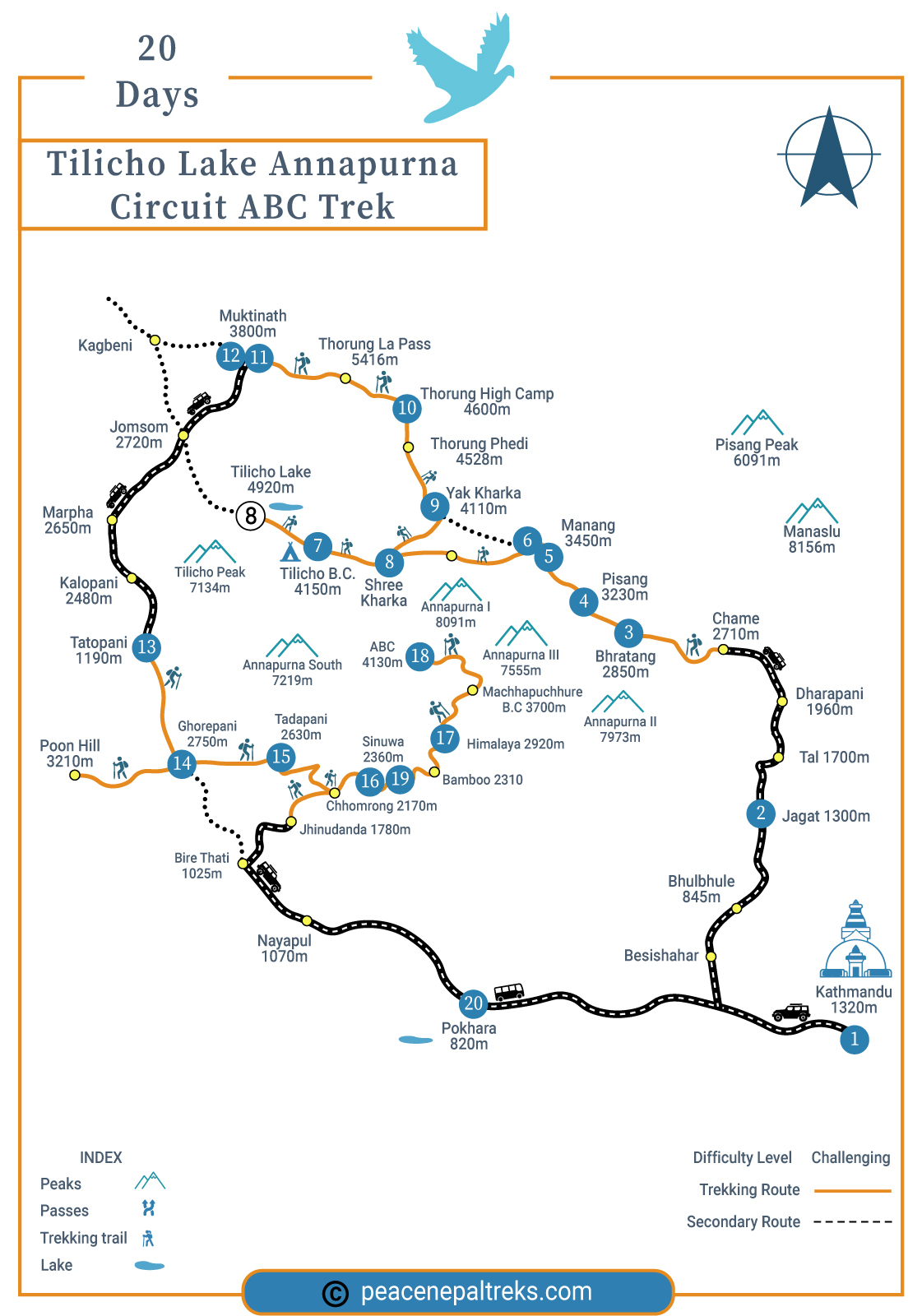
Kathmandu → Besisahar → Dharapani → Chame → Upper Pisang → Manang → Khangsar → Siri Kharka → Tilicho Base Camp → Tilicho Lake → Siri Kharka → Manang → Besisahar → Kathmandu
The trek starts with a road journey from Kathmandu through Besisahar to Dharapani. The walking section follows part of the Annapurna Circuit to Manang before leaving the main trail for the Tilicho Valley. After visiting the lake, the route returns to Manang rather than crossing Thorong La Pass.
The 11-day Tilicho Lake Trek costs USD 695 per person, based on a minimum of two travellers. The price includes airport transfers, road transportation, the required conservation permit, a licensed guide, porter support, two Kathmandu hotel nights, eight trail and lodge nights, loaned trekking equipment and safety support.
Meals are not included, allowing guests to select food from the available tea-house menu. Budget approximately USD 30–40 per person per day for breakfast, lunch and dinner, depending on food choices, appetite and altitude.
Private transportation, a single room, an extra porter and additional hotel nights can be arranged for an extra charge. Solo travellers should request the current private-trip or group-joining price.
The Tilicho Lake Trek is graded moderate to challenging. It does not require technical climbing skills, but participants must cope with high altitude, long walking days, cold temperatures and rough mountain terrain.
The most demanding sections are the direct walk from Manang to Tilicho Base Camp and the early climb to Tilicho Lake. The trail can include snow, ice, loose rock, scree and landslide-prone slopes.
Trekkers should prepare with regular walking, stair climbing, cardiovascular exercise and leg-strength training for at least six to eight weeks before departure. Previous multi-day hiking experience is recommended.
The route climbs from Dharapani at 1,860 metres to Tilicho Lake at 4,919 metres. The itinerary includes two nights in Manang, with an acclimatization hike before continuing higher.
Altitude sickness can affect anyone regardless of age or fitness. Possible warning signs include:
Walk slowly, drink adequate treated water, avoid alcohol at altitude and report symptoms immediately. Reaching Tilicho Lake is never more important than personal safety. The guide may delay, modify or stop the ascent if conditions or a guest's health make continuation unsafe.
Medication such as acetazolamide should be discussed with a qualified medical professional before travel. Trekking staff can provide practical support but do not replace medical advice.
Kathmandu accommodation is provided in a comfortable twin-sharing hotel. Along the route, guests stay in locally operated tea houses and lodges.
Mountain rooms normally contain two simple beds, mattresses, pillows and blankets. Toilets may be shared, and facilities become more basic near Tilicho Base Camp. Hot showers, Wi-Fi and charging may be unavailable or subject to an additional fee.
The package includes eight mountain nights: Dharapani, Chame, Upper Pisang, two nights in Manang, Tilicho Base Camp, Siri Kharka and Besisahar.
Meals are self-paid. Tea-house menus commonly offer dal bhat, noodles, fried rice, potatoes, eggs, soup, pasta, Tibetan bread, tea and coffee. Food choices become more limited and expensive at higher elevations because supplies must be transported into the mountains.
Budget approximately USD 30–40 per person per day for three meals. Carry some additional Nepalese currency for drinks, snacks, charging and showers.
Bottled water is available in some settlements but creates unnecessary plastic waste. A better option is boiled water or locally available water treated with the purification tablets provided by Peace Nepal Treks.
The main permit required for this itinerary is the Annapurna Conservation Area Permit (ACAP). Peace Nepal Treks arranges the permit before departure and includes the cost in the package.
Permit regulations and fees may change. Guests should provide a passport copy, Nepal visa information and any photographs requested for permit processing. For official tourism information, visit the Nepal Tourism Board.
Roads between Kathmandu, Besisahar, Dharapani and Manang can be rough and affected by rain, landslides, snow, construction and vehicle delays. Driving times are approximate.
The itinerary may be modified if a vehicle cannot reach the planned pickup or drop-off point. Guests should keep at least one or two additional days in Nepal after the trek and avoid booking an international flight immediately after the scheduled mountain return.
Peace Nepal Treks is a locally operated trekking company based in Kathmandu. Our team coordinates the complete journey, including airport transfers, transportation, permits, guides, porters, accommodation, equipment and emergency assistance.
Guests receive:
Learn more about why travellers choose Peace Nepal Treks or contact Peace Nepal Treks to request a private departure, slower itinerary or group-joining date.
A Peace Nepal Treks representative will welcome you at Tribhuvan International Airport and transfer you to your hotel in Kathmandu. After checking in, you can rest or explore the nearby streets of Thamel.
Your trekking guide will meet you for a route briefing, equipment check and discussion about altitude, weather, transportation and trail conditions. Any missing trekking equipment can be arranged before departure.
Driving: Approximately 6 km, 20–30 minutes
Accommodation: Twin-sharing hotel in Kathmandu
Meals: Self-paid
Leave Kathmandu early and travel through Nepal's middle hills towards Besisahar. The road follows river valleys, farmland and busy local towns. From Besisahar, continue by shared four-wheel-drive jeep along the mountain road beside the Marsyangdi River.
The road can be rough, dusty or muddy depending on weather and maintenance. Arrive in Dharapani, check into the lodge and prepare for the first walking day.
Distance: Approximately 235–250 km
Driving: Approximately 10–12 hours
Accommodation: Tea house or lodge in Dharapani
Meals: Self-paid
Begin trekking through the Marsyangdi Valley, passing Bagarchhap, Danaque, Timang and Koto. The route passes pine and rhododendron forest, waterfalls, suspension bridges and traditional villages.
As the trail gains elevation, mountain views gradually open towards Manaslu, Annapurna II and surrounding peaks. Chame is the administrative centre of Manang District and provides comfortable lodges and basic trekking services.
Distance: Approximately 15–16 km
Walking: Approximately 5–6 hours
Accommodation: Tea house in Chame
Meals: Self-paid
Follow the Marsyangdi River through a narrowing valley and forested trail. Pass Bhratang and walk beneath the remarkable Paungda Danda rock face before continuing towards the wider Pisang Valley.
The final climb leads to Upper Pisang, a traditional settlement with stone houses, prayer flags and a monastery. In clear weather, the village offers excellent views of Annapurna II and Pisang Peak.
Distance: Approximately 13–14 km
Walking: Approximately 5–6 hours
Accommodation: Tea house in Upper Pisang
Meals: Self-paid
Continue through the dry upper Manang landscape. Depending on trail and weather conditions, the guide may follow the scenic upper route through Ghyaru and Ngawal or the lower Marsyangdi Valley route.
The upper trail is more demanding but provides expansive views of Annapurna II, Annapurna III, Annapurna IV, Gangapurna and the surrounding mountains. Pass monasteries, mani walls, chortens and traditional settlements before arriving in Manang.
Distance: Approximately 15–18 km
Walking: Approximately 6–8 hours
Accommodation: Tea house in Manang
Meals: Self-paid
Spend a second night in Manang to support acclimatization before climbing towards Tilicho Base Camp. This is an active rest day rather than a complete day without walking.
Depending on weather and group condition, take a gradual hike to Gangapurna Lake, a local monastery or a viewpoint above the village. Walking higher and returning to sleep at Manang helps the body adjust to reduced oxygen.
Drink adequate safe water, eat regularly and tell the guide immediately if you develop headache, nausea, dizziness, unusual tiredness or poor balance.
Optional hike: Approximately 3–8 km, 2–5 hours
Highest point: Approximately 3,800–4,000 m, depending on the selected hike
Accommodation: Tea house in Manang
Meals: Self-paid
Leave Manang and follow the trail towards Khangsar. Continue through a quieter valley towards Siri Kharka and Tilicho Base Camp. The landscape becomes increasingly dry, rocky and exposed as the route enters high alpine terrain.
Some sections cross loose scree and landslide-prone slopes. Walk carefully, remain close to the guide and avoid stopping beneath unstable cliffs. This is a long day with a substantial sleeping-altitude gain, so a slow and steady pace is essential.
This direct route is suitable for fit trekkers. Guests who prefer better acclimatization can request a longer itinerary with an additional night at Khangsar or Siri Kharka.
Distance: Approximately 15–18 km
Walking: Approximately 7–8 hours
Accommodation: Basic tea house at Tilicho Base Camp
Meals: Self-paid
Begin before sunrise for the most important day of the trek. Climb steadily from Tilicho Base Camp over steep and sometimes icy terrain. The early start provides more time and may reduce exposure to stronger afternoon winds.
Reach Tilicho Lake at 4,919 metres and enjoy views of the lake, Tilicho Peak and surrounding snowy ridges. The lake may appear deep blue, partly frozen or completely snow-covered depending on the season.
After spending a suitable amount of time at the lake, descend to Tilicho Base Camp and continue to Siri Kharka. This is a demanding day involving significant ascent and descent.
Distance: Approximately 17 km
Walking: Approximately 7–8 hours
Maximum altitude: 4,919 m
Accommodation: Tea house in Siri Kharka
Meals: Self-paid
Descend from Siri Kharka through Khangsar and continue towards Manang. After meeting the local jeep, begin the drive through the Marsyangdi Valley to Dharapani.
The arrival time depends on the weather, road conditions and jeep availability. If the vehicle cannot reach the planned pickup point, additional walking may be required. Your guide may also change the overnight location if snow, landslides or road damage cause delays.
Walking distance: Approximately 9–12 km
Walking time: Approximately 4–5 hours
Driving time: Approximately 4–6 hours
Total duration: Approximately 9–11 hours, including walking, waiting and driving
Accommodation: Lodge or hotel in Dharapani
Meals: Not included; guests pay directly
The journey may take longer because of road construction, traffic, landslides or poor weather. We strongly recommend keeping at least one additional buffer day in Kathmandu before your international flight.
Driving distance: Approximately 230–240 km
Driving time: Approximately 10–12 hours
Accommodation: Twin-sharing hotel in Kathmandu
Meals: Not included; guests pay directly
Peace Nepal Treks will arrange your transfer from the Kathmandu hotel to Tribhuvan International Airport according to your flight schedule. The airport transfer completes the 11-day Tilicho Lake Trek package.
Driving: Approximately 6 km, 20–30 minutes
Accommodation: Not included
Meals: Self-paid
Two nights of twin-sharing hotel accommodation in Kathmandu: arrival night and post-trek night
Eight nights of twin-sharing tea-house, lodge or local hotel accommodation during the journey
Basic shared or dormitory accommodation when private rooms are unavailable at high-altitude locations
Annapurna Conservation Area Permit (ACAP)
Required local entry fees where applicable
Government taxes and Peace Nepal Treks service charges
All loaned equipment must be returned after the trek.
Selected fruit, cookies or light trail snacks supplied by Peace Nepal Treks may be provided when available. Additional snacks purchased personally are not included.
Personal expenses such as
Choose a scheduled departure and reserve your place.
The 11-day Tilicho Lake Trek costs USD 695 per person, based on a minimum of two travellers. It includes transportation, ACAP, a licensed guide, porter support, two Kathmandu hotel nights, eight mountain accommodation nights, loaned equipment and safety support. Meals, insurance and personal expenses are not included.
The Peace Nepal Treks itinerary takes 11 days from arrival in Kathmandu to airport departure. It includes approximately six walking days, an acclimatization day in Manang and road travel through Besisahar. A slower 12-day or 13-day itinerary is recommended for travellers who want shorter walking stages.
Tilicho Lake is situated at approximately 4,919 metres above sea level in Nepal's Manang District. It is one of the world's highest large alpine lakes and the maximum elevation reached on this itinerary.
Tilicho Lake is commonly described as one of the world's highest large alpine lakes. Claims that it is simply the world's highest lake are not precise because smaller lakes and other differently classified bodies of water exist at higher elevations.
The trek is moderate to challenging. Its main difficulties are high altitude, long walking days, cold conditions, loose terrain and the steep ascent from Tilicho Base Camp to the lake. Technical climbing experience is not required, but good fitness and previous hiking experience are recommended.
Fit beginners with regular hiking experience may complete the trek with preparation, a gradual pace and proper acclimatization. However, the 11-day version is fast-paced and is better suited to people who can comfortably walk for six to eight hours on consecutive days.
No. The route reaches Tilicho Lake and returns through Siri Kharka, Manang and Besisahar. It does not cross Thorong La Pass and does not continue to Muktinath or Jomsom.
The best periods are March to May and late September to November. Spring offers longer days and improving temperatures, while autumn normally provides clear skies and stable mountain views. Snow can occur at Tilicho Base Camp and the lake during either season.
Winter trekking may be possible for experienced trekkers, but heavy snow, ice, extreme cold and lodge closures can make the route unsafe. Any winter departure must be confirmed according to current trail, weather and accommodation conditions.
Trekkers need an Annapurna Conservation Area Permit. Peace Nepal Treks arranges the ACAP and includes its cost in the package. Additional local entry requirements will be confirmed before departure if regulations change.
No. Meals are self-paid so travellers can select from the available tea-house menu. Budget approximately USD 30–40 per person per day for breakfast, lunch and dinner. Drinks, bottled water and personal snacks cost extra.
Yes, basic tea-house accommodation is normally available at Tilicho Base Camp during the main trekking seasons. Rooms and facilities are limited, and closures can occur because of snow, weather or seasonal demand.
Yes. Solo travellers can request a private departure or ask to join a compatible group. A single-person supplement may apply because accommodation, guide and transportation expenses cannot be shared in the same way as a two-person booking.
Peace Nepal Treks strongly recommends travelling with a licensed guide because the Tilicho trail reaches nearly 5,000 metres and includes loose slopes, changing weather and remote sections. Current entry and guide regulations will be confirmed before departure.
Insurance must cover trekking to at least 5,000 metres, altitude sickness, emergency medical treatment and helicopter evacuation. Check the written altitude limit because many standard travel policies exclude high-altitude trekking.
Yes. The standard 11-day itinerary returns from Besisahar to Kathmandu. A transfer to Pokhara can be arranged as a customized service, but it is not included in the standard package unless confirmed in writing.
Spring offers longer daylight, generally comfortable walking temperatures and good mountain visibility. Lower valleys become greener, while snow may remain around Tilicho Base Camp and the lake during March and early April.
Autumn is the most popular trekking season. Skies are frequently clear after the monsoon, providing excellent views of the Annapurna range. Nights become progressively colder during November, and snowfall is possible near the lake.
The Manang Valley lies partly within the Himalayan rain shadow, but access roads and lower trails can still be affected by heavy rain, mud, landslides and delays. The loose slopes near Tilicho Base Camp may become unstable.
Winter conditions can be severe. Heavy snow and ice may block the trail, obscure the route or close high-altitude lodges. Winter departures are suitable only for experienced trekkers with proper equipment, flexible dates and confirmation of local conditions.
Tilicho Lake is located at 4,919 metres, where altitude sickness can affect anyone, regardless of age or fitness. The itinerary includes an acclimatization day in Manang at 3,540 metres. During this day, trekkers can make a short hike to a higher viewpoint and return to sleep at Manang. To reduce altitude-related risks: Walk slowly and maintain a comfortable pace Drink enough safe water Eat regular meals Avoid alcohol at high altitude Inform the guide about headaches, nausea, dizziness or unusual tiredness Descend when altitude symptoms become serious Travel insurance should cover trekking to at least 5,000 metres, medical treatment and emergency helicopter evacuation.
The best seasons for the Tilicho Lake Trek are spring and autumn, when the weather is generally more stable and the mountain views are clearer.
Spring is one of the best times to visit Tilicho Lake. The lower valleys are green, daytime temperatures are comfortable, and the Himalayan views are usually clear. Snow may still remain around Tilicho Base Camp and the lake, especially in March and early April.
Autumn is the most popular season for the Tilicho Lake Trek. The skies are normally clear after the monsoon, offering excellent views of Annapurna II, Gangapurna, Tilicho Peak and the surrounding mountains. September and October are generally comfortable, while November brings colder nights and possible snow at higher elevations.
The monsoon season from June to August is less suitable because rain can cause muddy trails, landslides and difficult road conditions. Manang receives less rainfall than many other parts of Nepal, but the approach to Tilicho Lake can still be unstable.
Winter from December to February is extremely cold. Heavy snow and ice may block the trail, some tea houses may close, and Tilicho Lake may be frozen. Winter trekking is recommended only for experienced trekkers with proper equipment and a flexible schedule
The Tilicho Lake Trek reaches an altitude of 4,919 metres, so warm clothing, reliable footwear and proper trekking equipment are essential. Pack light, but make sure you are prepared for cold temperatures, strong winds, snow and changing mountain weather.
Peace Nepal Treks can provide a sleeping bag, down jacket, duffel bag and trekking poles on request. These items must be returned after the trek.
Personal travel insurance is required for the Tilicho Lake Trek. The policy should cover trekking up to at least 5,000 metres, emergency medical treatment, trip interruption, rescue services and helicopter evacuation.
Guests should carefully check the altitude limit written in their policy. Standard travel insurance may not automatically cover high-altitude trekking. A copy of the insurance policy and emergency contact details should be shared with Peace Nepal Treks before departure.
Travel insurance should also cover:
Peace Nepal Treks arranges appropriate insurance for the guides and porters employed for the trip. This normally includes accident, medical and emergency support related to their trekking work.
The company also covers staff wages, meals and accommodation during the trek. Guests are not responsible for purchasing separate insurance for the trekking crew.
The Tilicho Lake Trek begins and ends in Kathmandu and uses road transportation rather than domestic flights.
After arriving in Kathmandu, guests are transferred to their hotel. The following day, the journey continues by road towards Besisahar and then by a local four-wheel-drive jeep through the Marsyangdi Valley to Dharapani.
The trekking section begins at Dharapani and follows the route through:
Dharapani – Chame – Upper Pisang – Manang – Khangsar – Siri Kharka – Tilicho Base Camp – Tilicho Lake
The journey from Kathmandu to Dharapani may take approximately 10–12 hours, depending on traffic, road conditions and stopping time.
After visiting Tilicho Lake, trekkers return to Siri Kharka and continue towards Manang. From Manang, the journey continues by local jeep to Besisahar.
The following day, guests drive from Besisahar to Kathmandu. Airport transfer is provided on the final departure day.
Road conditions in the Manang region can change because of rainfall, landslides, snowfall and maintenance work. The guide may adjust the jeep pickup point or daily schedule when necessary for safety.
Before booking the Tilicho Lake Trek with Peace Nepal Treks, guests should carefully review the itinerary, services, costs and booking conditions.
Make sure the number of trekking days, overnight places, transport arrangements and acclimatization days are clearly written. This 11-day program is fast-paced, with several long walking and driving days.
The itinerary may need to change because of:
The guide has the authority to adjust the route when necessary for the safety of guests and staff.
The contract should clearly state whether the package includes:
Guests should also understand the excluded costs, such as:
Before signing, check the required deposit, final-payment date, cancellation charges and refund conditions. Some costs, including permits, hotels and transport reservations, may be non-refundable after confirmation.
Guests should provide:
Important health information should not be hidden from the company or guide.
Accommodation during the trek is provided in local tea houses. Rooms are generally simple and have twin beds, mattresses, pillows and blankets. Private bathrooms are limited, especially above Manang.
Facilities become more basic around Siri Kharka and Tilicho Base Camp.
Guests can choose breakfast, lunch and dinner from the tea-house menu and pay directly. Common choices include dal bhat, noodles, fried rice, pasta, soup, potatoes, eggs, porridge, Tibetan bread, tea and coffee.
We recommend budgeting approximately USD 30–40 per person per day for meals, depending on food choices and altitude.
Bottled water becomes expensive and creates plastic waste. Boiled or filtered water is usually available at tea houses. Guests should carry a reusable bottle and use purification tablets or a water filter when necessary.
Charging, Wi-Fi and hot showers may be available at some lodges for an additional fee. Mobile-network coverage is not reliable throughout the route, particularly near Tilicho Base Camp and Tilicho Lake.
Carry a fully charged power bank and inform family members that communication may be limited for several days.
ATMs are not dependable after leaving the main towns. Carry enough Nepalese rupees for meals, drinks, charging, Wi-Fi, showers, snacks and personal expenses.
One porter normally carries the shared baggage of two guests, with a total weight limit of approximately 20 kilograms. Each guest should carry a small daypack containing water, warm clothing, valuables, snacks, sunscreen and personal medicines.
Tilicho Lake stands at 4,919 metres, and altitude sickness can affect anyone. Walk slowly, drink enough water, eat properly and report headaches, nausea, dizziness or unusual tiredness to the guide immediately.
The acclimatization day in Manang is important and should not be treated as an unnecessary rest day.
Mountain roads and trails are unpredictable. Guests should keep at least one flexible day in Nepal after the trek whenever possible. International flights should not be booked too close to the planned return from the mountains.
1 photo
No reviews yet. Traveled with us on this trip? Be the first to share your experience.
Enjoy the popular trekking and tour packages in Nepal Himalayas. 2026.
Adrian Mula
Robert and Arnica Reurekas
Patrick Keulens Helmond
Richard Kirtley
Chang Jong Kwon
Lim Tianshun
Mark Eversham