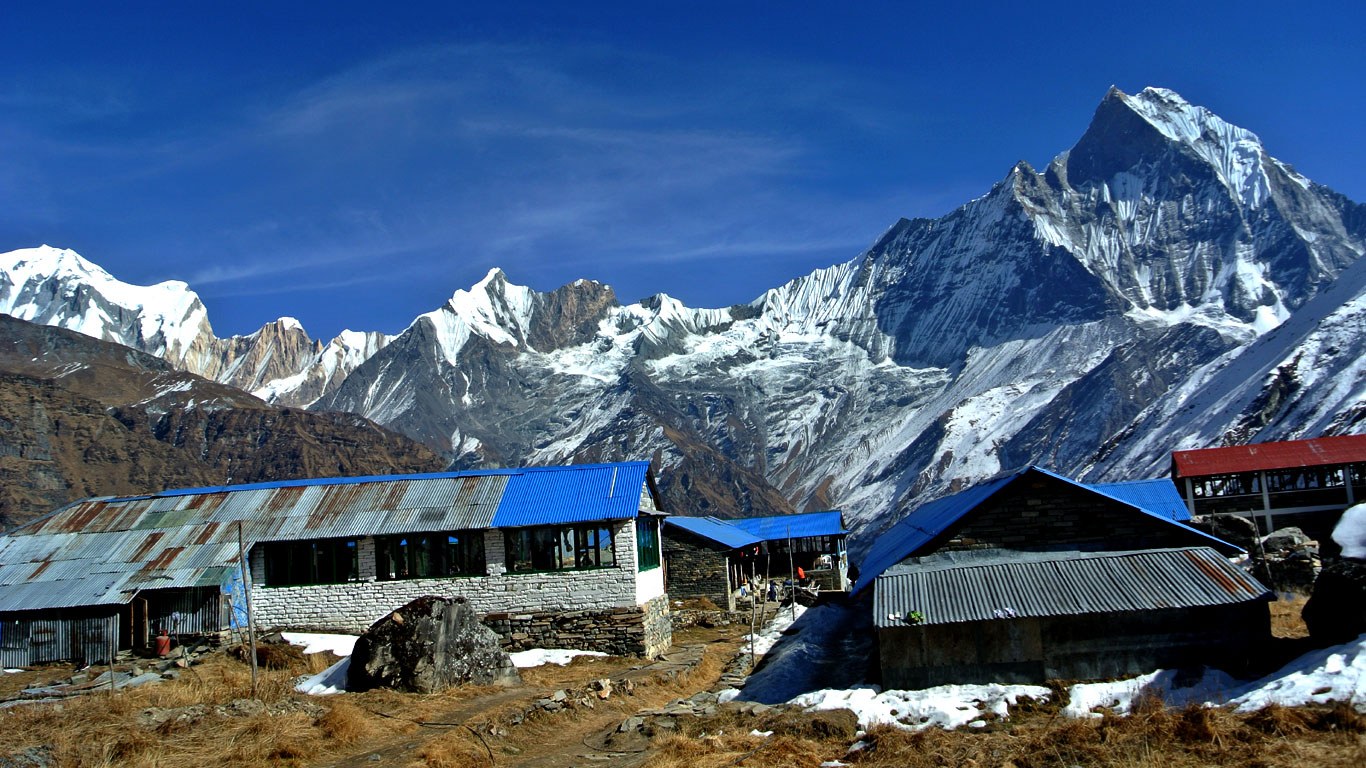
Annapurna Base Camp Trek is one of Nepal’s most popular and rewarding Himalayan journeys. The route combines rich culture, dramatic landscapes, and close-up views of some of the world’s most iconic peaks. Whether you’re searching for a short adventure, planning an 8 Days Annapurna Base Camp Trek, or looking for the best Annapurna Base Camp Trek itinerary, this trail offers an unforgettable mountain experience for trekkers of all levels.
The trek to Annapurna Base Camp takes you deep into the natural amphitheater of the Annapurna Sanctuary, surrounded by towering Himalayan giants like Annapurna I, Hiunchuli, Machhapuchhre (Fishtail), and Annapurna South. Unlike Everest, which requires domestic flights and longer acclimatization, the ABC Trek Nepal is more accessible and perfect for those with limited time. Most trekkers complete the journey in just 7–9 days, making it ideal for both beginners and experienced hikers.
If you’re new to trekking in Nepal, the Annapurna Base Camp hike is one of the safest and most achievable high-altitude adventures. The maximum elevation—4,130 meters at Annapurna Base Camp—is high enough to give breathtaking views while keeping altitude risks manageable. The gradual ascent and well-marked ABC trekking route make it a comfortable introduction to Himalayan trekking.
The journey starts with a scenic drive from Pokhara, which is appealing for travelers who want to avoid flights to remote mountain airports. This makes the Annapurna Base Camp Trek in Nepal both budget-friendly and accessible.
The 8 Days Annapurna Base Camp Trek is designed for trekkers who want to experience the Annapurna region’s best highlights in a short timeframe. You’ll walk through terraced fields, rhododendron forests, suspension bridges, and high alpine basins as you ascend steadily toward the base camp. Charming villages like Ghandruk, Chhomrong, Sinuwa, and Bamboo offer cultural warmth and insights into local Gurung lifestyles.
Even within a limited schedule, the ABC Trek itinerary includes all major viewpoints and scenic stops, making it one of the most complete short treks in Nepal.
The best seasons to trek Annapurna Base Camp are:
Winter treks (December–February) are possible for those who can handle cold weather and snow-covered paths. Monsoon (June–August) is less favored due to heavy rain and slippery terrain.
Along the Annapurna Base Camp trekking route, you’ll stay in local tea houses offering simple, cozy rooms and wholesome meals. The most common dishes are dal bhat, noodles, fried rice, momo, pancakes, and soups. Hot showers, charging facilities, and Wi-Fi are available in many tea houses, often for a small fee.
Many trekkers compare Everest Base Camp (EBC) and Annapurna Base Camp (ABC). ABC is often preferred by those who want a shorter trek with fewer logistical challenges. Here are some differences:
The trekking route to Annapurna Base Camp generally begins in Pokhara, Nepal’s adventure capital. Most travelers travel from Kathmandu to Pokhara either by tourist bus (6–7 hours) or private vehicle. If time is limited, a 25–30 minute flight is a faster option.
From Kande, the hike begins toward Australian Camp before continuing through forest trails and traditional villages. The trail gradually climbs toward Deurali, Machhapuchhre Base Camp (MBC), and finally Annapurna Base Camp.
The ABC Trek Nepal is suitable for all age groups and fitness levels. First-time trekkers, families, and travelers with moderate fitness can complete this route comfortably. Since the ascent is gradual and the trail is well-maintained, the trek is accessible to anyone who can walk 5–6 hours per day.
At Annapurna Base Camp (4,130 m), trekkers enjoy close-up views of several major Himalayan peaks:
Sunrise and sunset at ABC are among the most beautiful in the Himalayas, with the peaks glowing in shades of gold, pink, and red.
This popular 8 Days ABC Trek itinerary includes all major highlights:
Day 01: Drive Kathmandu → Pokhara → Kande → overnight at Australian Camp (2,100m)
Day 02: Trek to New Bridge / Jhinu Hot Spring (1,780m)
Day 03: Trek to Sinuwa (2,300m)
Day 04: Trek to Deurali (3,200m)
Day 05: Trek to MBC (3,700m) → Annapurna Base Camp (4,130m)
Day 06: Trek back to Bamboo (2,310m)
Day 07: Trek to Gurjung (1,575m)
Day 08: Trek to Kimche via Ghandruk → Drive to Pokhara
If you’re looking for an even shorter trail than ABC, the Poon Hill Trek is a fantastic 3–5 day alternative. It offers outstanding sunrise views over the Annapurna and Dhaulagiri ranges and can be combined with ABC for a longer journey.
No matter which itinerary you choose, the Annapurna Base Camp Trek delivers a rich blend of scenery, culture, and adventure—packed into just over a week.

Arrive at Kathmandu's Tribhuvan International Airport. Our representative will transfer you to your hotel where you can rest and prepare for the trek.
Drive from Kathmandu to Pokhara, a scenic journey that takes about 6-7 hours. From Pokhara, take a taxi to Kade, the starting point of your trek. Enjoy a short trek to Australian Camp for an overnight stay.
Trek Australian Camp to New Bridge/Hot Spring, Overnight aStart your trek with a descent to the Modi River. After crossing the river, continue to Jinu Danda, where you can relax in the natural hot springs. Overnight at Jinu Danda.t Jinu Danda (1,780m)
The trail now ascends toward Chhormrong for about one & a half hours as we descend down a stone staircase and then cross the Chhomrong Khola. After climbing high above the Modi Khola the trail continues uphill to Sinuwa Danda.
Begin the climb towards Deurali, passing through rhododendron forests and bamboo groves. As you approach Deurali, the landscape opens up to more expansive views of the Annapurna range.
Ascend to Machhapuchhre Base Camp, a beautiful spot to enjoy panoramic views of the Annapurna massif. Continue to Annapurna Base Camp, where you will spend the night and enjoy the spectacular views of Annapurna I, II, III, and Machhapuchhre.
Start your descent from Annapurna Base Camp to Bamboo. This day is longer due to the descent, but the scenery along the way is rewarding as you pass through forests and rivers.
After reaching New Bridge, you can catch a local bus or jeep heading back to Pokhara (820m). The drive takes around 2–3 hours and winds through beautiful countryside and small towns along the way. The road may be bumpy, but it's a quicker way to reach Pokhara after your trek.
Once in Pokhara, you can relax and enjoy the city's natural beauty. This option is more convenient for those who want to skip the longer drive from Nayapul to Pokhara, especially after a long trek.
Today, as part of our package, we will take a tourist bus from Pokhara to Kathmandu, which takes about 6 hours. The bus leaves at 7:30 AM and arrives in Kathmandu around 3 PM. You will stay overnight in Kathmandu. Alternatively, if you're short on time, you can catch a direct international flight in the late evening.
Note: If you prefer, you can travel by private car, jeep, or Hiace, which can be arranged upon request. This allows you to leave at any time, make stops along the way, and arrive in Kathmandu 4 to 5 hours earlier than the tourist bus. Flights from Pokhara to Kathmandu are also available for an additional cost.
Note: The holiday itinerary can be customized to fit your preferences. We can make it shorter or longer based on your needs. We design your trip according to your requirements.
Water: Mineral waters are available at all stops during tea house treks (paying your own). You can also use tap water if you choose to use water purification tablets.
Medical support: An emergency first aid kit is carried by the support staff at all times. (Oximeter to measure your oxygen and pulse in high altitude)
Food on tea house trek: During tea house treks our guests pay for their own food (breakfast/lunch/dinner) at the lodge. It can be about USD $30 each day per person. You can choose your own meal as a menu for every tea house.
Travel Insurance is mandatory for all clients who choose to trek or climb with us. The insurance should cover you in case of emergencies like accidents, altitude sickness, and ambulance and helicopter rescue charges if required. Please carry a copy of your insurance papers while traveling in Nepal and do send us a copy as well. This will help us in making all the necessary arrangements in case of any sort of emergency.
The 8 Days Annapurna Base Camp Trek is a short, scenic, and moderately challenging Himalayan trekking route that takes trekkers deep into the heart of the Annapurna Sanctuary. It offers magnificent views of Annapurna I, Machhapuchhre (Fishtail), Hiunchuli, and Gangapurna. This shorter version of the ABC trek is perfect for travelers with limited time who still want a full Himalayan experience. The trek combines beautiful forests, terraced villages, waterfalls, and panoramic mountain views in a compact itinerary.
The 8 Days Annapurna Base Camp Trek difficulty is rated as moderate. You don’t need technical climbing skills, but you should be comfortable walking 5–7 hours per day on ascending and descending trails. Anyone with basic fitness can complete this trek, especially with proper acclimatization and a steady pace. Peace Nepal Treks provides experienced guides who help you walk safely and comfortably.
The total Annapurna Base Camp Trek distance covered in 8 days is approximately 70–80 km, depending on the route taken (usually via Chhomrong, Bamboo, Deurali, ABC, and back to Jhinu or Ghandruk). The path involves uphill stone steps, forest trails, suspension bridges, and scenic river paths.
The highest point of the trek is Annapurna Base Camp (4,130 meters). Trekkers spend a night at Machhapuchhre Base Camp (3,700m) or ABC depending on weather. The altitude is manageable compared to higher Himalayan treks, but you still need to trek slowly and maintain proper hydration.
The best time for Annapurna Base Camp Trek is during:
Spring (March–May) – warm weather, blooming rhododendrons, superb mountain visibility
Autumn (September–December) – clear skies, stable weather, bright Himalayan views
Winter (Jan–Feb) is cold but possible, while monsoon (June–August) is rainy with leeches and slippery trails.
Accommodation on the ABC trek consists of clean, comfortable tea houses run by local communities. Rooms are usually basic twin-sharing with warm blankets. Higher altitudes have simpler facilities. Peace Nepal Treks provides the best available tea houses on each stop to ensure comfort, cleanliness, and good service during your trek.
Tea houses on the Annapurna Base Camp Trek offer a variety of meals such as Dal Bhat, noodles, pasta, momo, fried rice, potato dishes, soups, pancakes, eggs, porridge, bread, and tea/coffee. Meals are hygienic and made fresh. Nepali Dal Bhat is the best option for strength, energy, and good digestion at altitude.
While it is possible to trek independently, having a licensed guide from Peace Nepal Treks ensures safety, altitude management, correct route navigation, cultural understanding, and assistance in case of emergencies. Guides also arrange rooms, meals, and timing to make your trek stress-free.
Hiring a porter is highly recommended. A porter carries up to 20–25 kg, allowing you to trek comfortably with a lightweight daypack. This reduces fatigue, prevents injuries, and helps you enjoy the trek more. Peace Nepal Treks provides insured, experienced porters.
You need two permits for the Annapurna Base Camp Trek:
ACAP Permit (Annapurna Conservation Area Permit)
TIMS Card (Trekking Information Management System)
Peace Nepal Treks arranges all permits on your behalf, saving you time.
The 8 Days Annapurna Base Camp Trek cost ranges depending on services, group size, guide/porter needs, and accommodation level. Peace Nepal Treks provides a best-value cost package including permits, guide, porter, transportation, and accommodation. Meals are typically not included so guests can choose freely from menus.
Altitude sickness is possible but usually manageable because the route allows gradual ascent. Staying hydrated, walking slowly, and avoiding alcohol reduces risk. Peace Nepal Treks’ guides monitor your health and take preventive measures. In case of emergency, evacuation can be arranged.
You will typically walk 5–7 hours per day depending on the trail and altitude. Some days may require more uphill climbing (especially towards Chhomrong and Deurali). Peace Nepal Treks designs the timing to balance rest and trek duration.
Essential items include:
Warm down jacket
Thermal layers
Trekking pants & fleece
Trekking boots
Gloves, woolen hat, sunglasses
Headlamp
Power bank
Water purification tablets
Personal medicines
Peace Nepal Treks can also help arrange down jackets or sleeping bags for rent.
WiFi is available at many tea houses for a small charge. Higher altitudes may have limited connectivity. NTC or Ncell mobile data works in several lower stations but not everywhere.
Yes, hot bucket or gas showers are available for an extra fee in most tea houses. At higher elevations, showers may not be available due to freezing temperatures.
Yes. The 8 Days Annapurna Base Camp Trek is perfect for beginners with average fitness. Peace Nepal Treks ensures safety with professional guide support, controlled pacing, and steady acclimatization.
Travelers take a tourist bus or private jeep from Kathmandu to Pokhara, and then a private car/jeep to Nayapul or Ghandruk to start the trek. Peace Nepal Treks arranges all transportation based on your comfort and budget.
Yes, Peace Nepal Treks can customize your ABC trek to include hot springs, Ghandruk village, Poon Hill, or a longer trek through Machhapuchhre Base Camp. You can extend or shorten days based on your needs.
At ABC (4,130m), temperatures can drop to -10°C to -15°C at night, especially in winter. Day temperatures are milder but wind chill is strong. Proper warm clothing is essential.
Accommodation at ABC is basic but comfortable, with shared dining halls and twin-sharing rooms. Rooms are simple due to high altitude, and heating is only available in the dining area.
Yes, charging facilities are available at most tea houses for an extra fee. Carrying a power bank is highly recommended.
The Annapurna region is one of Nepal’s safest trekking areas, with well-maintained trails and supportive local communities. Peace Nepal Treks adds extra safety by providing trained guides, emergency support, and reliable communication.
Yes, travel insurance that covers high-altitude trekking up to 4,500m is recommended. It should also include emergency evacuation and medical coverage.
Regular walking, jogging, stair climbing, and moderate cardio exercise 2–3 weeks before your trek helps greatly. Building leg strength makes uphill and downhill trekking easier.
Yes, but trekking solo is less safe and more expensive. The best option is trekking with a registered guide from Peace Nepal Treks for safety, support, and local navigation.
Yes, tipping is appreciated. Typical range:
Guide: USD 10–12 per day
Porter: USD 8–10 per day
This supports local workers and respects Nepali trekking culture.
Food costs increase with altitude. Typical prices:
Meals: USD 5–10
Tea/coffee: USD 2–4
Breakfast: USD 6–10
Daily food expenses may range from USD 25–35 per person.
ATMs are available only in Pokhara and sometimes Chhomrong. Higher areas have no ATM service, so carry enough cash for meals and extras.
Peace Nepal Treks offers experienced local guides, professional service, flexible itineraries, reasonable pricing, and personalized care. With years of experience operating in the Annapurna region, they ensure a safe, enjoyable, and well-organized trek. The company handles permits, transport, accommodation, guides, porters, and full trip support—making your trek stress-free and memorable.
The best time to visit the Annapurna Base Camp Trek is during the Spring and Autumn seasons—two periods of the year known for their stable weather, clear skies, and breathtaking Himalayan visibility. Choosing the right season ensures a safer, more enjoyable trekking experience with the best possible mountain views. The Annapurna Sanctuary sits at high altitude, and weather can change quickly, so trekking during peak seasons greatly reduces the risk of snowstorms, rainfall, and poor visibility.
Spring is one of the most rewarding times for the Annapurna Base Camp Trek. The trails are vibrant with rhododendron blossoms, the temperatures are comfortably warm, and the skies are beautifully clear in the mornings. This season offers exceptional photography opportunities and a festive trekking atmosphere.
Autumn is the most popular season for the ABC Trek due to its unbeatable weather stability, dry trails, and sharp visibility following the monsoon. The deep blue skies and calm winds make it ideal for safe trekking and the best panoramic views of Annapurna I, Machhapuchhre (Fishtail), Hiunchuli, and more.
Choosing these months ensures maximum safety, comfort, and the most rewarding mountain views during your Annapurna Base Camp Trek.
Preparing the correct equipment is crucial for a safe and comfortable Annapurna Base Camp Trek. Weather in the Himalayas can change rapidly, and temperatures drop significantly at higher altitudes. A well-prepared packing list prevents injuries, cold-related issues, and discomfort during long trekking days.
Below is the full equipment list categorized for easy reference.

Layering is the key to staying warm and comfortable.
Trekking terrain includes stone steps, forest trails, and rocky paths.
These items make your trek safer and more efficient.
Higher altitudes often have limited charging facilities.
Trekking environments require good hygiene practices.
To make trekking easier and more comfortable, Peace Nepal Treks provides essential equipment:
✔ Duffle Bag for Trekking Gear
✔ Trekking Poles (Walking Sticks)
✔ Warm Sleeping Bag
✔ Power Bank for Mobile Charging
✔ Micro-Spikes / Crampons in Snow Season
✔ First Aid Kit Carried by Guide
This ensures guests avoid unnecessary purchases and have everything required for a safe Annapurna Base Camp Trek.
Travel insurance is mandatory for the Annapurna Base Camp Trek, as the route goes above 4,000 meters where altitude sickness, sudden weather changes, and remote conditions must be taken seriously. A good insurance policy protects you from unexpected medical needs, evacuation, or cancellations.
Every international traveler must obtain insurance in their home country before the trek. The policy must specifically cover high-altitude trekking up to 4,500m.
These companies offer strong international coverage suitable for trekking in Nepal.
Peace Nepal Treks fully covers all trekking staff with professional insurance, including:
✔ Medical Insurance
✔ Accidental Coverage
✔ High-Altitude Insurance
✔ Life Insurance
We prioritize staff safety and ensure our team is always protected during expeditions.
All foreign travelers (except Indian nationals) must obtain a Nepal Tourist Visa before entering the country for the Annapurna Base Camp Trek. Nepal offers a simple and fast visa-on-arrival service at Kathmandu International Airport.
Most ABC trekkers choose the 15 or 30-day visa depending on their total stay.
Nepal offers both Visa on Arrival and Online Pre-Arrival Application.
You can fill out the form online within 15 days of your arrival:
➡ Nepal Immigration Department website. Online Services
This reduces queue time at the airport.
Peace Nepal Treks provides full guidance to guests to ensure a smooth and easy entry into Nepal.
Enjoy the popular trekking and tour packages in Nepal Himalayas. 2025.
Annapurna Region Trek 6 Days
Mardi Himal TrekkingAnnapurna Region Trek 16 Days
Dhaulagiri TrekAnnapurna Region Trek 8 Days
Khopra Ridge and Poon Hill Trek© 2011 - 2025 All rights reserved. Peace Nepal Treks.