

If you want the best view of Everest for the least time, cost, and altitude risk, choose the Pikey Peak Trek. If you want to stand at the foot of Everest itself and walk through the heart of Sherpa Khumbu culture, choose the Everest Base Camp Trek. Both treks start in Kathmandu and both put you face to face with the world's highest mountain - but they deliver very different experiences, budgets, and physical demands. Here's exactly how they compare.
Hand-picked itineraries
Recommended Trips
Related journeys you may want to explore after reading this article.

Quick Comparison Table
| Pikey Peak Trek | Everest Base Camp Trek | |
|---|---|---|
| Duration | 8 days | 13 days |
| Max altitude | 4,065m (Pikey Peak summit) | 5,364m (Base Camp) / 5,545m (Kala Patthar) |
| Access | Road only — no flight needed | Requires a Lukla flight |
| Difficulty | Easy to moderate | Moderate to challenging |
| Daily walking | 5–6 hours | 5–7 hours |
| Crowds | Low — off-the-beaten-path | High — one of the busiest trails in Nepal |
| Everest view | Wide panoramic, from a distance | Close-up, standing at its base |
| Altitude sickness risk | Low | Moderate to significant |
| Approx. cost | Lower | Higher |
| Best for | First-timers, short trips, budget travelers, families | Trekkers wanting the classic Everest bucket-list experience |
Cost: Pikey Peak Is the Budget-Friendly Option
Pikey Peak Trek is significantly cheaper than Everest Base Camp, for two main reasons: it's shorter, and it doesn't require an expensive Lukla flight (often $340–450+ round trip on its own, before permits or guiding fees). Everest Base Camp's longer duration also means more teahouse nights, more meals, and more guide/porter days to pay for.
If budget is your main constraint, Pikey Peak Trek delivers Everest-region views at a fraction of the EBC price tag.
Duration: Nearly Half the Time Commitment
- Pikey Peak Trek: 8 days round-trip from Kathmandu (a 5-day fast version is also possible)
- Everest Base Camp Trek: 13 days round-trip from Kathmandu
If you're working with a one- or two-week vacation window, Pikey Peak fits comfortably with days to spare. EBC typically eats an entire two-week trip.
Altitude and Altitude Sickness Risk
Pikey Peak tops out at 4,065m, a height most trekkers acclimatize to without difficulty. Everest Base Camp climbs to 5,364m, with many itineraries also summiting Kala Patthar at 5,545m — well into the altitude range where acute mountain sickness becomes a real concern. EBC itineraries build in mandatory acclimatization days for this reason; Pikey Peak generally doesn't need them.
If you're nervous about altitude sickness or have limited high-altitude experience, Pikey Peak is the lower-risk choice.
Difficulty: Both Doable, One Is Tougher
Pikey Peak is rated easy to moderate — a good option even for fit beginners with no prior trekking experience. Everest Base Camp is rated moderate to challenging: longer trekking days, higher altitude, colder nights, and a longer cumulative physical toll over two weeks.
Neither trek requires technical climbing skills or mountaineering equipment — both are teahouse treks on foot. But EBC demands considerably more physical preparation and stamina.
Crowds and Trail Experience
This is where the two treks diverge most. Everest Base Camp is one of the most popular trekking routes on Earth, with teahouses, suspension bridges, and viewpoints that can feel busy in peak season (October–November, March–April). Pikey Peak, by contrast, remains a quiet, off-the-beaten-path route — you'll pass through villages, monasteries, and forest trails with a fraction of the foot traffic, and teahouses that feel more personal and less transactional.
If solitude and an authentic, uncrowded Sherpa-village experience matter to you as much as the mountain views, Pikey Peak wins clearly.
The Views: Panoramic Distance vs. Standing at the Base
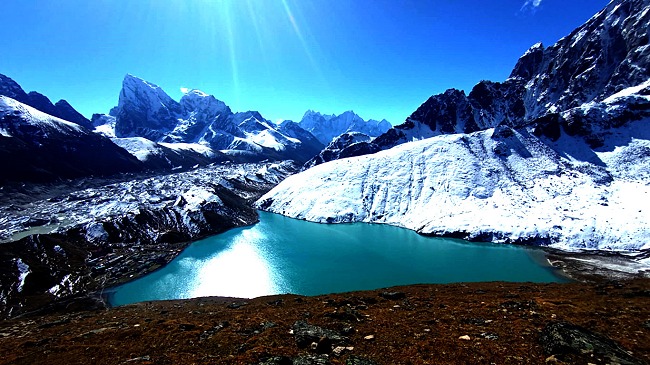
- Pikey Peak gives you one of the widest panoramic views in Nepal — Everest, Lhotse, Makalu, Kanchenjunga, and the Numbur Himal range all visible from a single summit. The legendary Everest pioneer Sir Edmund Hillary reportedly called this his favorite Himalayan viewpoint.
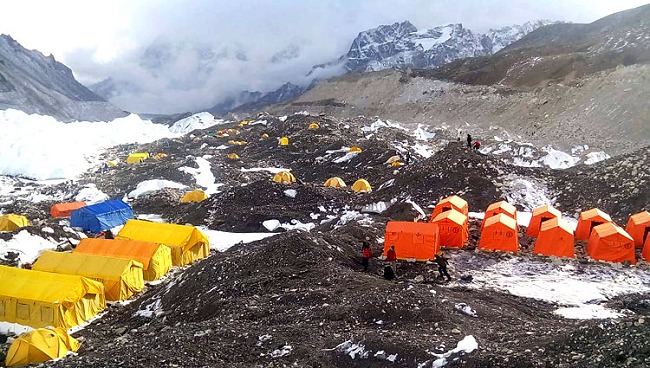
- Everest Base Camp gives you proximity, not panorama — you're standing in the Khumbu Icefall's shadow, at the literal starting point of Everest summit expeditions. The view of Everest itself is actually partially blocked by Nuptse from Base Camp; the classic postcard shot of Everest comes from Kala Patthar, a separate side hike.
Neither view is "better" — they're different experiences. Pikey Peak trades proximity for breadth; EBC trades breadth for the emotional weight of standing where Everest expeditions begin.
Which Should You Choose?
Choose Pikey Peak Trek if:
- You have one week or less
- You want to keep costs down
- You're new to trekking or worried about altitude sickness
- You want a quiet trail without EBC's crowds
- You want the widest possible view of Everest and its neighboring giants
Choose Everest Base Camp Trek if:
- You have 12+ days available
- Standing at Everest's base is a genuine bucket-list goal, not just seeing it from afar
- You want the full, classic Khumbu cultural experience — Namche Bazaar, Tengboche Monastery, Sherpa villages threaded through the world's most famous trekking corridor
- You're prepared for a longer, higher, more physically demanding trek
Can't decide? Many trekkers do Pikey Peak first as a shorter, lower-risk introduction to the Everest region, then return for the full EBC trek once they know what high-altitude trekking feels like.
Plan Your Trek with Peace Nepal Treks
Peace Nepal Treks runs both routes with experienced local guides, full permit handling, and flexible itinerary lengths.
(Update the EBC link above to match your actual live URL slug.)
Frequently Asked Questions
Is Pikey Peak Trek easier than Everest Base Camp? Yes. Pikey Peak is rated easy to moderate with a maximum altitude of 4,065m, while Everest Base Camp is rated moderate to challenging and climbs to 5,364m (5,545m including Kala Patthar).
Is Pikey Peak Trek cheaper than Everest Base Camp? Yes. Pikey Peak Trek costs significantly less than Everest Base Camp, mainly because it's shorter and doesn't require a Lukla flight.
Can you see Everest from Pikey Peak? Yes — Pikey Peak offers one of the widest panoramic views of Mount Everest in Nepal, along with Lhotse, Makalu, Kanchenjunga, and the Numbur Himal range, though from a greater distance than Everest Base Camp.
How many days do you need for Pikey Peak vs. Everest Base Camp? Pikey Peak Trek takes 6–9 days round-trip from Kathmandu; Everest Base Camp Trek takes 12–14 days.
Which trek is better for beginners, Pikey Peak or EBC? Pikey Peak is generally better for beginners due to its lower altitude, shorter duration, and easier daily terrain, making it a lower-risk introduction to Everest-region trekking.