What you need to pack for Nepal depends heavily on two things: the season you're traveling in, and whether your trip includes trekking at altitude. A relaxed cultural tour of Kathmandu and Pokhara in October needs a very different bag than a 14-day trek to Everest Base Camp in December. This guide breaks down exactly what to bring, organized by category and by season, so you can pack efficiently without over-stuffing your duffel or missing something essential on the trail.
Hand-picked itineraries
Recommended Trips
Related journeys you may want to explore after reading this article.
Nepal Packing List by Category
Documents & Money
| Item | Notes |
|---|
| Passport (6+ months validity) | Required for visa on arrival; keep a photocopy separate from the original |
| Passport photos (2–4) | For visa applications and trekking permits |
| Travel insurance details | Must cover high-altitude trekking and helicopter evacuation if trekking above 3,000m |
| Cash (USD) | For visa fees, permits, and remote areas without ATMs or card machines |
| Flight and hotel booking confirmations | Printed or saved offline |
| Trekking permits (TIMS, Sagarmatha/Annapurna National Park) | Usually arranged by your trekking agency |
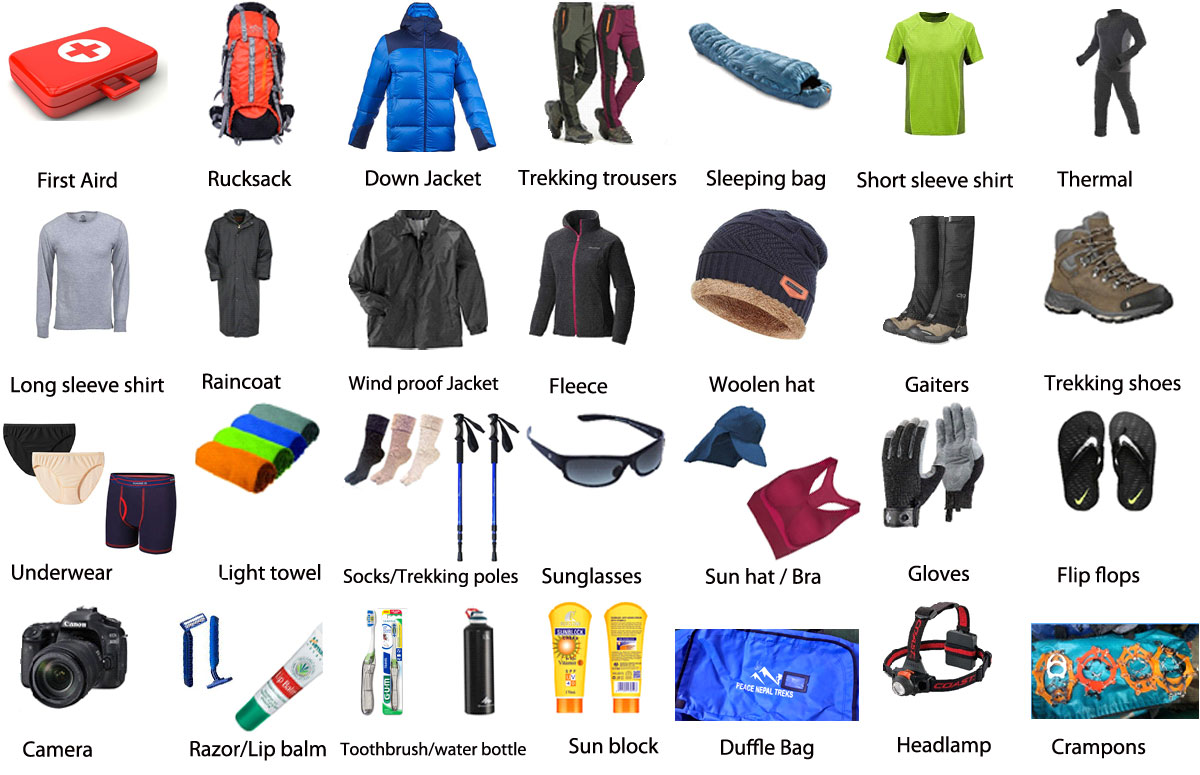
Clothing (Base Layers)
| Item | Quantity | Notes |
|---|
| Moisture-wicking t-shirts | 3–4 | Avoid cotton, it stays wet and cold |
| Long-sleeve base layers (thermal) | 2 | Merino wool holds up best over multiple days without washing |
| Trekking trousers (quick-dry) | 2 | Convertible zip-off styles are useful in variable weather |
| Fleece or lightweight jacket | 1 | Mid-layer for insulation |
| Down jacket | 1 | Essential above 3,500m; can often be rented in Kathmandu |
| Waterproof, windproof shell jacket | 1 | Non-negotiable for higher elevations |
| Trekking socks (wool blend) | 4–5 pairs | Bring extra; wet feet are a common source of trekking misery |
| Underwear | 5–7 | Quick-dry fabric preferred |
| Warm hat / beanie | 1 | For cold mornings and evenings at altitude |
| Sun hat or cap | 1 | For lower elevations and strong daytime sun |
| Gloves (lightweight + insulated pair) | 1 each | Insulated pair essential above 4,000m |
| Buff or neck gaiter | 1 | Dust, sun, and cold protection |
Footwear
| Item | Notes |
|---|
| Broken-in trekking boots | Waterproof, ankle support; never wear brand-new boots on a trek |
| Camp shoes or sandals | For evenings at teahouses |
| Gaiters | Useful in snow season (Dec–Feb) or muddy monsoon trails |
Health & Hygiene
| Item | Notes |
|---|
| Personal first-aid kit | Blister plasters, bandages, antiseptic, pain relievers |
| Diamox (acetazolamide) | For altitude sickness prevention, consult your doctor before your trip |
| Water purification tablets or filter/SteriPen | Bottled water isn't always reliable at high altitude |
| Hand sanitizer & wet wipes | Showers are limited or cold at higher elevations |
| Biodegradable soap | For minimal-impact washing at teahouses |
| Sunscreen (SPF 50+) | UV exposure is intense at altitude |
| Lip balm with SPF | Prevents painful cracked lips in dry mountain air |
| Personal medications | Bring enough for the full trip plus a buffer for delays |
| Toilet paper & small trowel | Toilet paper isn't always provided on the trail |
Gear & Equipment
| Item | Notes |
|---|
| Sleeping bag (rated to -15°C or lower) | Teahouse blankets are often insufficient in winter; many agencies offer rentals |
| Trekking poles | Reduces knee strain significantly, especially on descents |
| Headlamp + spare batteries | For early starts, e.g. Kala Patthar sunrise, and power cuts |
| Daypack (30–40L) | For carrying daily essentials if a porter carries your main bag |
| Duffel bag | For porter-carried gear; most agencies provide one |
| Dry bags or packing cubes | Keeps gear organized and protected from rain |
| Reusable water bottle (1–2L) | Reduces plastic waste and pairs with purification tablets |
| Power bank | Charging isn't free or reliable at higher teahouses |
| Universal power adapter | Nepal uses Type C/D/M sockets, 230V |
| Sunglasses (UV protection, category 3–4) | Snow glare at altitude can cause eye damage without proper protection |
Trekking Extras (High-Altitude Specific)
| Item | Notes |
|---|
| Down booties | Optional comfort item for cold teahouse evenings |
| Hand and toe warmers | Useful for winter treks or cold-sensitive trekkers |
| Energy snacks (bars, nuts, dried fruit) | Trail food gets pricier and more limited at altitude |
| Pee bottle (for tent camping treks) | Avoids cold nighttime trips outside the tent |
| Basic repair kit | Duct tape, safety pins, gear repair patches |
Packing List by Season
Spring (March–May): Pre-Monsoon Trekking Season
Spring brings mild days, cold mornings and nights at altitude, and blooming rhododendron forests on the lower trails.
| Focus Area | What to Prioritize |
|---|
| Layering | Light layers for daytime, insulated layers for morning/evening cold |
| Rain protection | Light showers possible, especially late May; pack a waterproof shell |
| Sun protection | Strong sun at altitude even with cooler air temperatures |
| Footwear | Standard trekking boots, gaiters not usually necessary below 4,500m |
Summer / Monsoon (June–August): Wet Season
Monsoon season means heavy rain in the hills and lowlands, though the rain-shadow trekking regions (Upper Mustang, Dolpo) stay relatively dry.
| Focus Area | What to Prioritize |
|---|
| Rain gear | A proper waterproof jacket and pack cover are essential, not optional |
| Footwear | Quick-dry boots or trail shoes; consider gaiters for muddy sections |
| Pest protection | Insect repellent and leech socks for lower-altitude forested trails |
| Extra clothing | Pack more spare socks and base layers since drying gear is difficult |
| Electronics protection | Waterproof dry bags for phones, cameras, and power banks |
Autumn (September–November): Peak Trekking Season
Nepal's most popular trekking window, with clear skies, stable weather, and the country's biggest festivals (Dashain, Tihar) falling in this window.
| Focus Area | What to Prioritize |
|---|
| Layering | Warm layers for high-altitude nights, which can drop well below freezing above 4,000m |
| Down jacket | Essential from Namche Bazaar and above |
| Sun protection | Clear skies mean strong daytime UV exposure |
| Footwear | Standard trekking boots; gaiters optional |
Winter (December–February): Cold, Clear, and Quiet
Winter offers the clearest mountain views and the fewest crowds, but temperatures at altitude drop significantly, especially overnight.
| Focus Area | What to Prioritize |
|---|
| Insulation | Heavier down jacket, thermal base layers, insulated gloves are mandatory above 3,500m |
| Sleeping bag | A -20°C rated bag is strongly recommended for high-altitude teahouse treks |
| Extremities | Extra socks, insulated gloves, and a warm hat are critical, frostbite risk increases at altitude |
| Footwear | Gaiters recommended in case of snowfall on higher sections |
| Flight buffer | Winter has more Lukla flight delay risk; build extra buffer days into your schedule |
Packing Tips for Nepal
- Layering beats bulk. Multiple thin layers trap heat more effectively and adapt better to Nepal's dramatic daily temperature swings than one heavy jacket.
- Rent gear in Kathmandu if needed. Down jackets, sleeping bags, and trekking poles are widely available for rent in Thamel at a fraction of retail cost, useful if you don't want to buy gear you'll rarely use again.
- Break in your boots before you arrive. New boots and high-altitude trekking are a bad combination; wear them for several weeks beforehand.
- Check your airline's baggage allowance carefully. Domestic flights to Lukla and other mountain airstrips typically allow only 10–15 kg checked and 5 kg carry-on, well below international allowances.
- Pack a physical map or download offline maps. Mobile signal is unreliable above Namche Bazaar on most routes.
- Weigh your duffel before departure day. If a porter is carrying your gear, most agencies cap porter loads at 10–15 kg per trekker for safety and fairness to the porter.
Ready to Start Packing?
Once your gear is sorted, the next step is choosing the right route and season for your trip. Whether you're planning an autumn festival-and-trekking combination or a quiet winter Everest journey, our team can help you plan an itinerary that matches your packing list and your travel dates.
Check out our Everest Base Camp Trek page for a full season-by-season breakdown, or get in touch with us for personalized packing and gear advice based on your specific route.