
There's a saying in Nepal that the country has more festivals than days in the year, and it's barely an exaggeration. Nepal's calendar is shaped by overlapping Hindu, Buddhist, Newari, and indigenous traditions, all following the lunar Bikram Sambat calendar, which means there's rarely a month that passes without something remarkable happening somewhere in the country.
Hand-picked itineraries
Recommended Trips
Related journeys you may want to explore after reading this article.
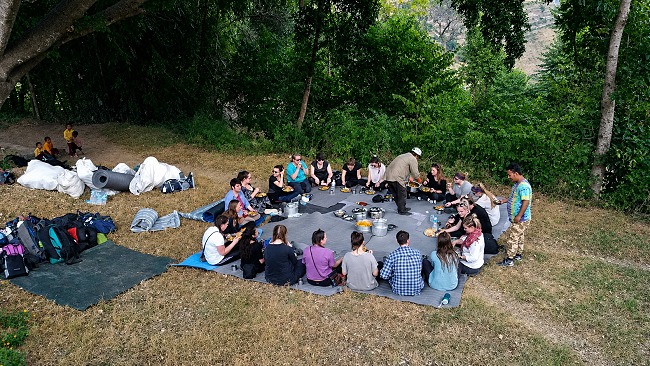
For travelers, timing a visit around one of Nepal's major festivals turns an already unforgettable trip into something else entirely: a front-row seat to living culture rather than a museum version of it. Here's a guide to the festivals worth planning your trip around, when they fall, and what to expect.
A quick note on dates: Nepal's major festivals follow the lunar calendar, so exact dates shift every year and are typically confirmed only a few months in advance. The dates below are strong 2026 estimates, always double-check closer to your travel dates.
Nepal Festival Calendar 2026 at a Glance
| Festival | 2026 Dates | Duration | Best Place to See It | Significance |
|---|---|---|---|---|
| Maghe Sankranti | January 14 | 1 day | Devghat, Triveni river ghats | Harvest festival, ritual river bathing |
| Holi | March 2 (hills) / March 3 (Terai) | 1–2 days | Kathmandu, Pokhara, Janakpur | Festival of colors marking the arrival of spring |
| Bisket Jatra & New Year | April 13–20 | 8 days | Bhaktapur | Chariot pulling festival, Nepali New Year (2083 BS) |
| Buddha Jayanti | May (full moon of Baisakh) | 1 day | Boudhanath, Swayambhunath, Lumbini | Buddha's birth, enlightenment, and death |
| Janai Purnima | August 9 | 1 day | Gosaikunda Lake, Pashupatinath | Sacred thread renewal, shaman pilgrimage |
| Gai Jatra | August 10 | 1 day | Kathmandu, Bhaktapur | Procession honoring the deceased, satire and comedy |
| Teej | September 13–16 | 3–4 days | Pashupatinath Temple | Women's fasting festival for marital wellbeing |
| Indra Jatra | September 25 – October 2 | 8 days | Kathmandu Durbar Square | Kumari chariot procession, honoring the god of rain |
| Dashain | October 11–25 | 15 days | Nationwide, especially family homes | Nepal's biggest festival, Durga's victory over evil |
| Tihar | November 7–11 | 5 days | Nationwide, especially Kathmandu Valley | Festival of lights, Laxmi Puja, Bhai Tika |
| Chhath Parva | Mid-November | 4 days | Janakpur, river ghats across the Terai | Sun worship, gratitude for life and harvest |
Maghe Sankranti: The Harvest Festival (January)
2026 date: January 14
Marking the winter solstice transition and the start of the sun's journey northward (Uttarayan), Maghe Sankranti is one of the few major Nepali festivals that follows the solar calendar rather than the lunar one, which is why its date barely shifts from year to year. It's rooted in the end of the paddy harvest, and devotees take ritual baths at sacred river confluences, most notably Devghat and the Triveni confluence, believing the water washes away sins accumulated over the year. Families also worship the sun and Lord Vishnu, feast on til ko laddu (sesame seed sweets), chaku (molasses candy), and sweet potatoes, and fly kites in the clear January skies. In Nuwakot, a traditional bullfighting event known locally as Gaura Parva also takes place. Historically, the festival is linked to the Mahabharata: Bhishma Pitamaha is said to have chosen this day to end his life, a detail that gives Maghe Sankranti particular spiritual weight for Hindus who consider it an auspicious day for liberation (moksha).
Holi: The Festival of Colors (March)
2026 dates: March 2 in the hill regions (including Kathmandu), March 3 in the Terai
Holi marks the arrival of spring and is Nepal's most joyfully chaotic festival: streets fill with people throwing colored powder and water balloons at friends and strangers alike, with bonfires lit the night before to mark the symbolic defeat of the demoness Holika. It's a rare case of a Nepali festival splitting across two dates by region, with the hills celebrating a day ahead of the Terai. If you're in Kathmandu or Pokhara during Holi, expect to get covered in color, that's the entire point, and trying to avoid it is considered part of the fun rather than something to dodge. Wear clothes you don't mind ruining, protect your camera gear, and lean into it. A traditional (and potent) drink called bhang lassi, yogurt blended with a cannabis-derived paste, is also associated with Holi celebrations in some communities; it's worth knowing what you're being offered before you accept a cup.
Bisket Jatra and Nepali New Year (April)
2026 dates: April 13–20, with Nepali New Year (2083 BS) falling on April 14
Best experienced in Bhaktapur, Bisket Jatra is one of the most physically dramatic festivals in the country: enormous wooden chariots carrying the deities Bhairav and Bhadrakali are hauled through the narrow streets by hundreds of locals in a literal tug-of-war between neighborhoods, culminating in the ceremonial raising of a towering wooden pole. The festival doubles as a celebration of the Nepali New Year, making it an energetic, community-wide event that's especially spectacular for photography.
Buddha Jayanti (May)
Celebrating the birth, enlightenment, and death of Gautam Buddha, Buddha Jayanti is sacred to both Buddhists and Hindus in Nepal. Boudhanath Stupa and Swayambhunath in Kathmandu Valley become the focal points, lit with thousands of butter lamps and filled with devotees performing kora (ritual circumambulation) around the stupas. For an especially meaningful experience, Lumbini, the birthplace of the Buddha, hosts deeply devotional celebrations that draw pilgrims from across the Buddhist world.
Janai Purnima and Gai Jatra (August)
2026 dates: Janai Purnima around August 9; Gai Jatra the following day
Janai Purnima is the sacred thread festival, when Hindu men renew the janai thread worn across the chest, and Hindus, Buddhists, and shamans alike make pilgrimages to sacred waters for ritual purification. The most remarkable version of this festival happens far from the cities: at Gosaikunda Lake, a high-altitude sacred lake at 4,380 meters north of Kathmandu, thousands of pilgrims trek up to bathe in its freezing waters, and traditional shamans (jhankris) perform ceremonial drumming and trance rituals along the shore. It's one of the most striking acts of devotion in the entire Nepali festival calendar, and one genuinely worth trekking for.
Gai Jatra, the "festival of cows," follows the next day. Rooted in mourning and remembrance for those who died in the past year, it has evolved into something unexpectedly joyful: satirical street performances, comedy, and open social commentary, a Nepali tradition of turning grief into laughter and community solidarity.
Teej: The Women's Festival (September)
2026 dates: September 13–16
Teej honors the divine bond between Lord Shiva and Goddess Parvati and is observed almost entirely by Hindu women, making it one of Nepal's most visually striking festivals: streets and temple courtyards fill with women dressed in vivid red and green saris, singing traditional Teej songs and dancing together. The festival unfolds over three main days. It opens with Dar Khane Din, a rich pre-fast feast shared with family and friends, followed by the central day, Haritalika Teej, when women observe a strict nirjala fast (without food or water) for their husband's long life or, for unmarried women, a good future husband, visiting temples such as Pashupatinath from early morning to make offerings. The festival closes with Rishi Panchami, a purification ritual involving a ceremonial bath and worship of the Sapta Rishi (seven sages). Haritalika Teej is an official public holiday in Nepal for female employees, underlining just how significant the festival is nationally. For travelers, the best place to witness Teej is around Pashupatinath Temple in Kathmandu, where thousands of women in red gather throughout the main fasting day.
Indra Jatra (September)
2026 dates: approximately September 25 to October 2
Indra Jatra is Kathmandu's grand thank-you to Indra, the god of rain, marking the end of the monsoon season, and it's centered entirely on Kathmandu Durbar Square. The eight-day festival opens with the raising of a towering wooden pole (the Linga) and builds toward its most iconic moment: chariots carrying the Kumari, Nepal's living goddess, alongside the deities Ganesh and Bhairav, pulled through the old city streets by huge crowds. Expect Lakhe masked dances, the ceremonial unveiling of a massive Bhairav mask, and an atmosphere unlike anywhere else in the country. One important note of respect: the Kumari must never be photographed with flash, this isn't a suggestion, it's a firm rule.
Dashain: Nepal's Biggest Festival (October)
2026 dates: begins October 11, main Tika day around October 21, concludes October 25 (Kojagrat Purnima)
Dashain is Nepal's most significant festival, a 15-day celebration of the goddess Durga's victory over the demon Mahishasura, and it reshapes the rhythm of the entire country. Shops close, roads fill with people traveling home to their villages, and every family compound becomes a center of ritual and reunion. At its heart is the tika ceremony: elders apply a mixture of vermilion, rice, and yogurt to the foreheads of younger family members, along with blessings and jamara (barley grass grown specifically for the occasion) as a symbol of prosperity.
For travelers, Dashain is a profound window into Nepali family life, though it's worth knowing that domestic flights, including those to Lukla, may run on reduced schedules around the main Tika days, and some guides or porters may understandably want the day off to be with family. A well-planned itinerary builds in buffer time around this.
A few more details worth knowing: the festival's first day, Ghatasthapana, involves sowing barley seeds in a clay pot, which sprout into the yellow jamara grass used in the tika ceremony ten days later. The seventh day, Phulpati, sees huge numbers of people traveling home to their villages, making roads and public transport especially busy. Kite flying is also a beloved Dashain tradition, with colorful kites filling the October skies over Kathmandu, said to carry messages to the gods asking for clear weather. Traditional swings called ping, tall bamboo structures built fresh each year, appear in villages and neighborhoods throughout the festival for children and adults alike.
Tihar: The Festival of Lights (October/November)
2026 dates: approximately November 7–11
Often compared to Diwali, Tihar is a five-day celebration that's as visually stunning as it is heartfelt. Each day honors a different figure: crows as messengers, dogs for their loyalty (every dog in Nepal receives tika and a garland on this day), cows as sacred animals, followed by Laxmi Puja, when homes are illuminated with oil lamps and candles to welcome the goddess of wealth. The festival closes with Bhai Tika, when sisters bless their brothers for long life and prosperity. Laxmi Puja night is, without question, the best night of the year for photography in Nepal, entire neighborhoods glow with lamplight, and intricate rangoli patterns decorate doorsteps across the city.
Chhath Parva: Worship of the Sun God (November)
2026 dates: mid-November, roughly four days after Tihar concludes
Chhath is one of the most rigorous and devotional festivals observed in Nepal, particularly among communities in the Terai and the city of Janakpur. Devotees fast for extended periods, some without water for over 24 hours, and gather at riverbanks and ponds at dawn and dusk to offer prayers directly to the sun, standing waist-deep in the water while holding baskets of fruit, sugarcane, and traditional offerings like thekuwa (a sweet, deep-fried wheat treat). The festival is an expression of gratitude for life, health, and the harvest, and while it's less internationally known than Dashain or Tihar, witnessing the sunrise and sunset rituals at a Chhath ghat is one of the most quietly powerful cultural experiences available in Nepal.
Combining Festivals With a Himalayan Trek
Autumn is where Nepal's cultural calendar and its best trekking weather overlap almost perfectly. Indra Jatra, Dashain, and Tihar fall within about six weeks of each other, right in the middle of peak trekking season (September to November), with clear skies and stable mountain weather. A common and deeply rewarding approach: complete a trek like Everest Base Camp in September or early October, then descend to Kathmandu in time for Dashain's Tika days or Tihar's lamp-lit nights. You get the physical adventure of the Himalayas and one of the world's richest living cultural experiences in a single trip.
Festival Etiquette for Travelers
Nepal's festivals aren't performances staged for visitors, they're genuine expressions of faith, family, and community that happen to unfold in public. A few guidelines go a long way:
- Ask before photographing individuals, rituals, or ceremonies up close
- Follow local guidance on where you can stand or walk during processions
- Never use flash photography around the Kumari
- At Dashain, some temples perform animal sacrifice as part of religious ritual; approach with sensitivity and don't photograph it without clear permission
- Dress modestly at religious sites, even during more festive, colorful events like Holi
Plan Your Trip Around Nepal's Festival Calendar
Whether you're chasing the color of Holi, the lamplight of Tihar, or the shamanic pilgrimage of Janai Purnima at Gosaikunda, timing your visit to Nepal around one of these festivals adds a dimension to your trip that no trekking peak or mountain view can replicate on its own.
If you're planning an autumn trip, pairing a trek with Nepal's biggest festival season is one of the best ways to experience the country. Explore our Everest Base Camp Trek itinerary and get in touch with our team to build a trip that combines the mountains with Dashain, Tihar, or Indra Jatra in Kathmandu.