
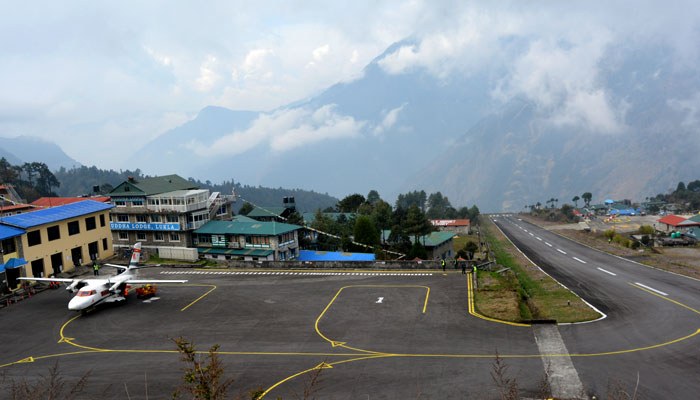
If there's one thing every Everest Base Camp trekker hears before they arrive in Nepal, it's this: the flight to Lukla is unpredictable. It's part of the adventure, but it's also the single biggest logistical wildcard in your entire trip. The good news is that delays and cancellations rarely derail a well-planned trek. Understanding why they happen, and building your schedule around them, is what separates a stressful start to your Everest journey from a smooth one.
Hand-picked itineraries
Recommended Trips
Related journeys you may want to explore after reading this article.
Here's everything you need to know before you fly.
Why Lukla Flights Get Delayed
Lukla's Tenzing-Hillary Airport sits at 2,860 meters on a short, sloped runway squeezed onto a mountainside, one of the most technically demanding airports in the world. Every flight in and out operates under Visual Flight Rules (VFR), meaning pilots need clear visual conditions to land safely. There's no instrument backup. If cloud, wind, or fog rolls in at the wrong moment, on either end of the route, flights simply don't move until conditions clear.
Two things drive most delays:
- Weather at Lukla itself. Mountain weather changes fast, and the safe landing window is often just a few hours in the early morning before clouds build up.
- Weather at the departure airport. If Kathmandu or Ramechhap is fogged in, nothing takes off, regardless of how clear it is at Lukla.
This is why you can sometimes show up at the domestic terminal on a clear morning and still find your flight cancelled: the problem isn't always where you're standing.
The Ramechhap (Manthali) Diversion: What It Means for You
One of the biggest things to understand before flying to Lukla is that, during peak trekking season, flights often don't depart from Kathmandu at all.
To reduce congestion at Tribhuvan International Airport, the Civil Aviation Authority of Nepal (CAAN) has repeatedly shifted Lukla-bound flights to Manthali Airport in Ramechhap district, roughly 132 km east of Kathmandu, during the busiest weeks of spring (March–May) and autumn (September–November). Ramechhap sits at a much lower elevation with more stable morning weather, and with no international traffic competing for runway slots, airlines can run more rotations to Lukla in a single morning.
What this means in practice:
- You'll typically leave your Kathmandu hotel around 1:00–2:00 AM for the 4–5 hour drive to Manthali
- The Ramechhap–Lukla flight itself only takes about 15–20 minutes
- Outside peak season, flights generally still operate directly from Kathmandu (30–35 minutes)
It's an early start, but the trade-off is real: Ramechhap flights tend to be more reliable than a Kathmandu departure would be during the same peak weeks, precisely because there's less air traffic competing for the same short weather window.
Whether your flight departs from Kathmandu or Ramechhap depends on the season and current CAAN directives, so it's worth confirming with your operator close to your travel dates rather than assuming based on older information.
How Long Can a Lukla Flight Be Delayed?
There's no fixed answer, delays can range from a couple of hours to a full extra day, and cancellations do happen. As a general pattern:
- Post-monsoon (October) tends to be the most stable window, with short, infrequent delays
- Early spring, late May, and November carry a higher delay risk as weather transitions between seasons
- Monsoon season (June–August) and deep winter (December–February) see the least predictable conditions overall
If a flight is cancelled, you'll usually be rebooked onto the next available slot, with priority typically given to earlier bookings. Airlines will not fly if conditions aren't safe, and cancelling is always the right call over pushing through marginal weather.
What to Do If Your Flight Is Delayed or Cancelled
- Build in a buffer day. This is the single most effective thing you can do. Most experienced trekkers and agencies recommend at least one, and ideally two, spare days in your itinerary before any international flight home. A short delay only becomes a real problem if your schedule has zero flexibility.
- Stay close to your agency's updates. Weather assessments usually happen early morning (5–8 AM), so cancellations and rebookings are communicated the same day rather than in advance.
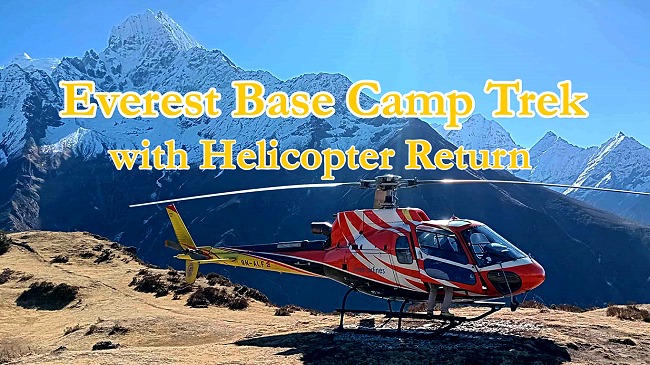
- Consider a helicopter. When fixed-wing flights are grounded, helicopters can sometimes still fly, since they can operate with lower cloud bases and more maneuverability. A shared helicopter seat between Lukla and Kathmandu or Ramechhap generally runs somewhere in the $400–700 per person range depending on the operator and demand, while a private charter costs significantly more. If you have travel insurance with helicopter evacuation coverage, ask whether it applies, some policies will reimburse this.
- Talk to your international airline if it affects a connecting flight. If a Lukla delay threatens a same-day international departure from Kathmandu, most carriers will rebook without penalty once you explain the situation, ideally with documentation from your trekking agency.
- Keep perspective. A day stuck in Kathmandu or Manthali isn't wasted, it's a good chance to rest, sort last-minute gear, or simply enjoy a proper coffee before days of teahouse life.
Practical Tips for Flying to Lukla
- Baggage limits are strict: typically 10 kg checked and 5 kg carry-on per person, with excess baggage charged separately. Pack your duffel to this limit and sort your bags the night before.
- Arrive with a fully charged phone and camera for the flight itself; the views of the Himalayas on approach to Lukla are extraordinary, and on a clear day this flight is one of the highlights of the trip on its own.
- Dress in layers if you're doing the Ramechhap drive. Manthali sits at a much lower altitude than Kathmandu and can be surprisingly warm by midday, even though the pre-dawn drive is cold.
- Don't book a same-day international flight right after your trek ends. This is the single most common source of Lukla-related travel stress, and it's entirely avoidable with basic planning.
- Book with an experienced operator. A trekking agency familiar with the Ramechhap diversion, current CAAN schedules, and rebooking procedures will handle the early wake-up calls, transport, and contingency planning so you don't have to figure it out at 1 AM in Thamel.
Is the Lukla Flight Worth the Hassle?
Yes, and by a wide margin. Despite its reputation, safety standards on the Lukla route have improved significantly over the years, with specially trained pilots, tightly managed early-morning flight schedules when weather is most stable, and a strict no-fly policy whenever conditions aren't right. The delays are an inconvenience, not a danger sign, they exist precisely because pilots and airlines refuse to take unnecessary risks.
For most trekkers, the flight itself, threading between Himalayan ridgelines before touching down on one of the most dramatic runways on Earth, is the moment the Everest Base Camp trek truly begins.
Plan Your Everest Base Camp Trek With a Team That Handles the Logistics
Lukla flight delays are far easier to manage with an experienced local team that knows the current CAAN schedule, handles Ramechhap transport, and builds sensible buffer days into your itinerary from the start. Peace Nepal Treks has been guiding trekkers through the Khumbu for years and takes care of exactly this kind of logistics, so a weather delay stays a minor inconvenience rather than a trip-ending problem.
Explore the full itinerary, cost breakdown, and season-by-season planning advice on our Everest Base Camp Trek page, or get in touch with our team to build a schedule with the right buffer days for your travel dates.