
Nepal has three main styles of trekking - Tea House Trekking (basic village lodges, used on routes like Everest and Annapurna), Lodge Trekking (the same concept with upgraded, more comfortable accommodations), and Camping Trekking (a fully self-contained tented expedition with a cook and crew, used on remote routes like Kanchenjunga and Upper Dolpo where no lodges exist). Your choice depends on which region you're trekking, your budget, and how much comfort versus wilderness you want.
Hand-picked itineraries
Recommended Trips
Related journeys you may want to explore after reading this article.

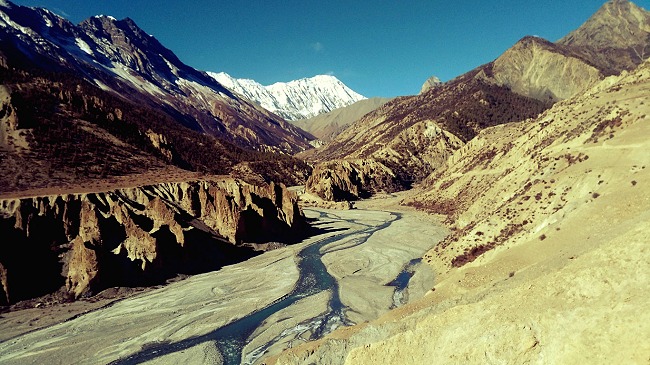

I've been organizing treks out of our office in Thamel for more than 20 years now, and this is still one of the first questions almost every client asks me: "Which kind of trek am I actually signing up for?" It's a fair question, because the three styles are genuinely different experiences, not just different price tags. I've slept in all three - a Namche Bazaar teahouse with a wood stove and a card game going, a lodge in Manang with an attached bathroom I was embarrassingly grateful for, and a tent in Upper Dolpo with nothing but stars and wind for company. Let me walk you through what each one actually involves, where you'll find them in Nepal, and how to know which one is right for your trip.
The Three Types of Trekking in Nepal, At a Glance
| Tea House Trekking | Lodge Trekking | Camping Trekking | |
|---|---|---|---|
| Where you sleep | Basic family-run guesthouse, twin-share room | Upgraded lodge, often with attached bathroom | Tent, set up fresh each night by the crew |
| Meals | Cooked to order from a lodge menu | Cooked to order, wider menu, better kitchens | Prepared by a dedicated trek cook |
| Team needed | Guide (+ optional porter) | Guide (+ optional porter) | Guide, cook, kitchen crew, porters |
| Typical regions | Everest, Annapurna, Langtang, Manaslu | Everest, Annapurna (upgraded sections) | Kanchenjunga, Upper Dolpo, Makalu, restricted/off-trail routes |
| Relative cost | Moderate | Moderate–high | Highest |
| Best for | First-timers, most trekkers | Comfort-seekers on established routes | Experienced trekkers, true wilderness routes |
Now let's get into what's actually behind each of those rows.
Tea House Trekking: The Backbone of Nepal Trekking
If you've read anything about trekking in Nepal, you've almost certainly read about tea house trekking, because it's how the overwhelming majority of trekkers experience the Himalayas today. A "tea house" is a small, family-run lodge built specifically to host trekkers — a simple twin-share room, a communal dining hall with a stove in the middle, and a kitchen turning out dal bhat, noodles, and eggs in every possible combination.
I always tell first-time clients that tea house trekking isn't a compromise — it's genuinely the best way to experience the Everest and Annapurna regions. You're not carrying a tent, so your pack stays light. You end each day's walk with a hot meal already being prepared for you, and a warm dining room full of other trekkers swapping stories about the day. And because these lodges are run by local Sherpa, Gurung, or Tamang families, you get a direct, unscripted window into mountain life that no amount of camping in the wilderness replaces.
Where you'll find it: Everest Base Camp, the Annapurna Circuit and Annapurna Base Camp, Langtang Valley, Gokyo Lakes, and increasingly Manaslu, now that tea houses have expanded along that circuit too.
What to expect:
- Twin-sharing rooms, usually with shared bathrooms (attached bathrooms become rarer above 4,000m)
- Extra blankets provided, but I still tell every client to bring a proper sleeping bag, since heating is limited at altitude
- A pay-as-you-go food menu — most packages don't include meals, so budget $25–$45 a day depending on altitude
- Wi-Fi and charging, usually for a small extra fee the higher you climb
This is what we build our Everest Base Camp Trek and Annapurna Base Camp Trek around, and it's the right call for probably 90% of the trekkers who come through our office.
Lodge Trekking: Same Concept, Better Comfort
Here's where I see the most confusion, because "lodge trekking" and "tea house trekking" get used interchangeably by a lot of operators, including sometimes by us, honestly. In its purest sense, lodge trekking refers to the exact same accommodation model — established buildings along the trail, no tents involved — but at a higher standard: private attached bathrooms, proper hot showers, real mattresses, sometimes even Western-style beds instead of the basic wooden platform.
After 20 years watching the Everest and Annapurna trails develop, I can tell you the infrastructure has genuinely improved. Namche Bazaar, Pheriche, and Manang now have lodges that would have been unthinkable when I started guiding — proper duvets, decent Wi-Fi, menus with apple pie and pizza next to the dal bhat. That's the "lodge" end of tea house trekking, and if comfort matters more to you than saving an extra $20 a night, it's worth asking your operator to book you into these upgraded stops specifically.
Where you'll find it: The same established routes as tea house trekking — Everest and Annapurna regions especially — just at the better end of the accommodation available on those trails. Our Everest Base Camp Trek with Helicopter Return and our Tilicho Lake – Annapurna Circuit – ABC combination trek both use upgraded lodge stops wherever the trail allows it.
What to expect on top of standard tea house trekking:
- Attached private bathrooms at most stops below 4,000m
- Better mattresses, sometimes proper duvets instead of just blankets
- A wider food menu, occasionally with a bakery
- Higher nightly cost, but still nowhere near the cost of a full camping crew
Camping Trekking: The Original Style, and the Only Option in Nepal's Wild Places
Before there were tea houses in Nepal at all, there was only camping. Every trek in the country used to run this way — tents, a full support crew, everything carried in. I actually started my career running camping treks in the early 2000s, before the tea house network reached the routes it covers today, and there's still nowhere else in Nepal that gives you the same sense of being completely self-sufficient in the mountains.
A camping trek means your guide is joined by a cook, kitchen staff, and enough porters to carry tents, a full kitchen setup, and food supplies for the entire trip. Every evening, the crew moves ahead, sets up your tent, and has a hot meal cooking by the time you arrive. It's more logistically demanding to organize — and more expensive, because you're now supporting an entire mobile camp instead of paying a lodge bill — but it opens up parts of Nepal that simply have no other way to stay overnight.
Where camping is required, not optional: Once you get beyond Everest, Annapurna, Langtang, and the now-teahouse-connected sections of Manaslu, you're in genuine wilderness. The Kanchenjunga region, home to the world's third-highest mountain, has only limited teahouse infrastructure — our Kanchenjunga Circuit Trek and Kanchenjunga Base Camp Trek rely on camping for significant stretches of the route. Upper Dolpo, one of the most remote trekking areas in Asia, has essentially no teahouses at all — our Upper Dolpo Trek is a fully supported camping trek from start to finish. High-altitude passes and peak climbing objectives, like the base camps we use on our Pisang Peak climb along the Annapurna Circuit or the upper reaches of our Annapurna Three High Passes Trek, also switch to tents once you're above the last teahouse.
What to expect:
- A dedicated tent each night, set up and taken down by the crew
- Meals cooked fresh by a trek cook, often more varied than what a remote teahouse kitchen could offer
- Complete route flexibility — you're not limited to wherever the next lodge happens to be
- A noticeably higher cost, driven by the wages, food, and equipment needed to support a full crew
- A genuinely different kind of solitude — I've camped in valleys in Dolpo and Kanchenjunga where we didn't see another trekking group for days
So Which One Should You Actually Choose?
I ask every client roughly the same three questions before I recommend a trek style:
Are you trekking Everest, Annapurna, Langtang, or Manaslu? If yes, you'll almost certainly be tea house or lodge trekking — the infrastructure is there, it's well-run, and there's no reason to add camping logistics and cost to a route that doesn't need them.
Do you want maximum comfort on an established route? If yes, ask your operator to book the upgraded lodges specifically — that's lodge trekking, and it's a small cost increase for a real jump in comfort.
Are you heading to Kanchenjunga, Upper Dolpo, Makalu, or off-trail terrain? If yes, camping isn't a style choice anymore — it's the only way the trip works, and you'll want an operator experienced in running full camping logistics, not just teahouse bookings.
Frequently Asked Questions About Nepal Trekking Styles
What is the difference between tea house trekking and lodge trekking? They're built on the same idea — established village accommodation instead of tents — but "lodge trekking" generally refers to the upgraded end of that spectrum: private bathrooms, better beds, and a wider food menu, usually available on the busier stops of the Everest and Annapurna routes.
Is camping trekking more expensive than tea house trekking? Yes, significantly. A camping trek needs a full crew — guide, cook, kitchen staff, and porters to carry tents and supplies — so the day-to-day cost is higher than paying for a lodge room and a meal from the menu.
Which trekking style is best for beginners? Tea house trekking. It's how routes like Everest Base Camp and Annapurna Base Camp are designed to be walked, it requires the least gear, and you get the safety net of a warm lodge and hot meal every night.
Do I need a tent for the Everest Base Camp trek? No. The entire Everest Base Camp route is teahouse-supported, so you'll sleep in lodge rooms the whole way, not tents.
Which Nepal treks require camping? The Kanchenjunga Circuit and Kanchenjunga Base Camp treks, the Upper Dolpo Trek, Makalu Base Camp, and most peak-climbing base camps require full camping support, since these routes go beyond where teahouse infrastructure currently reaches.
Can I choose a camping trek on a route that already has teahouses? Yes — some trekkers specifically want the camping experience even on routes like the Annapurna Circuit or Everest region, for extra privacy, flexibility, or a different kind of experience. It's more expensive than using the existing teahouses, but it's absolutely something we can arrange.
My Honest Recommendation, After 20 Years of Doing This
If this is your first trip to Nepal, don't overthink it: tea house trekking on a route like Everest Base Camp or Annapurna Base Camp gives you everything that makes this country's trekking special, without unnecessary cost or logistics. Save lodge upgrades for when comfort really matters to you, and save camping for when the mountain genuinely requires it — Kanchenjunga, Dolpo, and the handful of routes where there's simply no other way in.
Whatever style fits your trip, that's the one I'll help you plan properly — with the right crew, the right gear, and twenty years of knowing exactly what each of these regions actually demands. Browse our full range of Everest Region treks, or get in touch and I'll tell you honestly which trekking style suits the mountain you have in mind.
Not sure which style fits your trip? Talk to Peace Nepal Treks — we've run both teahouse and full camping expeditions for over two decades, and we'll give you a straight answer.