

Standing at the foot of the world’s tallest peak is an unmatched milestone. But a successful journey to Everest Base Camp (EBC) relies entirely on one critical variable: your itinerary. A poorly planned route risks acute mountain sickness (AMS); a perfectly balanced itinerary guarantees an unforgettable adventure.
Hand-picked itineraries
Recommended Trips
Related journeys you may want to explore after reading this article.

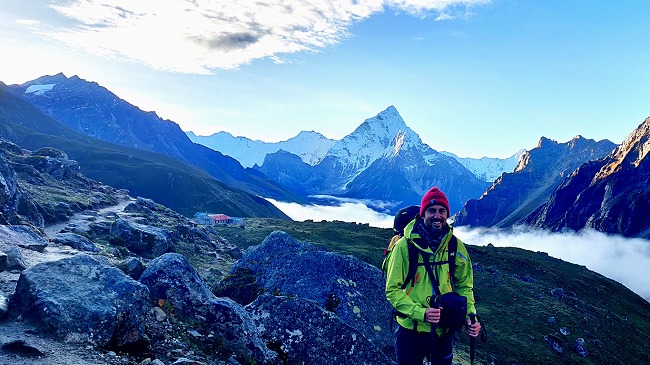
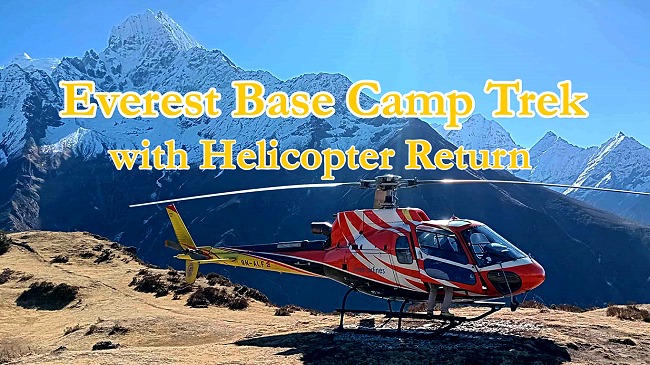
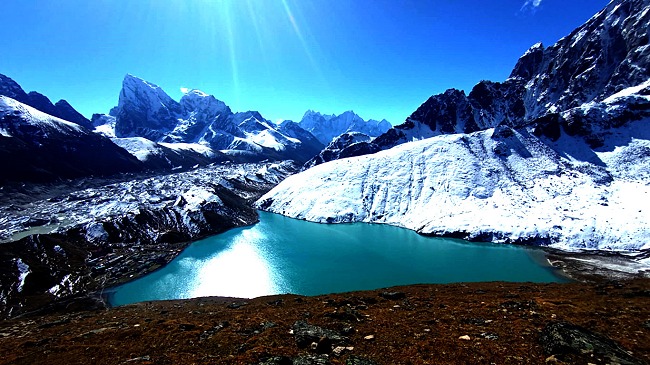
At Peace Nepal Treks, we have spent over two decades guiding adventurers through the Khumbu valley. This comprehensive 14-day Everest Base Camp trek itinerary is carefully designed as the ultimate blueprint. It balances optimal high-altitude acclimatization, manageable daily distances, and rich cultural immersion.
EBC Itinerary Quick Reference: Distances & Elevations
Before diving into the day-by-day trail breakdown, here is the full mathematical overview of the classic 14-day Everest Base Camp trek route.
| Day | Route Stage | Elevation (m / ft) | Distance (km / miles) | Trekking Duration |
| Day 1 | Arrival in Kathmandu | 1,400 m / 4,593 ft | Land Transfer | Welcome & Briefing |
| Day 2 | Fly to Lukla, Trek to Phakding | 2,610 m / 8,562 ft | 7.8 km / 4.8 miles | 3 to 4 Hours |
| Day 3 | Phakding to Namche Bazaar | 3,440 m / 11,286 ft | 10.5 km / 6.5 miles | 5 to 6 Hours |
| Day 4 | Acclimatization in Namche Bazaar | 3,440 m / 11,286 ft | 4.5 km / 2.7 miles | 2 to 3 Hours (Hike) |
| Day 5 | Namche Bazaar to Tengboche | 3,860 m / 12,664 ft | 9.2 km / 5.7 miles | 5 to 6 Hours |
| Day 6 | Tengboche to Dingboche | 4,410 m / 14,468 ft | 10.8 km / 6.7 miles | 5 to 6 Hours |
| Day 7 | Acclimatization in Dingboche | 4,410 m / 14,468 ft | 5.0 km / 3.1 miles | 3 to 4 Hours (Hike) |
| Day 8 | Dingboche to Lobuche | 4,940 m / 16,207 ft | 8.5 km / 5.2 miles | 5 to 6 Hours |
| Day 9 | Lobuche to Gorak Shep & EBC | 5,364 m / 17,598 ft | 13.0 km / 8.0 miles | 7 to 8 Hours |
| Day 10 | Kala Patthar to Pheriche | 5,545 m / 18,192 ft | 14.5 km / 9.0 miles | 6 to 7 Hours |
| Day 11 | Pheriche to Namche Bazaar | 3,440 m / 11,286 ft | 18.2 km / 11.3 miles | 6 to 7 Hours |
| Day 12 | Namche Bazaar to Lukla | 2,840 m / 9,317 ft | 18.3 km / 11.3 miles | 7 to 8 Hours |
| Day 13 | Fly Lukla to Kathmandu | 1,400 m / 4,593 ft | Flight (35 mins) | Rest & Shopping |
| Day 14 | Final International Departure | N/A | Airport Drop | End of Service |
The 14-Day Everest Base Camp Trek: Day-by-Day Breakdown
Your journey begins as you land at Tribhuvan International Airport (KTM). A member of the Peace Nepal Treks team will welcome you and arrange transport to your hotel in Thamel. In the evening, we will conduct a thorough pre-trek briefing, check your technical gear list, and introduce you to your licensed trekking guide.
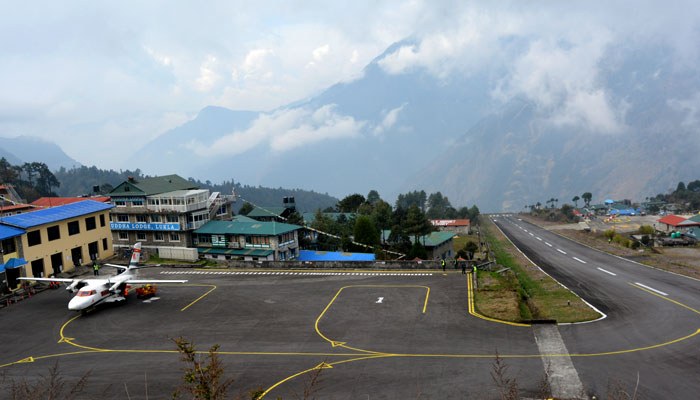
We catch an early morning mountain flight to the Tenzing-Hillary Airport in Lukla (2,860m). After organizing gear with our porters, we hit the trail. The path winds downward through lush pine forests, passing traditional mani stone walls and small Sherpa settlements along the Dudh Koshi River before resting in Phakding.
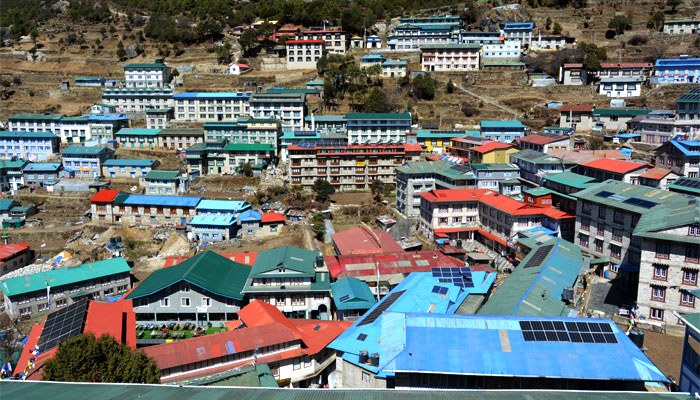
Following the banks of the roaring Dudh Koshi, we cross several spectacular suspension bridges, including the famous high-altitude Hillary Suspension Bridge. After registering our permits at the Monjo checkpoint to enter the Sagarmatha National Park, we tackle the infamous Larja Dobhan incline—a steep 600-meter vertical climb through pine forests that rewards us with our first glimpse of Everest before we reach Namche Bazaar.
This rest day is mandatory for your physiological adaptation. To prompt safe red blood cell production, we practice "climb high, sleep low" by hiking up to the Everest View Hotel (3,880m). Here, enjoy an unforgettable panoramic vista of Everest, Lhotse, Nuptse, and the iconic peak Ama Dablam. Spend your afternoon exploring Namche's local bakeries, the Sherpa Culture Museum, or the local monasteries.
The trail leaves Namche along smooth mountain ridges before dipping down to Phunki Thenga for lunch. From the riverbed, we ascend steeply through rhododendron, birch, and conifer woodlands to reach Tengboche. Home to the legendary Tengboche Monastery—the spiritual heartbeat of the Khumbu—this vantage point offers unparalleled sunset views over the mountain giants.
We trek downhill through forests to cross the Imja Khola, passing through the historic stone-walled village of Pangboche (home to the oldest monastery in the valley, founded in 1667). As we cross into the Imja Valley, the trees completely disappear, opening up into stark, high-alpine meadows. We steadily climb past Shomare to reach the windy settlement of Dingboche.
Your second built-in rest day ensures you are fully prepared to cross the 5,000-meter threshold. We take a steep, active acclimatization hike up Nangkartshang Peak (4,960m) or Nagarjun Hill. The challenging climb rewards you with sheer views of the world's fifth-highest peak, Makalu (8,485m), alongside Island Peak and Cholatse, before descending back down to Dingboche for an afternoon of deep rest.
The path follows a wide glacial valley floor up to Thukla (Dughla) for a quick hot tea. Next, we face the challenging climb up the lateral moraine of the Khumbu Glacier to Thukla Pass (4,830m). Here sits an emotional memorial site filled with stone cairns and prayer flags dedicated to climbers who lost their lives on Everest. From the pass, the grade softens as we follow the glacier edge to Lobuche.
The monumental day of the expedition. We trek roughly 3 hours along rough, rolling glacial moraines and sandy paths to Gorak Shep, checking into our high-altitude teahouse. After a fast lunch, we pack our daypacks and push along the edge of the active Khumbu Glacier for another 2 to 3 hours to reach Everest Base Camp (5,364m). Stand among the prayer flags, celebrate the legendary achievement, and witness the roaring Khumbu Icefall before hiking back to Gorak Shep to sleep.
We wake up at 4:30 AM in freezing conditions (-10°C to -15°C) to tackle the most demanding uphill hike of the trek: scaling the black rock of Kala Patthar (5,545m). This is the highest point of your journey and offers the absolute best, unobstructed, close-up panoramic view of Mount Everest (8,848.86m) glowing in the morning sunrise. We slide back down to Gorak Shep for breakfast, pack our gear, and make a massive, rapid descent down to the lower, oxygen-rich valley of Pheriche.
Walking down is a joyful breeze as your lungs absorb the denser air. We retrace our footsteps down through Pangboche and Tengboche, crossing the suspension bridges once more before climbing the short hill back into the bustling bowl of Namche Bazaar. Celebrate your achievement with a hot shower, espresso, or a slice of apple pie!
Our final day on the trail is a long but rewarding push. We hike down the steep Namche hill, exiting the Sagarmatha National Park at Monjo. Following the familiar Dudh Koshi river valley, we pass back through Phakding before making the final uphill climb to reach the gateway town of Lukla. Tonight, we host a farewell dinner to celebrate with our local Sherpa team.
We board an early morning flight from Lukla back to Kathmandu (or via Manthali/Ramechhap Airport during peak seasons due to air traffic control, followed by a smooth drive back). Once back in the capital, you have a free afternoon for souvenir shopping in the bustling streets of Thamel or treating yourself to a post-trek massage.
Your legendary Himalayan trek draws to a close. A team member from Peace Nepal Treks will collect you from your hotel and drive you to Tribhuvan International Airport for your flight home.
The Ramechhap Flight Factor
During the peak trekking seasons of Spring (March to May) and Autumn (September to November), civil aviation regulations route almost all Lukla flights out of Manthali Airport in Ramechhap instead of Kathmandu to prevent runway congestion. This requires a 4-hour midnight drive (starting around 1:00 AM) from your hotel in Kathmandu to catch your early morning flight. Peace Nepal Treks handles all vehicle logistics and flight bookings seamlessly so you don't lose sleep over changing transport schedules.
Acute Mountain Sickness (AMS) Protocol
Any professional EBC trek itinerary must include two dedicated acclimatization rest days. Pushing directly to Base Camp without pausing at Namche Bazaar (3,440m) and Dingboche (4,410m) increases the risk of high-altitude medical issues. Our guides are fully trained to monitor your blood oxygen levels daily with pulse oximeters and carry Diamox safely if required.

Frequently Asked Questions
How long is the Everest Base Camp trek itinerary?
The standard and safest Everest Base Camp trek itinerary is 14 days round-trip from Kathmandu. This includes 11 active days of walking, 2 mandatory acclimatization days on the trail, and travel buffer windows to accommodate potential mountain flight delays.
How many kilometers do you walk each day on the EBC trek?
Trekkers walk an average of 5 to 10 kilometers (3 to 6 miles) per day during the ascent phase, taking roughly 4 to 6 hours. On the descent phase, daily walking distances increase significantly to 14 to 18 kilometers (8 to 11 miles) as the trail drops into oxygen-rich zones and progress becomes faster and easier.
Can beginners complete the 14-day Everest Base Camp trek?
Yes, beginners can absolutely complete the EBC trek. The route is a non-technical walk-up that does not require climbing ropes, crampons, or prior mountaineering experience. However, beginners must prepare with consistent aerobic training (stair climbing, swimming, running, or loaded hiking) for at least 6 to 8 weeks before arriving in Nepal.
Book Your Everest Adventure with Peace Nepal Treks
Planning a trip to the roof of the world shouldn't feel like an administrative nightmare. When you book your 14-day Everest Base Camp trek with Peace Nepal Treks, we manage every variable: local flight allocations, Sagarmatha National Park entry permits, TIMS cards, experienced Wilderness First Aid certified Sherpa guides, and comfortable teahouse lodging.