
Kathmandu Valley packs an extraordinary amount of history into a small stretch of land. Seven separate monument zones here carry UNESCO World Heritage status, all inscribed together back in 1979, and together they tell the story of Nepal's Hindu and Buddhist heritage better than any museum could. Ancient palace squares, towering pagoda temples, sacred stupas, and a river considered holy enough to draw pilgrims from across South Asia all sit within a short drive of each other.
Hand-picked itineraries
Recommended Trips
Related journeys you may want to explore after reading this article.



If you are planning a trip to Nepal, whether as the start of a trek or as a standalone cultural journey, this guide walks through all seven sites, what makes each one worth your time, and how to plan a visit that does not leave you exhausted by lunchtime on day one.
The 7 UNESCO World Heritage Monument Zones of Kathmandu Valley
Before diving into each site, it helps to know the full list. UNESCO grouped these seven zones together as a single serial World Heritage property, which is why Kathmandu Valley appears as one listing rather than seven separate ones.
- Kathmandu Durbar Square
- Patan Durbar Square
- Bhaktapur Durbar Square
- Swayambhunath Stupa
- Boudhanath Stupa
- Pashupatinath Temple
- Changu Narayan Temple
Let us go through each one.
Pashupatinath Temple
Pashupatinath is Nepal's most sacred Hindu temple, dedicated to Lord Shiva and set on the banks of the holy Bagmati River. The temple complex is enormous, spreading across hundreds of shrines, ashrams, and cremation ghats, and it remains an active pilgrimage site rather than a preserved relic. This is one of the most important reasons a visit here feels different from the other UNESCO sites. You are stepping into a living religious practice, not a museum exhibit.
Non Hindu visitors cannot enter the inner sanctum where the sacred Shiva lingam sits, but the wider complex is fully open, including the cremation ghats along the river, the Deer Park, and several smaller temples. Watching the rituals unfold along the Bagmati, particularly during the evening aarati ceremony when priests perform fire offerings, is one of the more moving experiences available anywhere in the valley.
Dress modestly here, expect to remove your shoes at several points, and be respectful with photography around the cremation ghats. This is a place of real mourning and reverence for many of the people you will see.
Boudhanath Stupa
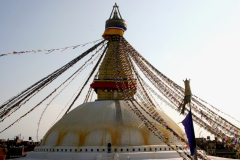
Boudhanath is one of the largest spherical stupas in the world and the spiritual center of Tibetan Buddhism in Nepal. The massive white dome, painted with the watchful all seeing eyes of the Buddha near the top, sits at the heart of a neighborhood filled with monasteries, prayer wheels, and shops selling Tibetan artwork and textiles.
The best way to experience Boudhanath is to join the kora, the ritual clockwise walk around the stupa's base, which pilgrims and locals perform daily while spinning the long rows of prayer wheels. Late afternoon and early evening tend to be the most atmospheric times to visit, when the light softens and the circuit fills with monks in maroon robes, elderly pilgrims, and families out for an evening walk.
Swayambhunath Stupa
Known widely as the Monkey Temple thanks to the troops of macaques that live around the grounds, Swayambhunath is one of the oldest Buddhist sites in Nepal and sits on a hilltop overlooking the entire valley. Climbing the roughly 365 stone steps to the top is part of the experience, and the reward at the summit is a sweeping view across Kathmandu, with the Himalayas visible on a clear day.
What makes Swayambhunath particularly special is the religious blending you see here, with Hindu shrines standing comfortably alongside Buddhist stupas and prayer flags. Sunrise is widely considered the best time to visit, both for the cooler temperatures on the climb and for the quality of light over the valley below.
Kathmandu Durbar Square
Kathmandu Durbar Square was the royal palace complex for the Malla and later Shah dynasties, and it remains the historic heart of the old city. The square is packed with temples, courtyards, and palace buildings, including the Hanuman Dhoka Palace, the towering Taleju Bhawani Temple, and Kasthamandap, the wooden pavilion said to have given Kathmandu its name.
This is also home to the Kumari Ghar, residence of the Kumari, Nepal's living goddess, a young girl worshipped as a divine incarnation. Visitors sometimes catch a glimpse of her at a window overlooking the courtyard, though photography of the Kumari herself is not permitted.
The square sits right in the middle of the city, just a short taxi ride from Thamel, which makes it an easy first stop on any Kathmandu itinerary.
Patan Durbar Square
Just across the Bagmati River in Lalitpur, Patan Durbar Square is often considered the most architecturally refined of the valley's three durbar squares. This was once an independent kingdom in its own right, and the square reflects centuries of investment in fine metalwork, wood carving, and stone sculpture.
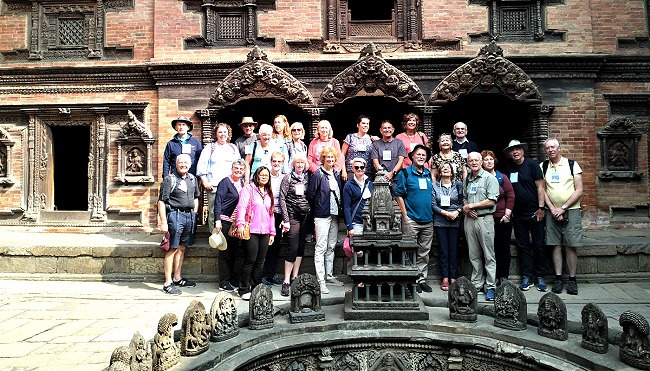
The Patan Museum, housed inside the old palace building, is widely regarded as one of the finest small museums in South Asia, with an excellent collection of bronze statues and religious artifacts. Sundari Chowk's sunken royal bath, carved with intricate stonework, is another highlight worth slowing down for.
Compared to Kathmandu Durbar Square, Patan tends to feel calmer and less crowded, which makes it a good choice if you want more time to actually absorb the craftsmanship rather than navigate through crowds.
Bhaktapur Durbar Square
Bhaktapur is the best preserved of the valley's three medieval cities, largely because it sits a bit further from central Kathmandu and has kept much of its old town layout intact. The Durbar Square here includes the 55 Window Palace, the towering five story Nyatapola Temple, and a maze of narrow streets and courtyards where traditional pottery and woodcarving workshops still operate today.
Give yourself extra time in Bhaktapur beyond the main square itself. Wandering into Pottery Square to watch potters at work, or simply getting a little lost in the old city's brick lanes, often ends up being the highlight of the visit. Try the local specialty, Juju Dhau, a rich, creamy yogurt often called the king of yogurt, sold from clay pots throughout the old town.
Changu Narayan Temple
The least visited of the seven sites, Changu Narayan is also one of the most historically significant. This is the oldest surviving temple structure in Nepal, dedicated to Lord Vishnu, with stone inscriptions dating back to the 5th century AD. The temple sits on a forested hilltop near Bhaktapur, surrounded by a traditional Newari village that has changed relatively little over the centuries.
Because it draws far fewer visitors than the other sites, Changu Narayan offers a quieter, more contemplative experience, and the detailed stone and wood carvings here are considered some of the finest examples of early Nepali craftsmanship anywhere in the valley.
How Much Time Do You Need?
Technically, all seven sites can be visited in a single very long day with a private vehicle, but this is not something we would recommend. Rushing between sites leaves little room to actually take in the atmosphere, and Kathmandu's traffic can turn a short drive into a long one during peak hours.
A more comfortable pace splits the sites over two to three days. One practical way to structure it:
Day one: Swayambhunath at sunrise, followed by Kathmandu Durbar Square mid morning, then Pashupatinath in the afternoon, finishing at Boudhanath for sunset and the evening kora.
Day two: Bhaktapur Durbar Square in the morning, with time to wander the old town, followed by Changu Narayan on the way back, and Patan Durbar Square in the afternoon.
This pacing also fits naturally with the Kathmandu Historical Tour offered by Peace Nepal Treks, which is built around exactly this kind of unhurried, guide led exploration of the valley's heritage sites.
Entrance Fees
Entrance fees for foreign visitors are collected separately at each site and go toward ongoing conservation work. As a rough guide, expect to pay somewhere in the range of NPR 1,000 for Pashupatinath, a few hundred rupees for Swayambhunath, and between NPR 1,000 and 1,800 for the three durbar squares, with Bhaktapur typically the highest given its scale and preservation costs. Fees do shift from year to year, so it is worth confirming current prices with your guide or hotel before you go, and carrying small denominations of Nepali rupees makes the ticket counters move faster.
Do You Need a Guide?
You can absolutely visit any of these sites independently, and the ticketing process at each one is simple enough to manage on your own. What a guide adds is context. Kathmandu Durbar Square in particular is dense with layered history, from Malla era palace politics to post earthquake restoration work, and a lot of that story is invisible unless someone explains it. The same goes for the symbolism at Swayambhunath and Boudhanath, and the significance of what you are watching unfold along the ghats at Pashupatinath.
For a well rounded, guided introduction to all seven sites, Peace Nepal Treks offers both a focused Kathmandu Historical Tour and longer combined itineraries such as the Kathmandu Culture and Nature Tour, which pairs the valley's heritage sites with a scenic stay in Nagarkot and a visit to Changu Narayan along the way. If you would rather browse the full range of cultural tour options available, our Nepal tour packages page covers everything from single day city tours to multi day heritage circuits.
Best Time to Visit
Autumn, from October to November, is generally considered the best season for exploring the UNESCO sites, with dry weather, clear skies, and comfortable temperatures for walking between temples. Spring, from March to April, runs a close second, with mild weather and the added bonus of blooming flowers across the valley. Both seasons also line up with major festivals, including Dashain and Tihar in autumn and Indra Jatra around Kathmandu Durbar Square, which can make a heritage visit even more memorable if your timing lines up.
Frequently Asked Questions
How many UNESCO World Heritage Sites are in Kathmandu Valley? There are seven monument zones within Kathmandu Valley: Kathmandu Durbar Square, Patan Durbar Square, Bhaktapur Durbar Square, Swayambhunath Stupa, Boudhanath Stupa, Pashupatinath Temple, and Changu Narayan Temple. All seven were inscribed together in 1979.
Can I visit all 7 UNESCO sites in one day? It is technically possible with a private vehicle, but it is not recommended. Traffic, entry queues, and the sheer amount to see at each site make two to three days a far more comfortable pace.
Is there a dress code for these sites? Yes. These are active religious sites, not just historical ruins. Covering your shoulders and knees is expected, and you will need to remove your shoes and any leather items before entering certain temple areas.
Can non-Hindus enter Pashupatinath Temple? Non-Hindu visitors can explore the wider temple complex, including the ghats and outer shrines, but cannot enter the inner sanctum housing the main Shiva lingam.
Do I need a guide to visit the Kathmandu UNESCO sites? A guide is not required for entry, but it adds real value. Much of the history, symbolism, and post earthquake restoration story behind these sites is not immediately visible without someone to explain it.
Start Planning Your Kathmandu Heritage Tour
Seven UNESCO sites within a single valley is a rare concentration of history anywhere in the world, and Kathmandu rewards travelers who take the time to move through it slowly rather than checking boxes. Whether this is the cultural bookend to a Himalayan trek or the main event of your trip to Nepal, Peace Nepal Treks can build an itinerary around the sites, seasons, and pace that suit you best. Reach out and we will help you plan a Kathmandu Valley heritage tour that captures the full depth of what this remarkable valley has to offer.