
Mera Peak gets marketed as the friendliest 6,000 meter summit in Nepal, and in a lot of ways that reputation is earned. But "friendly" and "easy" are not the same thing, and a fair number of climbers arrive underestimating what a 6,476 meter summit actually demands of the body, even when the climbing itself is technically straightforward. Here is an honest look at what makes Mera Peak hard, what does not, and who it genuinely suits.
Hand-picked itineraries
Recommended Trips
Related journeys you may want to explore after reading this article.
The Short Answer
Mera Peak is technically moderate but physically demanding. The climbing itself, roped glacier travel, crampons, an ice axe, and a short fixed rope section near the top, is well within reach for a fit beginner with no prior mountaineering experience. What makes Mera Peak genuinely difficult is the altitude. At 6,476 meters, you are climbing in roughly half the oxygen available at sea level, and that single factor causes more turnarounds and failed summits than any technical section on the mountain.
The Technical Grade, Explained Simply
Mera Peak is rated PD, short for Peu Difficile, on the International French Adjectival System used to classify alpine climbs. Translated loosely, that means "a little difficult." It sits above the easiest grade, F for Facile, which is actually how Mera Peak used to be classified before changes to the glacier and a steeper final section near the summit pushed it up a level.
In practical terms, PD means:
- No vertical ice climbing or technical rock climbing on the standard route
- Snow and glacier slopes averaging 30 to 40 degrees, with one steeper section, roughly 40 to 45 degrees, just below the summit ridge
- A fixed rope on the final headwall, ascended using a jumar and descended by rappel or arm wrap
- Crevasse hazard on the glacier, managed by climbing roped together as a team
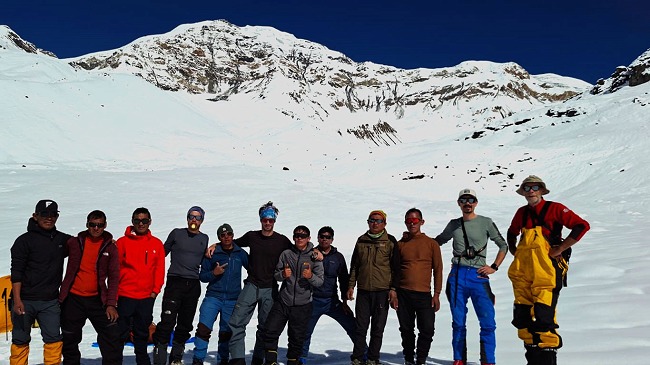
None of this requires prior climbing experience. Guides teach the necessary skills, crampon technique, self arrest with an ice axe, using a jumar on the fixed rope, during a dedicated training day at Khare before the summit push. If you can follow instructions and stay calm on gently angled snow, the technical side of Mera Peak is genuinely learnable in a day or two.
What Actually Makes It Hard: Altitude, Not Technique
This is the point almost every experienced guide makes, and it is worth taking seriously. The oxygen level at Mera Peak's summit sits at roughly 47 percent of what you would breathe at sea level. Climbers do not use supplemental oxygen on Mera Peak, which means your body is doing the entire climb on a fraction of its normal fuel supply.
Altitude sickness, not crevasses or the fixed rope section, is the reason most unsuccessful attempts end early. Symptoms often start subtly: a mild headache, a fading appetite, unusual fatigue on a day that should not feel particularly hard. Ignored, these can progress toward more serious conditions like HAPE or HACE, which is why a slow, well paced acclimatization schedule matters more to your summit chances than your fitness level on day one.
Summit day compounds this. Most climbers leave High Camp around 1 or 2 in the morning, climbing in temperatures between minus 15 and minus 30 degrees Celsius, sometimes colder with wind chill. The round trip typically takes 8 to 12 hours, and the final approach to the summit ridge is where climbers most often describe the effort as the hardest physical exertion of their lives, not because of technical difficulty, but because each step at that altitude can require two or three breaths.
The Three Summits Confusion
Mera Peak actually has three named summits along the same ridge, and this occasionally gets misrepresented by less transparent operators.
- Mera North (6,476 meters): The true, highest summit, and the one recognized as the official climbing objective
- Mera Central (6,461 meters): Slightly lower and reached somewhat more easily, occasionally marketed by some operators as "the summit"
- Mera South (6,065 meters): The lowest and least frequently attempted of the three
If summiting the true highest point matters to you, confirm with your operator specifically that your itinerary targets Mera North, not Mera Central.
What Physical Fitness You Actually Need
Mera Peak does not require prior mountaineering experience, but it does require genuine physical preparation. A realistic baseline before attempting the climb:
- Comfortably hiking 6 to 8 hours a day with a light daypack, for multiple consecutive days
- Prior experience trekking above 5,000 meters is a strong asset, whether that is Everest Base Camp, the Annapurna Circuit's Thorong La pass, or a similar high altitude trek
- No underlying cardiovascular or respiratory conditions that would compound the risks of low oxygen
- The mental resilience to handle cold, fatigue, and discomfort over a sustained, multi day push rather than a single hard day
If you can train specifically for sustained cardiovascular effort at altitude, hiking with a loaded pack, stair climbing, or a demonstrated multi day trek beforehand, you meaningfully improve your odds. Fitness alone will not guarantee a summit, since acclimatization and pacing matter just as much, but poor fitness combined with an aggressive itinerary is one of the most common reasons climbers turn back.
What the Success Rate Actually Looks Like
This is where honesty matters more than marketing. Reported success rates for Mera Peak vary widely across operators and seasons, generally somewhere between 50 and 90 percent, and the gap between those numbers usually comes down to itinerary length and acclimatization, not luck.
Shorter, rushed itineraries that compress the trek and skip a genuine acclimatization day at Khare tend to sit at the lower end of that range, sometimes reported as low as just above 50 percent in difficult seasons. Well built itineraries of 18 days or longer, with proper rest days and a contingency day built in for weather, report success rates closer to 80 to 90 percent. In other words, the itinerary you choose has a bigger effect on whether you summit than almost any other single factor, including your fitness level.
How Mera Peak Compares to Other Common Benchmarks
Mera Peak vs Island Peak: Mera is higher but less technical. Island Peak involves a steeper, more exposed fixed rope headwall, more crevasse crossings, and a narrower summit ridge, making it the more technically demanding of the two despite its lower elevation.
Mera Peak vs Kilimanjaro: Mera Peak is meaningfully harder. Kilimanjaro is a high altitude trek with no technical climbing at all, while Mera Peak involves glacier travel, crampons, an ice axe, and a roped ascent, on top of reaching a higher summit altitude.
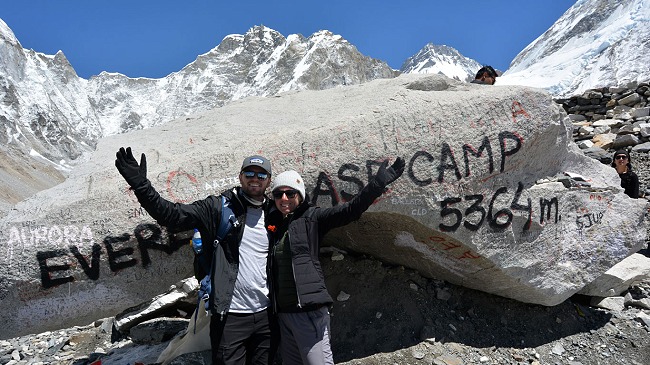
Mera Peak vs Everest Base Camp: EBC tops out at 5,364 meters and involves no technical climbing whatsoever. Mera Peak goes over a thousand meters higher and adds genuine, if moderate, mountaineering technique on top of the trekking difficulty. Many climbers use EBC or a similar high altitude trek as preparation before attempting Mera.
Who Mera Peak Genuinely Suits, and Who Should Reconsider
Mera Peak is a strong fit if you are a fit, motivated trekker without prior technical climbing experience, ideally with at least one high altitude trek above 5,000 meters already under your belt, and you are prepared to commit to a properly paced, longer itinerary rather than the cheapest or shortest one available.
It is worth reconsidering, or at minimum discussing carefully with a doctor, if you have a history of altitude sickness that has previously forced you to turn back, an underlying heart or lung condition, or if your available time only allows for a compressed itinerary under 14 days with limited acclimatization built in.
How to Improve Your Odds of Summiting
Choose a longer itinerary over a shorter one. The single biggest lever you control is acclimatization time. An extra two to three days on the approach dramatically improves your odds compared to the fastest itinerary available.
Train specifically, not generally. Sustained cardiovascular fitness matters more than gym strength. Long hikes with a loaded pack, stair training, and if possible a shorter high altitude trek beforehand all translate directly to summit day performance.
Take the acclimatization day at Khare seriously. This is not a rest day to skip if you feel fine. It is where your body catches up to the altitude gain and where you learn the technical skills you will use on summit day.
Choose your operator on itinerary quality, not price alone. A noticeably cheap package is often cheap because it has compressed the acclimatization schedule, reduced guide to climber ratio, or cut corners on gear quality, all of which affect your safety and summit chances directly.
Respect the cold on summit day. Proper down layers, warm gloves, and a good sleeping system at High Camp matter as much as your fitness. Cold, exhausted climbers make worse decisions and turn back more often than well rested, properly equipped ones.
Frequently Asked Questions
Is Mera Peak technically difficult to climb? No, not in terms of technical climbing skill. It is graded PD, moderately difficult, with a short fixed rope section and glacier travel, all of which is taught to climbers with no prior experience during training at Khare.
What is the hardest part of climbing Mera Peak? Altitude, not technique. The thin air at 6,476 meters is the main reason climbers turn back, far more often than the modest technical sections near the summit.
Do I need mountaineering experience to climb Mera Peak? No. Basic skills like crampon use, self arrest, and ascending a fixed rope with a jumar are taught on site. Strong physical fitness and prior high altitude trekking experience matter far more than prior technical climbing.
What is the success rate for Mera Peak? Reported success rates range from roughly 50 to 90 percent, largely depending on itinerary length. Longer, well acclimatized itineraries of 18 days or more report success rates in the 80 to 90 percent range.
Is Mera Peak harder than Island Peak? Mera Peak is higher but less technical. Island Peak has a steeper, more exposed fixed rope section and a narrower summit ridge, making it the more technically demanding climb of the two.
Plan a Mera Peak Climb Built for Success, Not Just Speed
The honest truth about Mera Peak is that the mountain itself is rarely the deciding factor. Itinerary length, acclimatization, guide quality, and your own preparation matter far more than any technical section on the route. At Peace Nepal Treks, our Mera Peak Climbing package is built around a properly paced itinerary with genuine acclimatization days, not the shortest schedule we can advertise, because we would rather get you to the true summit safely than rush you toward a lower success rate. If you want to understand the full cost picture before you commit, our Mera Peak climbing cost breakdown covers exactly what a properly built itinerary includes.