High on a pine-covered ridge north of Boudhanath, prayer flags snap in the wind above one of the most visited Tibetan Buddhist centers in the Himalayas. Kopan Monastery draws everyone from first-time backpackers curious about Buddhism to serious meditators who fly in from across the world for its month-long courses. Yet most travel blogs only skim the surface - a bit of history, a mention of the view, a "must-visit" tag, and little else.
Hand-picked itineraries
Recommended Trips
Related journeys you may want to explore after reading this article.


This guide is different. It's built from firsthand route details, current course pricing, entry policies, and the practical questions travelers actually search for before they show up at the monastery gate. Whether you have one free afternoon in Kathmandu or you're planning a 10-day silent retreat, here's everything you need to know.
Quick Facts: Kopan Monastery at a Glance
| Detail | Information |
|---|---|
| Location | Kopan Hill, north of Boudhanath, Kathmandu |
| Distance from Kathmandu city center | Approx. 6–8 km |
| Distance from Tribhuvan International Airport | Approx. 5–6 km (20–30 min by taxi) |
| Tradition | Tibetan Mahayana Buddhism, Gelug lineage (FPMT) |
| Founded | 1969–1971, by Lama Thubten Yeshe and Lama Zopa Rinpoche |
| Entry fee | Free (donations welcomed) |
| Visiting hours | Roughly 9:00 AM – 4:00/5:00 PM daily |
| Best time to visit | September to May (dry, clear skies) |
| Course cost | Roughly USD 7–20 per day, or from around USD 90 for a 7-day course, including food and shared accommodation |
Where Is Kopan Monastery and Why It Matters
Kopan Monastery sits on a quiet hillock just northeast of the Boudhanath Stupa, one of the largest stupas in the world and a UNESCO World Heritage Site. That location is no accident. When Tibetan lamas fled to Nepal after the 1959 uprising, many settled around Boudhanath because it was already a stronghold of Tibetan Buddhist culture. Kopan grew out of that same community, and today the two sites are usually visited together.
What sets Kopan apart from Kathmandu's other monasteries is that it isn't a museum piece. It's a working monastic community of several hundred monks, nuns, and resident students, alongside a school that trains young monks in philosophy and debate. Visitors aren't just looking at Buddhism here; they're stepping into it while it's actually happening.
History and Founding of Kopan Monastery
Kopan Monastery was established between 1969 and 1971 by two Tibetan lamas, Thubten Yeshe and Thubten Zopa Rinpoche, on land purchased from a Nepali royal astrologer. What began as a small teaching center for a handful of Western students grew into the headquarters of the Foundation for the Preservation of the Mahayana Tradition (FPMT), a global network of Buddhist centers now spanning dozens of countries.
Lama Yeshe passed away in 1984, and Lama Zopa Rinpoche continued to lead FPMT and guide Kopan's growth until his passing in 2023. The monastery has since continued its teaching programs and is completing a major memorial stupa project in his honor, alongside the existing Stupa of Complete Victory that houses sacred relics. The monastery now houses well over 300 monks and runs a companion nunnery, Khachoe Ghakyil Ling, a short walk further up the hill.
Getting There: Routes, Timings, and Costs
Kopan Monastery is easy to reach from anywhere in Kathmandu, and there are more ways to get there than most guides mention.
- By taxi: The simplest option. Expect to pay roughly NPR 600–1,000 (about USD 5–8) from Thamel or the airport, with the ride taking 25–40 minutes depending on traffic. Taxis can only drop you at the base of the hill; a short uphill walk to the main gate follows.
- By public bus: Local buses run toward the base of Kopan Hill from areas like Ratna Park, costing under NPR 50. It's the cheapest option but involves more walking and less predictable timing.
- On foot from Boudhanath: A popular and scenic choice. The walk from Boudhanath Stupa through Phulbari takes roughly 40–50 minutes and gives you a feel for the neighborhood before you climb the final stretch to the monastery.
- By motorbike or bicycle: A flexible option if you're comfortable with Kathmandu traffic, and it lets you continue on to nearby viewpoints afterward.
Good to know: The monastery gate typically closes around 5:00 PM, so plan your visit to wrap up before late afternoon. It's also worth calling ahead or checking the official Kopan Monastery website, since day-visitor access is sometimes restricted while a course or retreat is in session.
Best Time to Visit Kopan Monastery
The ideal window is September through November and March through May, when Kathmandu Valley's skies are clearest and the Himalayan foothills are visible from the monastery grounds. Winter (December–February) is cold but usually clear, while the monsoon months (June–August) bring haze and rain that can obscure the valley views, though the gardens turn lush and green.
Within the day, mornings are best if you want to see the monks' prayer rituals and Dharma talks, while late afternoon is when the sunset light hits the valley and the Himalayan skyline in the distance. Saturdays tend to draw large numbers of local Nepali visitors and families, so if you prefer a quieter, more contemplative visit, aim for a weekday.
Things to See and Do at Kopan Monastery
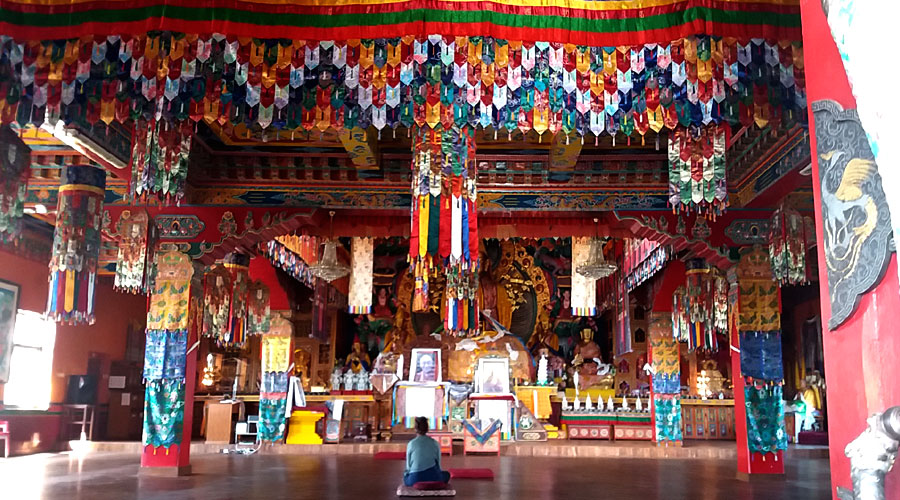
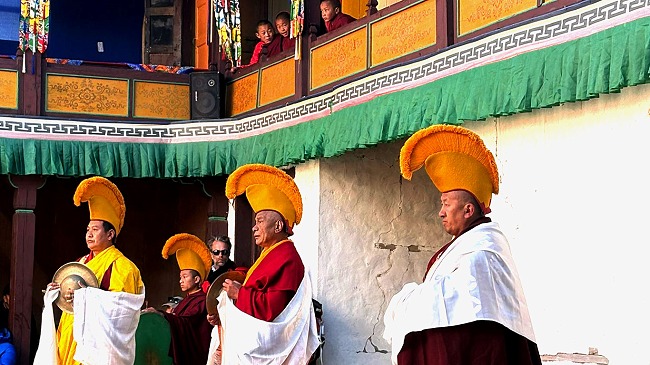
- Attend a morning puja or Dharma talk. Visitors are welcome to sit in on the monks' chanting and prayer sessions, usually held in the main gompa. Arrive quietly, sit toward the back, and avoid interrupting the ritual.
- Walk the gardens and stupa grounds. Kopan's manicured gardens, ponds, and the golden Stupa of Complete Victory are ideal for a slow, reflective walk, and they're some of the best photography spots on the hill.
- Spin the prayer wheels. Rows of prayer wheels line the courtyard paths — turn them clockwise as a gesture of respect to local custom.
- Browse the monastery library and small museum. Both hold Buddhist scriptures, texts, and artifacts that give context to what you're seeing outside.
- Take in the valley view. From the hilltop you can pick out Boudhanath Stupa, the Kathmandu airport runway, and on a clear day, the distant Himalayan range.
- Stop at the monastery café. A simple, inexpensive spot serving vegetarian food and drinks — a nice place to pause before the walk or taxi back down.
- Interact respectfully with monks and nuns. Many are happy to answer questions about monastic life, though remember this is their home and place of study, not a performance for tourists.
Meditation Courses and Retreats at Kopan
Kopan's meditation and study programs are what put it on the map internationally, and they range from a single afternoon of reflection to a full month of structured practice.
Types of programs typically offered:
- Day visits — no course enrollment required, just show up during visiting hours.
- Short courses (around 7 days) — an introduction to Buddhist philosophy and meditation, including shared dorm-style accommodation and three vegetarian meals a day, generally priced in the range of USD 7–20 per day depending on the room type.
- The November course — Kopan's best-known program, a month-long deep dive into Lamrim (the graduated path to enlightenment) that draws hundreds of participants annually and requires advance booking.
- The FPMT Basic Program — a multi-year structured study track for more committed students.
- Private and group retreats — typically reserved for returning students or those affiliated with FPMT centers, given limited space.
Before you book:
- Reserve well ahead of time, especially for the November course, which fills up months in advance.
- Expect simple, shared accommodation rather than private hotel-style rooms.
- A strict vegetarian diet is served throughout any course or retreat stay.
- Periods of silence, discussion groups, and daily meditation sittings are standard parts of the schedule — go in expecting structure, not a relaxed retreat.
Entry Fee, Opening Hours, and Etiquette
There is no compulsory entry fee to visit Kopan Monastery as a day visitor, though donations toward its upkeep and educational work are appreciated. Visiting hours generally run from around 9:00 AM to 4:00 or 5:00 PM, though it's worth confirming current hours directly with the monastery before you go, since access can be limited during teaching periods.
A few etiquette points that matter here more than at a typical tourist site:
- Dress modestly. Cover your shoulders and knees; this is an active place of worship, not a photo backdrop.
- Remove your shoes before entering prayer halls and temples.
- Keep your voice down near the gompa, especially during chanting or meditation sessions.
- Walk clockwise around stupas and prayer wheel rows, in line with Tibetan Buddhist custom.
- Ask before photographing monks or nuns, particularly during ceremonies.
Nearby Attractions to Pair With Your Visit
Kopan sits close enough to several major Kathmandu Valley landmarks that most travelers turn it into a half-day or full-day cultural loop rather than a standalone stop.
- Boudhanath Stupa — a 40–50 minute walk or short taxi ride away, and easily the most natural pairing with Kopan.
- Pashupatinath Temple — one of the holiest Hindu temple complexes in Nepal, a short drive from Boudhanath.
- Swayambhunath (Monkey Temple) — across the valley, offering another hilltop viewpoint and a very different, Newari-Buddhist atmosphere.
- Amitabha Monastery — visible from Kopan's grounds on the neighboring hill, a smaller and quieter alternative for those who want more solitude.
A well-planned day could look like: morning at Boudhanath, late morning walk up to Kopan for a Dharma talk and garden stroll, then Pashupatinath in the afternoon before the crowds build on the way back into the city.
Frequently Asked Questions About Kopan Monastery
Is Kopan Monastery open to tourists? Yes. Day visitors are welcome to explore the grounds, gardens, library, and stupa, and to sit in on daily prayer sessions, without needing to enroll in any course.
Is there an entry fee for Kopan Monastery? No, entry is free. Donations toward the monastery's maintenance and educational programs are welcomed but not required.
How far is Kopan Monastery from Kathmandu and the airport? It's roughly 6–8 km from central Kathmandu and about 5–6 km from Tribhuvan International Airport, translating to a 20–40 minute taxi ride depending on traffic.
What is the best time to visit Kopan Monastery? September to November and March to May offer the clearest skies and best valley views. Mornings are best for prayer ceremonies, and late afternoon is best for sunset views.
Can I stay overnight or join a meditation course at Kopan? Yes, provided you enroll in one of the monastery's retreat or course programs, which include shared accommodation and vegetarian meals. Advance booking is essential, especially for the popular month-long November course.
What should I wear to Kopan Monastery? Modest clothing that covers your shoulders and knees, comfortable walking shoes for the uphill approach, and a light layer for the hilltop breeze. Shoes come off before entering prayer halls.
Is Kopan Monastery good for a day trip from Kathmandu? Yes. Its short distance from the city, free entry, and proximity to Boudhanath Stupa make it one of the easiest and most rewarding half-day cultural excursions in the Kathmandu Valley.
Do I need to book in advance to visit Kopan Monastery? No advance booking is needed for a general day visit. Booking ahead is only necessary for meditation courses, retreats, or overnight stays.
Final Thoughts
Kopan Monastery works precisely because it doesn't try to package spirituality for tourists. It's a functioning Tibetan Buddhist community that happens to welcome outsiders in, whether for an hour of quiet reflection in the gardens or a month of structured meditation practice. Pair it with a walk up from Boudhanath, go on a weekday morning if you want the quieter version of it, and give yourself more time than you think you'll need — most visitors end up staying far longer than planned.
If you're building out a Kathmandu itinerary around Boudhanath, Pashupatinath, Swayambhunath, and Kopan, our team at Peace Nepal Treks can help you sequence the day so you catch the monastery's morning prayers without rushing the rest of the valley's cultural sites. Get in touch and we'll help you plan a route that fits your schedule.