The Dhaulagiri Circuit Trek is one of Nepal’s most challenging and remote high-altitude adventures. This 19-day journey circles Mount Dhaulagiri, 8,167 metres, the seventh-highest mountain in the world. The trek crosses glaciers, isolated valleys and two mountain passes above 5,000 metres.
The trail is much quieter than the popular Everest Base Camp Trek and Annapurna Circuit Trek. It is an excellent choice for experienced trekkers who want to explore a wild part of the Nepal Himalayas away from busy trekking routes.
The journey begins in the warmer Myagdi Valley. During the first part of the trek, you walk through terraced farmland, forests and traditional Magar villages. The trail follows the Myagdi Khola and passes through Beni, Babichor, Dharapani, Muri, Boghara and Dobang.
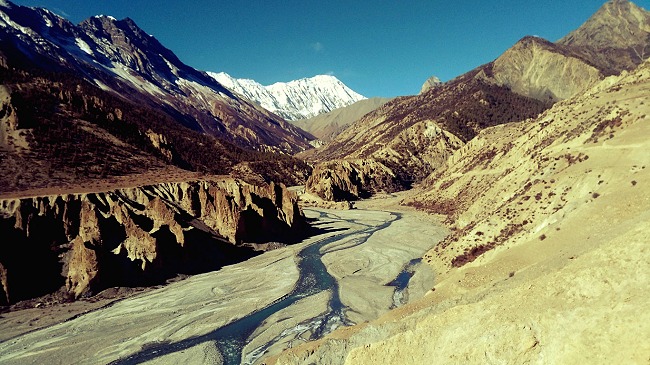
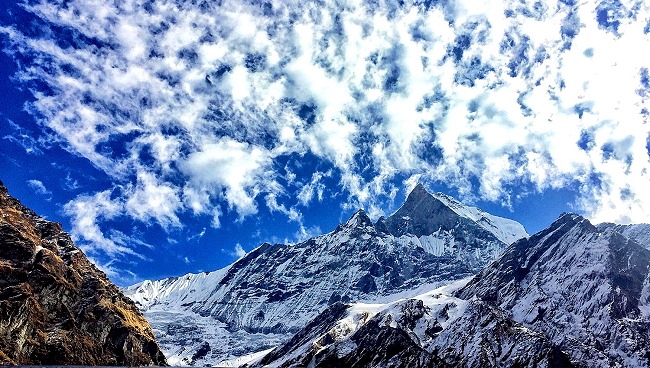
As the route climbs higher, villages and forests slowly disappear. The landscape changes into rocky valleys, glaciers, icefalls and snow-covered mountains. The remote section includes Italian Base Camp, Glacier Camp and Dhaulagiri Base Camp.
After proper acclimatisation, the trail crosses French Pass at approximately 5,360 metres and enters Hidden Valley. You then cross Dhampus Pass, also called Thapa Pass, at approximately 5,240 metres, before descending towards Yak Kharka and the Kali Gandaki Valley.
This route is a fully supported camping trek. Tea houses and permanent accommodation are unavailable in many of the higher areas. Peace Nepal Treks therefore provides tents, meals, cooking equipment, experienced guides, porters and a complete trekking support team.
The Dhaulagiri Circuit is different from most other treks in Nepal. It is not only a walk through the mountains but also a true Himalayan expedition-style experience.
The route offers complete wilderness, very few trekkers and constantly changing scenery. You begin among green hills and farming villages before entering a high-altitude world of glaciers, snow, rock and ice.
The trek is especially suitable for travellers who have already completed other difficult Himalayan journeys and are ready for a greater challenge. If you prefer another remote but slightly more accessible route, you may also consider the Manaslu Circuit Trek.
The journey begins with a drive from Kathmandu towards Baglung and Beni. From the lower Myagdi Valley, the walking route passes through Babichor, Dharapani, Muri, Boghara and Dobang.
Beyond Dobang, permanent settlements become limited. The trail continues towards Italian Base Camp through forests and increasingly rugged mountain terrain.
After acclimatising at Italian Base Camp, you move towards Glacier Camp and Dhaulagiri Base Camp. This section involves glacial moraine, rocky ground and demanding high-altitude walking.
From Dhaulagiri Base Camp, the route climbs across French Pass before descending into Hidden Valley. The journey continues across Dhampus Pass and descends towards Yak Kharka, Tukuche and the Kali Gandaki Valley.
After completing the trek, you travel through Beni and Baglung before returning to Pokhara.
Travellers interested in other quiet Himalayan routes can explore our off-the-beaten-path treks in Nepal.
The Dhaulagiri Circuit Trek is graded strenuous and is one of the most difficult trekking routes in Nepal. It is recommended for physically fit trekkers with previous experience at high altitude.
Trekkers should be prepared for:
The route is generally considered a trek rather than a technical climb. However, snow and ice conditions may require crampons, ropes and other safety equipment. The guide will decide which equipment is necessary after checking the trail and weather conditions.
The Dhaulagiri Circuit is best for experienced trekkers who:
This trek is not recommended for first-time trekkers. Beginners should first complete a less demanding route, such as the Annapurna Circuit Trek, before attempting Dhaulagiri.
Good acclimatisation is one of the most important parts of the Dhaulagiri Circuit Trek. The route rises from the lower Myagdi Valley to mountain passes above 5,000 metres.
Our 19-day itinerary includes time to acclimatise around Italian Base Camp and Dhaulagiri Base Camp. These extra days allow the body to adjust before crossing French Pass and entering Hidden Valley.
Trekkers must walk slowly, drink enough water and inform the guide about headaches, dizziness, nausea or unusual tiredness. If symptoms become serious, the guide may change the itinerary or arrange a descent.
Safety always comes before the planned schedule.
The lower section may provide simple local lodges where available. However, the higher and more remote sections require full camping support.
Our camping service includes:
The support team sets up the camp, prepares meals and manages the equipment. Trekkers can therefore focus on walking, acclimatising and enjoying the journey.
Fresh meals are prepared by the trekking cook during the camping section. The menu normally includes rice, noodles, soup, vegetables, potatoes, pasta, eggs, bread and other energy-rich foods.
Hot drinks such as tea, coffee and hot chocolate are also provided. Food choices may become more limited at higher elevations because every item must be transported by the support team.
Boiled or properly treated drinking water is provided during the remote section. Trekkers should carry a reusable water bottle and follow the guide’s instructions for safe drinking water.
The best seasons for the Dhaulagiri Circuit Trek are spring and autumn. Because the route crosses high passes, weather and snow conditions play an important role.
Spring brings warmer daytime temperatures and colourful forests in the lower region. The mountain views are generally good, although afternoon clouds may develop.
April and May are normally better than early March because the higher passes can still have deep winter snow.
Autumn offers clear skies, dry weather and excellent mountain views. October and early November are normally the most suitable periods for crossing French Pass and Dhampus Pass.
Conditions can change quickly at high altitude, even during the best trekking months.
The trek is generally not recommended during winter because heavy snowfall, severe cold and strong winds may block the mountain passes.
The monsoon season is also unsuitable. Rain can cause landslides, muddy trails, swollen rivers and poor visibility in the lower region.
Temperatures vary greatly because the trek travels from low valleys to camps above 5,000 metres.
The lower villages can be warm during the day. At Italian Base Camp, Dhaulagiri Base Camp and Hidden Valley, daytime temperatures are much colder. Night temperatures may fall well below freezing.
Trekkers must carry a warm sleeping bag, down jacket, waterproof clothing, insulated gloves and suitable trekking boots. Weather can change without warning, so extra days may be required.
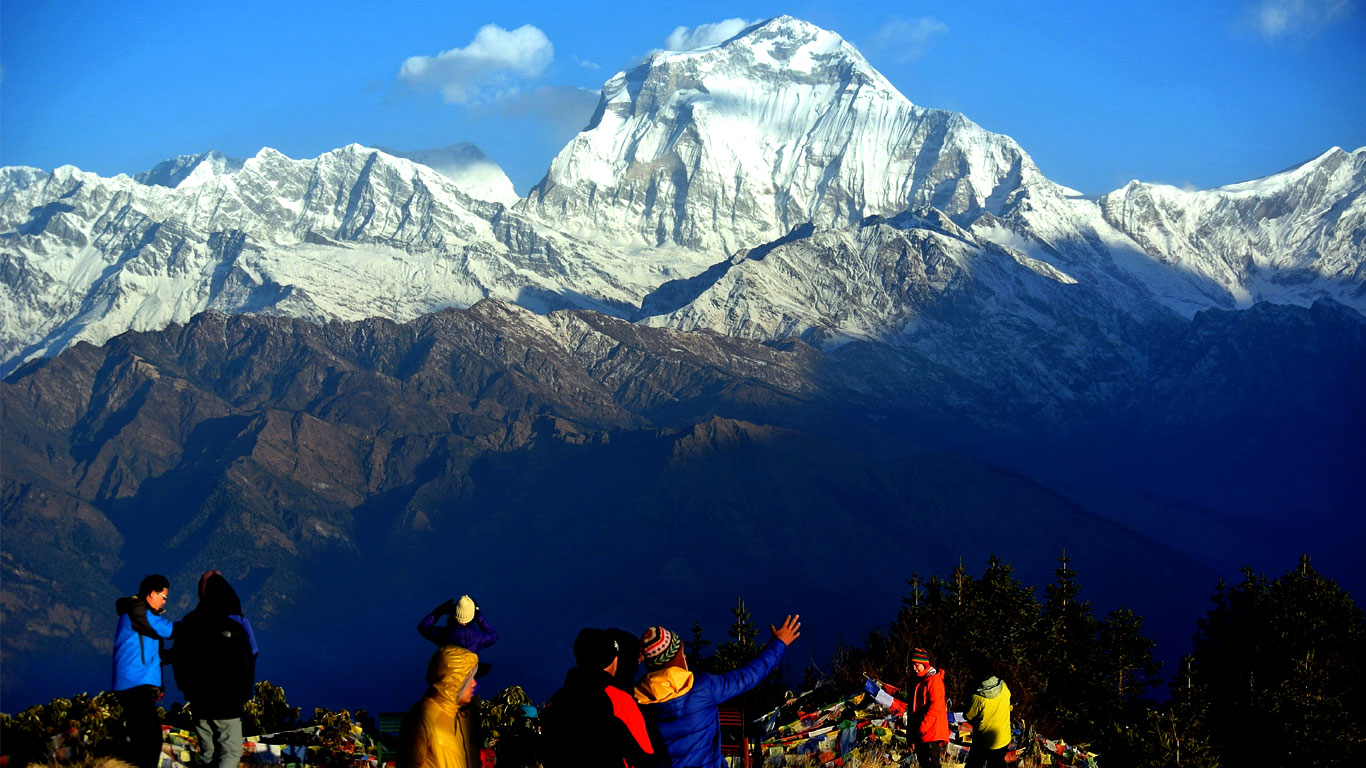
The route offers close views of several major Himalayan peaks, including:
The most dramatic scenery appears around Italian Base Camp, Dhaulagiri Base Camp, French Pass and Hidden Valley.
Before entering the high mountains, the route passes through traditional villages in the Myagdi region. Many local families depend on farming, livestock and seasonal work.
Walking through Dharapani, Muri, Boghara and other settlements provides an opportunity to observe village houses, terraced fields and everyday rural life.
The cultural section becomes quieter as the trail rises. Beyond the last permanent settlements, the journey enters an almost completely uninhabited mountain environment.
The required permits depend on the final route and entry points. They may include:
Peace Nepal Treks will check the latest requirements and arrange the necessary permits before departure.
The Dhaulagiri Circuit requires careful planning, strong logistics and experienced mountain staff. Peace Nepal Treks arranges the complete journey, including transportation, permits, camping equipment, food supplies, guides, cooks and porters.
Our team understands that weather, trail conditions and individual health can change during a remote expedition. The itinerary will therefore remain flexible when safety requires an adjustment.
To discuss dates, group size or a private departure, please contact Peace Nepal Treks.
Yes, the Dhaulagiri Circuit is worth completing for experienced trekkers seeking a serious and remote Himalayan challenge.
The route offers very few crowds, close mountain views, traditional villages, glaciers, two passes above 5,000 metres and a genuine camping experience. However, it requires excellent fitness, previous altitude experience and a reliable support team.
For well-prepared adventurers, it can be one of the most memorable trekking experiences in Nepal.
Our representative will welcome you at Tribhuvan International Airport and transfer you to your hotel. Later, meet your trekking guide, check your equipment and receive information about the route, camping arrangements and mountain safety.
Height: Kathmandu – 1,400 m
Transfer time: Approximately 30–45 minutes
Accommodation: Kathmandu hotel
Leave Kathmandu early in the morning and drive through beautiful hills, rivers and countryside to Baglung. From Baglung, begin the walk towards Beni, the main gateway to the Dhaulagiri region.
This will be a very long travel day. Driving directly from Kathmandu to Beni would be a more comfortable option.
Baglung height: 1,020 m
Beni height: 850 m
Driving distance: Approximately 270 km
Driving time: Approximately 9–10 hours
Walking distance: Approximately 13 km
Walking time: Approximately 3–4 hours
Accommodation: Lodge in Beni
Begin the trek by following the Myagdi Khola. Walk through small villages, terraced farmland and green countryside. Cross local bridges before reaching Babichor for the overnight stay.
Height: Babichor – 950 m
Walking distance: Approximately 14–16 km
Walking time: Approximately 5–6 hours
Accommodation: Lodge Stay
Continue through farming villages and subtropical forests. The trail follows the river and gradually climbs towards Dharapani. On a clear day, you may enjoy your first views of the Dhaulagiri mountain range.
Height: Dharapani – 1,400 m
Walking distance: Approximately 13–15 km
Walking time: Approximately 6–7 hours
Accommodation: Lodge Stay
Descend towards the river, cross a bridge, and climb through forests and terraced fields. Reach Muri, a beautiful traditional Magar village overlooking the surrounding valley.
Height: Muri – 1,850 m
Walking distance: Approximately 11–13 km
Walking time: Approximately 5–6 hours
Accommodation: Lodge Stay
Descend from Muri and cross the Myagdi Khola. Continue through farmland, forests and several uphill and downhill sections. Boghara is one of the final permanent villages before entering the remote mountain area.
Height: Boghara – 2,080 m
Walking distance: Approximately 12–14 km
Walking time: Approximately 6–7 hours
Accommodation: Lodge Stay
Follow a narrow trail through the forest and alongside the Myagdi River. Some parts of the trail may be rocky, wet or steep. Reach Dobang and settle into the campsite for the night.
Height: Dobang – 2,520 m
Walking distance: Approximately 12 km
Walking time: Approximately 6–7 hours
Accommodation: Tented Camp Stay.
Continue through dense forests, cross streams and climb higher into the isolated valley. As the altitude increases, the vegetation becomes thinner and the landscape gradually changes.
Height: Choriban Khola Camp – 3,110 m
Walking distance: Approximately 6–8 km
Walking time: Approximately 5–6 hours
Accommodation: Tented Camp Stay.
Climb towards the Chhonbarban Glacier and Italian Base Camp. The trail becomes rougher, with loose rocks and glacial terrain. Enjoy close views of the Dhaulagiri massif, Tukuche Peak and the surrounding mountains.
Height: Italian Base Camp – 3,660 m
Walking distance: Approximately 8–10 km
Walking time: Approximately 6–7 hours
Accommodation: Tented Camp Stay.
Enter the high-mountain section of the route. Walk through a narrow valley and carefully cross rocky moraine and glacial terrain. Your guide and support team will assist you through the difficult sections.
Height: Glacier Camp – 4,200 m
Walking distance: Approximately 6–8 km
Walking time: Approximately 6–7 hours
Accommodation: Tented Camp Stay.
Continue across the glacier and moraine towards Dhaulagiri Base Camp. This is a physically demanding day, but the close views of Dhaulagiri I, Tukuche Peak and the surrounding icefalls make the journey very rewarding.
Height: Dhaulagiri Base Camp – 4,740 m
Walking distance: Approximately 7–9 km
Walking time: Approximately 6–7 hours
Accommodation: Tented Camp Stay.
Begin walking early and climb across snow, ice and glacial moraine towards French Pass. From the pass, enjoy remarkable views of Dhaulagiri, Tukuche Peak, Mukut Himal and the surrounding mountains. Descend carefully into Hidden Valley.
French Pass height: 5,360 m
Hidden Valley height: 5,050 m
Walking distance: Approximately 10–12 km
Walking time: Approximately 7–9 hours
Accommodation: Tented Camp Stay.
Cross the open landscape of Hidden Valley and climb towards Thapa Pass, also known as Dhampus Pass. After crossing the pass, begin a long and steep descent towards Yak Kharka. Snow and ice may make this day more challenging.
Thapa Pass height: 5,244 m
Yak Kharka height: 3,680 m
Walking distance: Approximately 12–14 km
Walking time: Approximately 7–9 hours
Accommodation: Tented Camp Stay.
Descend towards the Kali Gandaki Valley. The landscape becomes drier as you approach Tukuche, a traditional Thakali village known for its stone houses, apple orchards and mountain views.
Height: Tukuche – 2,590 m
Walking distance: Approximately 10–12 km
Walking time: Approximately 5–6 hours
Accommodation: Tea house Stay
Follow the Kali Gandaki Valley through Larjung, Kobang and other Thakali villages. The route passes apple orchards, pine forests and traditional settlements before reaching Ghasa.
Height: Ghasa – 2,010 m
Walking distance: Approximately 20–22 km
Walking time: Approximately 6–8 hours
Accommodation: Lodge Stay
After breakfast, drive from Ghasa through the Kali Gandaki Valley. Pass through Tatopani, Beni and Baglung before continuing to Pokhara. After arrival, transfer to your hotel and enjoy a well-earned rest.
Height: Pokhara – 820 m
Driving distance: Approximately 130–150 km
Driving time: Approximately 6–8 hours
Accommodation: Pokhara hotel
This itinerary does not include an acclimatization day before crossing French Pass and Thapa Pass. For better altitude adjustment and safety, we strongly recommend adding one rest day at Italian Base Camp and another at Dhaulagiri Base Camp.
Medical support: emergency first aid kit carried by the support staff
Camping equipment: We always provide every guest holiday trek with high qualities equipment: good qualities tent, Gas stove for food preparation, toilets tent and papers, kitchen tent with necessary utensils, Dining tent (for eating), table and chairs as a group, hand clean up towel and soap with tap water, Ice ax and sable.
Accommodation and meals: During camping treks, an expert cook accompanies us and serves the best local dishes with different items on our plates. Both food and accommodation during camping treks are our responsibilities. We serve three meals on camping treks.
Breakfast Verities: Tea, coffee, hot chocolate, milk, boil water/different kinds Tibetan bread, toast, omelet fried or scrambled, boil an egg, porridge, muesli, cornflake, chapatti, jam, honey, pinner butter, rice pudding, pancake, butter, salami, sinoman role.
Lunch: Juice, tea (black/lemon/coffee), boil water/ sandwich, potato cheaps, different items bread, vegetable, macaroni, chaumin, fried/boil potatoes, plan chapatti, back beans.
Dinner: Different items Soup, popcorn, prawn, cookies, papad/ local Nepali verities food (Daal/rice/vegetables/meat/pickle), pizza (vegetable/mushroom/chicken), burger, pasta, chicken meat, can meat, veg/non-veg momo, spagity, noodles, tuna fish, sasit, spring role.
Desert: tea, coffee, milk, chocolate, boil water, cake, pie, seasonal fruits, tin fruit, mango, apple, banana.
Water: we serve with boil water drink along the trek either you can make tea or coffee for a day trip. It should be better to bring a good quality water bottle for the trek.
Travel Insurances are compulsory for clients trekking or climbing with us. The insurance should cover you in case of emergencies like accidents, altitude sickness and ambulance and helicopter rescue charges if required. Please carry a copy of your insurance papers while travelling in Nepal and do send us a copy as well. This will help us in making all the necessary arrangements in case of any sort of emergencies.

Our complete Dhaulagiri Circuit Trek takes 19 days, including arrival, transportation, trekking, acclimatisation and the return to Pokhara. The exact duration may change because of weather or trail conditions.
Yes. It is one of Nepal’s most demanding treks. It includes remote camping, glacier travel, long walking days and two passes above 5,000 metres.
Previous high-altitude trekking experience is strongly recommended. This route is not suitable as a first Himalayan trek.
No. Lodges may be available in some lower villages, but a fully supported camping service is necessary for the upper section.
Crampons or microspikes may be necessary when snow or ice covers the passes and glaciers. The final equipment requirement depends on current conditions.
The trek is not recommended for beginners. Trekkers should already have experience walking at high altitude and camping in remote conditions.
Yes. Weather, snow, landslides, trail conditions or a trekker’s health may require changes. The guide will make the final safety decision.
Choosing the right season is extremely important for the Dhaulagiri Trek, as this is one of Nepal’s most remote and challenging high-altitude trekking routes. Weather conditions directly affect safety, visibility, and the ability to cross high passes such as French Pass and Dhampus Pass.
Spring is one of the best times to trek in the Dhaulagiri region. During this season, the weather is relatively stable, with warmer daytime temperatures at lower altitudes and manageable cold conditions at higher elevations.
Spring is especially good for trekkers who prefer less extreme cold while still experiencing dramatic Himalayan scenery.
Autumn is considered the best and safest season for the Dhaulagiri Trek. After the monsoon rains clear the air, the skies become crystal clear, offering outstanding mountain views.
Most successful Dhaulagiri expeditions take place in autumn due to its predictable weather and safer trail conditions.
Winter trekking in the Dhaulagiri region is extremely difficult and risky.
Winter is suitable only for professional expeditions with extreme cold-weather experience and specialized equipment.
The monsoon season brings heavy rainfall to lower regions and unstable weather in the mountains.
For safety reasons, the Dhaulagiri Trek should never be planned during the monsoon season
The Dhaulagiri Trek is a full camping expedition, requiring proper equipment for comfort, safety, and survival in high-altitude and remote conditions. High-quality gear is not optional—it is essential.

Base Layer
Insulation Layer
Outer Layer
Lower Body
Insurance is mandatory for both trekkers and Nepali staff on the Dhaulagiri Trek due to the extreme nature of the route and altitude.
All trekkers must have comprehensive travel insurance that includes:
Repatriation in case of emergency
Without proper insurance, rescue operations may be delayed or denied in remote areas like the Dhaulagiri region.
Peace Nepal Treks ensures that all Nepali staff are fully insured during the trek. This is not only ethical but also a legal and professional requirement.
Staff insurance covers:
Proper staff insurance ensures:
The Dhaulagiri Trek is a serious high-altitude expedition. Proper season selection, correct equipment, and full insurance coverage are essential for a safe, successful, and enjoyable adventure.
With the right preparation and a reliable trekking company like Peace Nepal Treks, this challenging journey becomes a life-changing Himalayan experience.
1 photo
No reviews yet. Traveled with us on this trip? Be the first to share your experience.
Enjoy the popular trekking and tour packages in Nepal Himalayas. 2026.
Adrian Mula
Robert and Arnica Reurekas
Patrick Keulens Helmond
Richard Kirtley
Chang Jong Kwon
Lim Tianshun
Mark Eversham