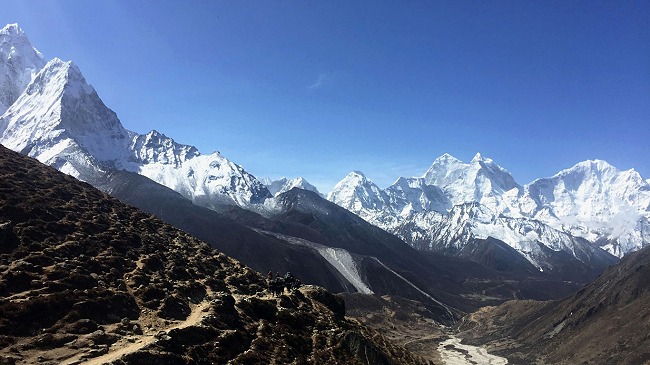
The Annapurna Base Camp Group Join Trek is Nepal's most rewarding beginner-to-moderate trek - a 10-day journey that climbs through subtropical forests, terraced villages, and rhododendron hillsides into the dramatic Annapurna Sanctuary, standing face-to-face with Annapurna I (8,091m), Machhapuchhre (the sacred Fishtail peak), and Annapurna South. Compared to high-pass treks like Manaslu Circuit or Annapurna Circuit, ABC tops out at a lower, gentler 4,130m - no high-altitude pass crossing required - making it one of the most accessible Himalayan treks for first-timers.
Joining one of Peace Nepal Treks' scheduled fixed departure dates means you share your guide, porter, and transport costs with fellow trekkers on the classic Ghorepani Poon Hill route, famous for its sunrise viewpoint over the entire Annapurna range, before continuing on through Chhomrong and the Modi Khola valley into the Sanctuary itself.
| Duration | 10 Days |
| Max Altitude | Annapurna Base Camp, 4,130m |
| Trek Grade | Easy to Moderate |
| Group Size | 2–14 trekkers (fixed departure) |
| Starts / Ends | Pokhara / Pokhara (via Nayapul) |
| Accommodation | Teahouse / Guesthouse |
| Meals | Self - Paid |
| Best Season | March–May & September–December |
| Price (Group Join) | From USD 750 per person |
| Permits Required | ACAP (Annapurna Conservation Area Permit) |
ABC doesn't require a minimum group size, but a fixed-departure group is still the most popular and cost-effective way to trek it, because it means:
Peace Nepal Treks runs guaranteed ABC fixed departure dates through spring, autumn, and into early winter - we do not cancel or merge groups last-minute for low headcounts.
This is our standard fixed-departure itinerary via the classic Ghorepani Poon Hill route. Overnight stops may adjust slightly for trail or weather conditions - your guide will always prioritize safe acclimatization over the printed schedule. Prefer a faster route? Ask us about the shorter Nayapul–Jhinu Dada option, which skips Poon Hill and can shave 2–3 days off this itinerary.
Elevation: 1,400 m | Walking: No trek
Upon arrival at Tribhuvan International Airport, our representative will welcome you and transfer you to your hotel. You can rest and prepare for the trek.
Elevation: Pokhara – 820 m | Dhampus – 1,650 m | Driving: 9–11 hours
Travel from Kathmandu to Pokhara by comfortable tourist bus. From Pokhara, take a taxi to Dhampus, a beautiful village with views of the Annapurna mountains. Overnight stay in a lodge in Dhampus.
Elevation: Landruk – 1,565 m | Distance: 11–12 km | Walking: 5–6 hours
Walk through Pothana, Deurali and Tolka, passing forests, farmland and traditional villages. After some uphill and downhill sections, reach Landruk for an overnight lodge stay.
Elevation: Chhomrong – 2,170 m | Distance: 10–12 km | Walking: 5–7 hours
Descend towards the Modi River and continue through New Bridge and Jhinu Danda. From Jhinu, climb uphill on stone steps to Chhomrong. Overnight stay in a mountain lodge.
Elevation: Bamboo – 2,310 m | Distance: 8–9 km | Walking: 4–5 hours
Descend from Chhomrong to the river, cross a suspension bridge and climb towards Sinuwa. Continue through peaceful rhododendron and bamboo forests to reach Bamboo. Overnight lodge stay.
Elevation: Deurali – 3,200 m | Distance: 8 km | Walking: 5–6 hours
Follow the forest trail through Dovan and Himalaya. The route gradually climbs past waterfalls and rocky areas before reaching Deurali. Overnight stay in a lodge.
Elevation: MBC – 3,700 m | ABC – 4,130 m | Distance: 8–10 km | Walking: 5–6 hours
Walk through the beautiful Annapurna Sanctuary and reach Machhapuchhre Base Camp. Continue slowly to Annapurna Base Camp, surrounded by impressive Himalayan peaks. Overnight stay in a lodge at ABC.
Elevation: ABC – 4,130 m to Bamboo – 2,310 m | Distance: 13–14 km | Walking: 7–8 hours
Enjoy the morning mountain views before descending through Machhapuchhre Base Camp, Deurali, Himalaya and Dovan. Continue through the forest to Bamboo for an overnight lodge stay.
Elevation: New Bridge – approximately 1,340 m | Pokhara – 820 m | Distance: 10–12 km | Walking: 5–6 hours
Descend through Sinuwa and Chhomrong towards Jhinu Danda and New Bridge. From the road point, take local transportation to Pokhara and transfer to your hotel.
Elevation: Pokhara – 820 m to Kathmandu – 1,400 m | Distance: Approximately 200 km | Driving: 8–10 hours
After breakfast, travel from Pokhara to Kathmandu by comfortable tourist bus. Enjoy views of rivers, hills and countryside along the journey. Upon arrival, transfer to your hotel and stay overnight in Kathmandu.
Optional extension: combine this trek with the Mardi Himal Trek or a short Ghorepani Poon Hill Trek add-on if you have extra days in the region.
| Package | Duration | Price per person (group join) |
|---|---|---|
| Standard Group Join (Ghorepani Poon Hill route) | 12 Days | From USD 750 |
| Short Group Join (Nayapul–Jhinu Dada route) | 9 Days | From USD 595 |
Final price depends on group size, season, and departure date — larger fixed-departure groups reduce the per-person cost.
What's included:
What's excluded:
Like the Annapurna Circuit, the ABC trek requires only two documents — both handled for you by Peace Nepal Treks as part of your group-join package:
| Permit | Approx. Cost |
|---|---|
| Annapurna Conservation Area Permit (ACAP) | USD 30 |
| Trekkers' Information Management System (TIMS) Card | USD 20 |
All foreign trekkers must be accompanied by a licensed guide, arranged through a registered trekking agency — independent, unguided trekking is not permitted in the Annapurna Conservation Area.
| Month | Departure Date | Status |
|---|---|---|
| March 2026 | 8 March / 22 March | Guaranteed |
| April 2026 | 5 April / 19 April | Guaranteed |
| September 2026 | 6 September / 20 September | Guaranteed |
| October 2026 | 4 October / 18 October | Guaranteed |
| November 2026 | 8 November / 22 November | Guaranteed |
| December 2026 | 6 December | Limited spots |
Don't see a date that fits? Contact Peace Nepal Treks — we can also open a new fixed departure once 2 or more trekkers confirm a preferred date.
The ABC trek is graded easy to moderate, making it one of the most beginner-friendly treks in Nepal:
For a longer, more demanding alternative in the same region, see our Annapurna Circuit Group Join Trek, which crosses the high Thorong La Pass (5,416m).
A full, printable packing list is provided at your pre-trek briefing in Kathmandu.
How much does the Annapurna Base Camp Group Join Trek cost? A 12-day Annapurna Base Camp Group Join Trek with Peace Nepal Treks starts from USD 750 per person, including permits, guide, porter, teahouse accommodation, and meals on the trail. A shorter 9-day version starts from USD 595.
How many days does the Annapurna Base Camp Trek take? Most group-join itineraries run 9–14 days depending on the route. The classic Ghorepani Poon Hill route takes about 12 days from Kathmandu to Kathmandu; the shorter Nayapul–Jhinu Dada route can be done in as few as 7–9 days.
Is the Annapurna Base Camp Trek good for beginners? Yes — ABC is one of the most beginner-friendly treks in the Nepal Himalaya. There's no high-altitude pass crossing, the trail is well-established, and daily altitude gain is gradual. Reasonable fitness is still recommended.
Do I need a guide for the Annapurna Base Camp Trek? Yes, a licensed guide from a registered trekking agency is required to trek in the Annapurna Conservation Area. Group-joining is the most affordable way to meet this requirement.
What permits do I need for the Annapurna Base Camp Trek? You need the Annapurna Conservation Area Permit (ACAP) and a TIMS card — the same two permits required for the Annapurna Circuit Trek. Both are arranged for you as part of your Peace Nepal Treks package.
What is the best time to trek Annapurna Base Camp? September to November (autumn) and March to May (spring) offer the clearest skies and best mountain views. Winter (December–February) is also possible and increasingly popular for its quieter trails.
How is Annapurna Base Camp different from the Annapurna Circuit? Annapurna Base Camp is a shorter, out-and-back trek into the Annapurna Sanctuary with a maximum altitude of 4,130m and no high-pass crossing. The Annapurna Circuit is a longer loop trek that crosses the 5,416m Thorong La Pass and descends into the dry Mustang region — more demanding, but with more varied terrain and landscapes.
Can I combine Annapurna Base Camp with another trek? Yes — Peace Nepal Treks can combine ABC with a short Ghorepani Poon Hill Trek extension or the nearby Mardi Himal Trek for trekkers with extra time in the Annapurna region.
Ready to join the next fixed departure? Contact Peace Nepal Treks today to confirm your spot on the Annapurna Base Camp Group Join Trek, check current availability, or ask about the shorter route or a trek combination.
Upon arrival at Tribhuvan International Airport, our representative will welcome you and transfer you to your hotel. You can rest and prepare for the trek.
Travel from Kathmandu to Pokhara by comfortable tourist bus. From Pokhara, take a taxi to Dhampus, a beautiful village with views of the Annapurna mountains. Overnight stay in a lodge in Dhampus.
Elevation: Pokhara – 820 m | Dhampus – 1,650 m | Driving: 9–11 hours
Walk through Pothana, Deurali and Tolka, passing forests, farmland and traditional villages. After some uphill and downhill sections, reach Landruk for an overnight lodge stay.
Elevation: Landruk – 1,565 m | Distance: 11–12 km | Walking: 5–6 hours
Descend towards the Modi River and continue through New Bridge and Jhinu Danda. From Jhinu, climb uphill on stone steps to Chhomrong. Overnight stay in a mountain lodge.
Elevation: Chhomrong – 2,170 m | Distance: 10–12 km | Walking: 5–7 hours
Descend from Chhomrong to the river, cross a suspension bridge and climb towards Sinuwa. Continue through peaceful rhododendron and bamboo forests to reach Bamboo. Overnight lodge stay.
Elevation: Bamboo – 2,310 m | Distance: 8–9 km | Walking: 4–5 hours
Follow the forest trail through Dovan and Himalaya. The route gradually climbs past waterfalls and rocky areas before reaching Deurali. Overnight stay in a lodge.
Elevation: Deurali – 3,200 m | Distance: 8 km | Walking: 5–6 hours
Walk through the beautiful Annapurna Sanctuary and reach Machhapuchhre Base Camp. Continue slowly to Annapurna Base Camp, surrounded by impressive Himalayan peaks. Overnight stay in a lodge at ABC.
Elevation: MBC – 3,700 m | ABC – 4,130 m | Distance: 8–10 km | Walking: 5–6 hours
Enjoy the morning mountain views before descending through Machhapuchhre Base Camp, Deurali, Himalaya and Dovan. Continue through the forest to Bamboo for an overnight lodge stay.
Elevation: ABC – 4,130 m to Bamboo – 2,310 m | Distance: 13–14 km | Walking: 7–8 hours
Descend through Sinuwa and Chhomrong towards Jhinu Danda and New Bridge. From the road point, take local transportation to Pokhara and transfer to your hotel.
Elevation: New Bridge – approximately 1,340 m | Pokhara – 820 m | Distance: 10–12 km | Walking: 5–6 hours
After breakfast, travel from Pokhara to Kathmandu by comfortable tourist bus. Enjoy views of rivers, hills and countryside along the journey. Upon arrival, transfer to your hotel and stay overnight in Kathmandu.
Elevation: Pokhara – 820 m to Kathmandu – 1,400 m | Distance: Approximately 200 km | Driving: 8–10 hours
The following equipment is available when needed and must be returned after the trek:
Guests may safely leave city clothes, suitcases and other unnecessary belongings at our office during the trek. We will keep them secure until you return.
Bottled mineral water is available along the trekking route and must be paid for by guests. We recommend using tap or spring water with purification tablets because it is safe, affordable and helps reduce plastic waste in the mountains.
For meals and accommodation during the trek, please budget around USD 30-40 per person per day, depending on your food choices, lodge standard, and altitude.
Snacks and drinks such as chocolates, energy bars, soft drinks, bottled water, and alcoholic beverages are also not included.
One porter can be arranged for USD 180 and can carry up to 25 kg. Each guest may give the porter around 10–12 kg of luggage and carry only a small daypack with daily essentials.
Pokhara to Dhampus: Private jeep transportation from Pokhara to Dhampusi, the trek starting point, can be arranged upon request. The additional cost is USD 100 per jeep, which can be shared among the group members. One jeep can comfortably accommodate approximately 6 passengers.
New bridge to Pokhara: Private jeep transportation from New bridge to Pokhara can also be arranged upon request. The additional cost is USD 100 per jeep, which can be divided among the group members. One jeep can comfortably accommodate approximately 6 passengers.
The Nepal entry visa fee is not included. Most travelers can obtain a visa upon arrival at Tribhuvan International Airport in Kathmandu.
Current tourist visa fees are:
For an easier and faster process, guests can complete the online tourist visa form before arriving in Nepal. Please carry the application receipt, a valid passport and cash or another accepted payment method for the visa fee.
Guests are responsible for bringing their own personal trekking clothes, hiking boots, daypack and other personal equipment. Some trekking equipment may be borrowed or rented in Kathmandu when required.
| Group Size | Price Per Person |
|---|---|
| 1 | USD 725 |
| 2-5 | USD 475 |
| 6-10 | USD 425 |

Choose a scheduled departure and reserve your place.
The 10-day Regular Group Join Package starts from USD 475 per person. The final price may depend on the departure date, group size and any additional services requested.
The complete package is 10 days from arrival in Kathmandu to the return journey from Pokhara to Kathmandu. The trekking route begins from Dhampus and continues through Landruk, Chhomrong, Bamboo, Deurali and Machhapuchhre Base Camp before reaching Annapurna Base Camp.
Yes. Solo travellers are welcome to join one of our scheduled group departures. It is a good opportunity to trek safely with a licensed guide, meet other travellers and share transportation and guiding costs.
Yes, physically fit beginners can complete this trek. The route does not require climbing experience or technical skills. However, trekkers should prepare for long uphill and downhill sections, stone steps and several hours of walking each day.
Most trekking days require approximately 4–7 hours of walking. The longest day is usually the descent from Annapurna Base Camp to Bamboo, which takes around 7–8 hours. Daily walking distances are generally between 8 and 14 kilometres.
The highest point is Annapurna Base Camp at 4,130 metres. The trail also passes Machhapuchhre Base Camp at approximately 3,700 metres. Your guide will maintain a comfortable pace and monitor your health as you gain altitude.
The best seasons are spring from March to May and autumn from September to November. These months normally offer stable weather and clearer mountain views. Winter trekking is possible but can be very cold and snowy near the base camp.
During the trek, guests stay in simple, clean and comfortable mountain tea houses on a twin-sharing basis. Meals are self-paid and can be ordered from the lodge menu. Please budget approximately USD 30–40 per person per day for meals and accommodation, depending on your choices and the altitude.
Yes. The package includes the Annapurna Conservation Area Permit, required local entry fees and one experienced, government-licensed, English-speaking trekking guide. The guide will manage the route, accommodation, safety and daily trekking arrangements.
Yes. Travel insurance is mandatory and should cover trekking up to at least 4,500 metres, altitude sickness, accidents, medical treatment and emergency helicopter evacuation. Please provide a copy of your insurance policy before the trek so that emergency support can be arranged quickly when required.
The best seasons for the Annapurna Base Camp Group Join Trek are spring from March to May and autumn from September to November. During these months, the weather is usually more stable, the skies are clearer, and the mountain views are beautiful.
Spring is one of the most popular times for the Annapurna Base Camp Trek. The weather is generally pleasant, with warmer daytime temperatures and longer daylight hours. The forests along the trail are filled with colourful rhododendron flowers, making the journey even more beautiful. Mountain views are usually clear in the morning, although some clouds may appear later in the day.
Autumn is considered the best trekking season in Nepal. After the summer rains, the air becomes fresh and clear, offering excellent views of Annapurna, Machhapuchhre and the surrounding Himalayan peaks. The weather is usually dry and stable, with comfortable temperatures during the daytime. October and November are especially popular, so the trekking trails and lodges may be busier.
The Annapurna Base Camp Trek is also possible during winter. The trails are usually quieter, and the mountain views can be very clear. However, temperatures become very cold, especially in the morning, evening and at higher elevations. Heavy snow may sometimes cover the trail near Machhapuchhre Base Camp and Annapurna Base Camp. Trekkers should carry proper warm clothing and be prepared for possible changes in the itinerary.
The monsoon season is less suitable for trekking because of regular rainfall, cloudy weather and slippery trails. Leeches may also be common in the lower forest areas. Mountain views can be limited by clouds, and transportation may be delayed by poor road conditions. However, the landscape becomes very green, and the trails are much quieter for trekkers who do not mind the rain.
Guests should bring suitable personal trekking clothes and equipment for a safe and comfortable journey. We recommend bringing comfortable and well-used hiking boots, warm layers, waterproof clothing, gloves, sunglasses, a sun hat, a warm hat, a headlamp and a small daypack.
Weather conditions can change quickly in the mountains, so it is important to carry both warm and waterproof clothing. Comfortable hiking boots are especially important because the route includes stone steps, forest trails, uphill climbs and some rocky sections.
Peace Nepal Treks can provide the following trekking equipment when needed:
All borrowed trekking equipment must be returned after completing the trek. Guests are responsible for bringing their own personal clothing, hiking boots, daypack, toiletries, medicines and other personal items. Additional trekking equipment can also be rented or purchased in Kathmandu if required.
The package includes insurance for the Nepali trekking guide and porter when porter service is booked. Their wages, meals, accommodation and necessary trekking equipment are also covered during the trek.
Travel insurance is mandatory for every guest. The policy should cover:
Guests should send a copy of their insurance policy before arriving in Nepal and carry another copy during the trek. Rescue and medical expenses are not included in the package, but Peace Nepal Treks will provide full assistance with emergency arrangements. Nepal Tourism Board also recommends comprehensive insurance that covers emergency treatment and helicopter rescue
No reviews yet. Traveled with us on this trip? Be the first to share your experience.
Enjoy the popular trekking and tour packages in Nepal Himalayas. 2026.
Adrian Mula
Robert and Arnica Reurekas
Patrick Keulens Helmond
Richard Kirtley
Chang Jong Kwon
Lim Tianshun
Mark Eversham